
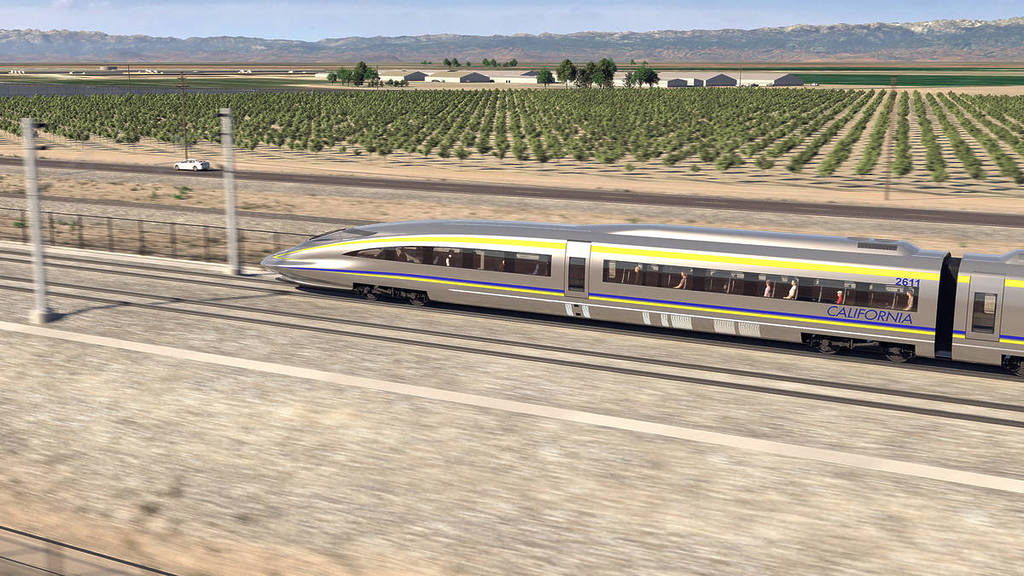

Any Californian knows that the dream of high-speed rail is a contentious and drawn-out one. It’s been more than a decade since the project first broke ground, but 2026 is supposed to be the year that we finally see high-speed track installed.
In a June 2026 board meeting agenda, the California High-Speed Rail Authority named November 30, 2026 as an anticipated milestone date to commence laying track. But despite the Authority awarding the enormous construction contract to Kiewit, Stacy Witbeck, and Herzog, many Californians are doubtful that track will actually hit the ground by then.
The project is vastly delayed and over budget due to a complex mix of factors, from utility companies whose transmission lines lay in the way of the route, to long-running land acquisition and legal battles, environmental regulations, political compromises, and stop-and-go funding.
Senator Dave Cortese (D-San Jose) recently authored SB 1425, a bill intended to address some of those delays. It would give the California High-Speed Rail Authority a formal permit program for encroachments on its operating right-of-way, meaning that any person who installs or performs an encroachment there without a permit could face a misdemeanor charge.
The bill passed the Legislature and was presented to Gov. Gavin Newsom on August 31, with a decision due by September 30.
High-speed track in the Central Valley
The vision for high-speed rail in California is a 2-hour and 40-minute journey between San Francisco and Los Angeles, with trains reaching speeds of up to 220 mph.
Most of the authority’s work over the last decade has involved the Initial Operating Segment in the Central Valley, a 171-mile stretch of which 119 miles are under active construction from Merced to Bakersfield.
In November 2025, the project launched a $3.5 billion Request for Proposals for qualified vendors to bid on the track and systems contract. And this past June, the Authority awarded it to an “American‑led consortium” comprising North American engineering and construction firm Kiewit, U.S. transit and heavy civil contractor Stacy Witbeck, and North American rail and heavy‑highway specialist Herzog.
Now, Californians are left waiting to see whether the state’s first miles of high-speed rail track can finally be installed before the end of the year.
