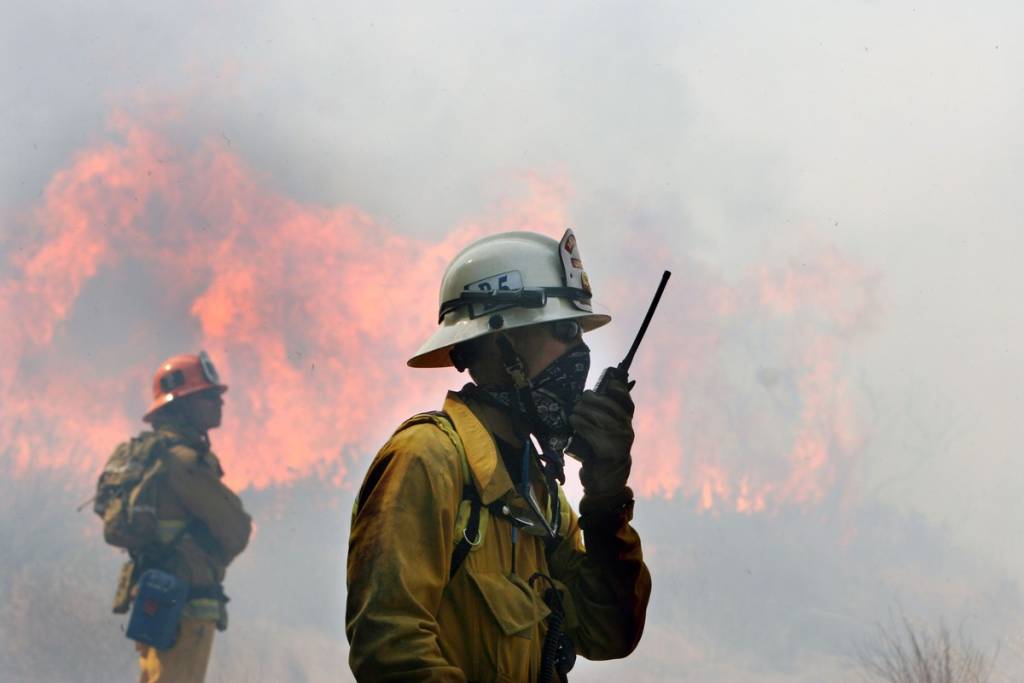

If you have stepped outside in Los Angeles recently, you have likely noticed the hazy sky and campfire smell.
The Los Angeles County Department of Public Health has officially declared an unhealthy air quality advisory. This alert is directly tied to the Bouquet Fire, which had scorched 1,000 acres as of 7:20 p.m. on Saturday.
While the blaze itself is alarming, the real driver pushing that smoke into our neighborhoods is a notorious seasonal weather hazard.
The science behind the ‘devil winds’
Every autumn, Angelenos brace for the arrival of the Santa Ana winds. Locals often refer to them as ‘devil winds’.
These intensely dry, fast-moving winds originate from high-pressure cold air systems building over the Great Basin.
As this heavy air flows downhill toward the Pacific Coast, it gets forcefully squeezed through the narrow passes of the San Gabriel Mountains and the Los Angeles Basin.
The air accelerates rapidly and warms up. This massive, invisible hairdryer strips local vegetation of moisture and turns the region into a tinderbox.
It is the exact scientific mechanism that fuels our dangerous October fire seasons.
Why the Bouquet Fire smoke is spreading west
Predicting exactly how winds will impact air quality or where ash will travel is notoriously difficult.
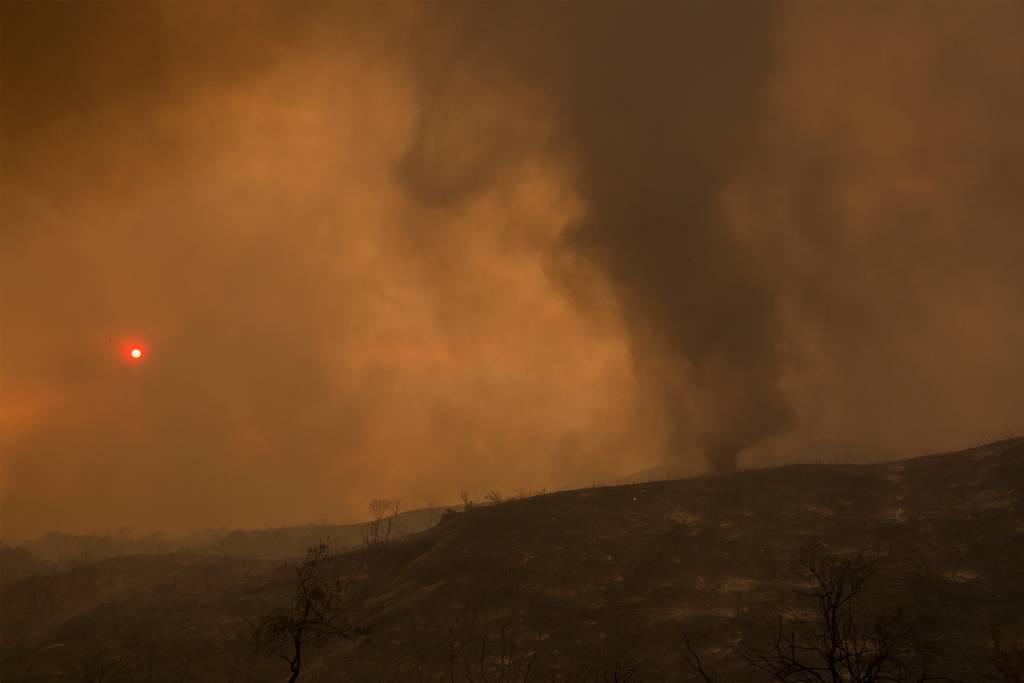
During the first weekend of October, smoke from the Bouquet Fire stayed well above the surface during the afternoon. However, the Santa Ana winds forcefully pushed this smoke toward the west.
The unhealthy air is now heavily impacting the Santa Clarita Valley, the I-5 corridor, and the Angeles National Forest.
How to protect yourself from the unhealthy air
The primary health concern is the mixture of small microscopic particles. These fine particles can trigger burning eyes, runny noses, scratchy throats, headaches, and bronchitis.
Here is how you can stay safe during a Southern California fire weather alert:
- Stay indoors to limit outdoor exposure, especially if you have heart or lung conditions, are pregnant, or are an older adult.
- Keep your windows and doors tightly closed to keep indoor air clean.
- If you run the AC, make sure it recirculates indoor air. Avoid units that only bring in outside air and do not recirculate.
- Check your air filters. Filters labeled ‘MERV13’ or higher are the most effective for removing harmful smoke particles.
- If you must spend long periods outside in heavy smoke or ash, wear a properly fitted N95 or P100 mask.
- Bring your pets into an indoor location, such as a house or enclosed garage, particularly at night.
- If your dog or cat is excessively panting or struggling to catch its breath, take them to an animal hospital immediately.
📍 San Gabriel Mountains & Los Angeles Basin
Current Status: Active seasonal weather hazard