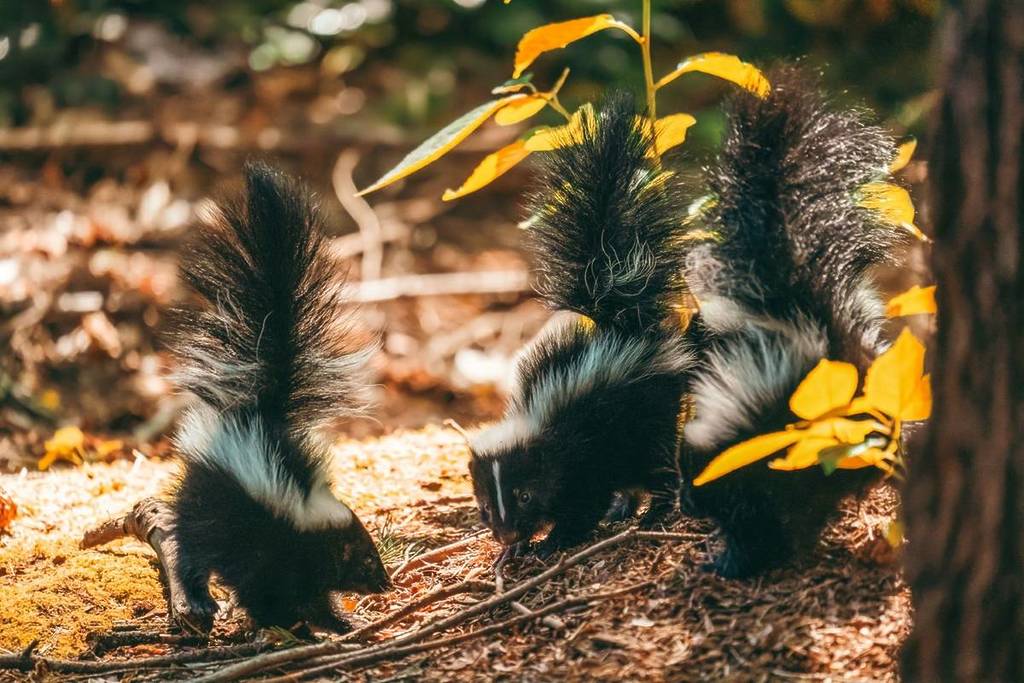

They slip through neighborhoods at dusk, small shadows weaving between hedges, fences, and trash bins. Most of the year, you might never notice them. But in spring, something changes.
This is when skunks, those famously misunderstood nighttime wanderers, enter baby season.
Across Los Angeles, mothers are raising litters of tiny kits, often four to six at a time. And while the babies may look harmless (even charming, in their own scruffy way), this season brings a subtle shift in skunk behavior that’s worth understanding.
Why you’re seeing more skunks right now
Spring is peak birth season. After mating in late winter, female skunks give birth around April. For the first few weeks, the kits stay hidden due to being blind, fragile, and completely dependent on their mother.
But by May, they begin venturing out. And that’s when sightings increase.
You might spot:
- A small group waddling behind a larger adult
- Movement near gardens or trash bins at dusk
- Activity under decks, sheds, or crawl spaces
Don’t panic! They aren’t invading. They’re just growing up.
The truth about skunk behavior
Despite their reputation, skunks aren’t naturally aggressive animals. Their philosophy is simple: leave me alone, and I’ll leave you alone.
They forage for food like bugs, fruit, scraps and prefer to avoid confrontation. But they do come equipped with one very effective defense mechanism, and they won’t hesitate to use it if they feel threatened.
During baby season, mothers are more alert, more defensive, and less tolerant of disturbances. They’re not being hostile. They’re simply protecting their babies.
Warning signs you’re too close for comfort
Before a skunk sprays, it almost always gives you a chance to back off.
Watch for:
- Stomping front feet
- Hissing or growling
- Raising its tail
If you see this, slowly move away. Do not run, do not approach, and definitely do not try to interact.

What to do if you get sprayed
Let’s say the worst happens. First of all, don’t panic. Second, don’t reach for tomato juice. It doesn’t work.
Skunk spray is an oily substance, and water alone can actually make the smell worse by spreading it.
Instead, use this tried-and-true mixture:
You’ll need:
- 1 quart hydrogen peroxide
- 1/4 cup baking soda
- 1 teaspoon dish soap
What to do:
- Mix the solution fresh (Don’t store it. It can build pressure).
- Apply it directly to the affected area (skin, clothing, or pet fur).
- Let it sit for a few minutes.
- Rinse thoroughly and repeat if necessary.
For indoor surfaces, diluted bleach solutions can help neutralize lingering odor, but test carefully to avoid damage.
Living peacefully with skunks
You don’t need to fear skunks, but you do need to be smart about sharing space.
A few simple habits can prevent most encounters:
- Keep pet food indoors
- Secure trash cans tightly
- Block access to crawl spaces or decks
- Keep pets leashed at night
Most skunks are just passing through. Make your yard uninviting, and they’ll move on.