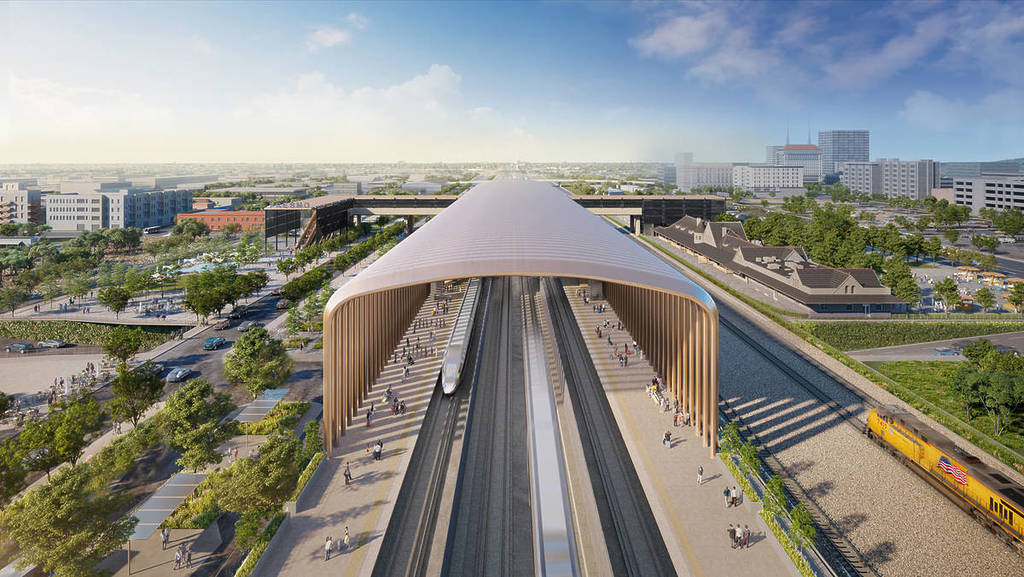

California High-Speed Rail (CAHSR) is one of our state’s most long-awaited and highly anticipated projects, promising a Los Angeles-to-San Francisco connection in just 2 hours and 40 minutes.
The past decade of civil construction work has been focused on the Initial Operating Segment (IOS) in the Central Valley, a 171-mile stretch between Merced and Bakersfield. If all goes to schedule, this segment may open as soon as 2032, according to The Associated Press.
Recommended Articles
 L.A. Metro’s $25B+ Sepulveda Pass subway will span 7 stations over a 12.3-mile stretch: See every stop on the route
 California’s best scenic train ride now takes you to the world’s largest living Christmas tree, standing 222 feet tall
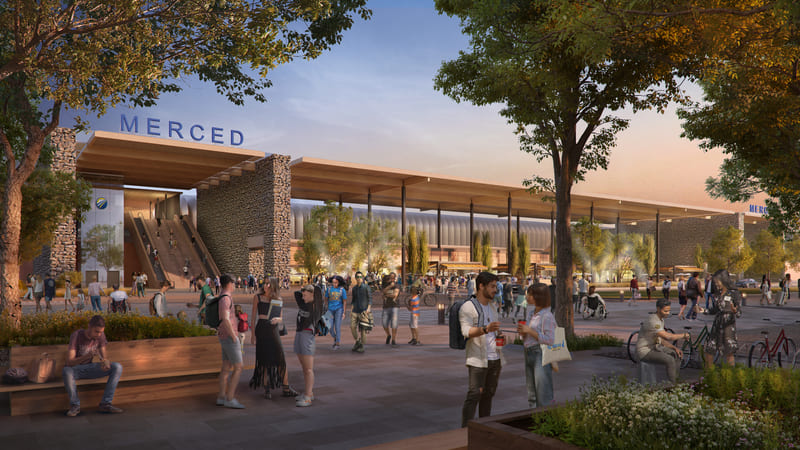
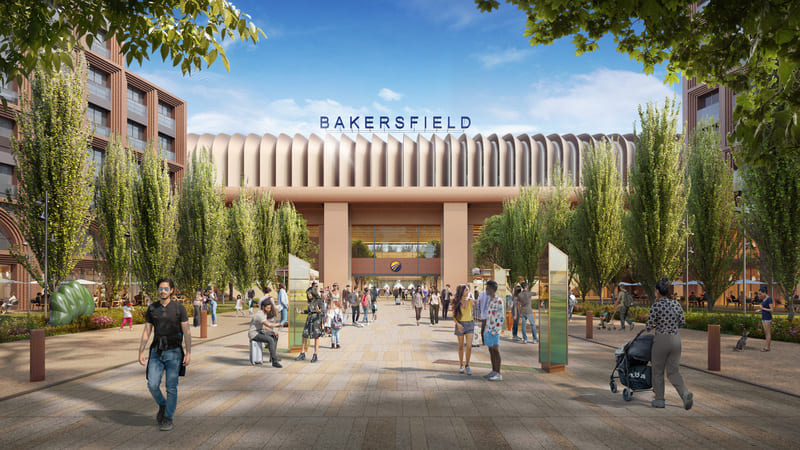
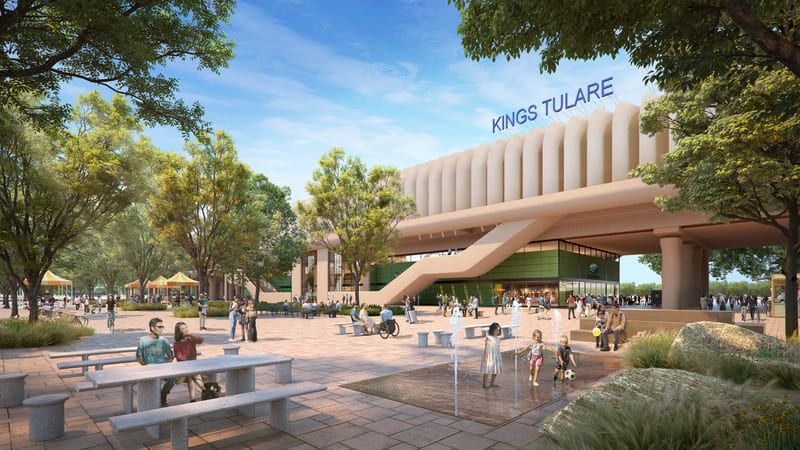
While there’s much to be done before that point, CAHSR already has renderings of the planned Central Valley stations. Keep reading for a closer look.
Central Valley station renderings
The Initial Operating Segment serves five planned stations in the Central Valley: Merced, Madera, Fresno, Kings/Tulare, and Bakersfield.
The California High-Speed Rail Authority selected San Francisco architecture firm Foster + Partners and British engineering company Arup to plan four of the five station designs. The San Joaquin Joint Powers Authority will lead the Madera station design.
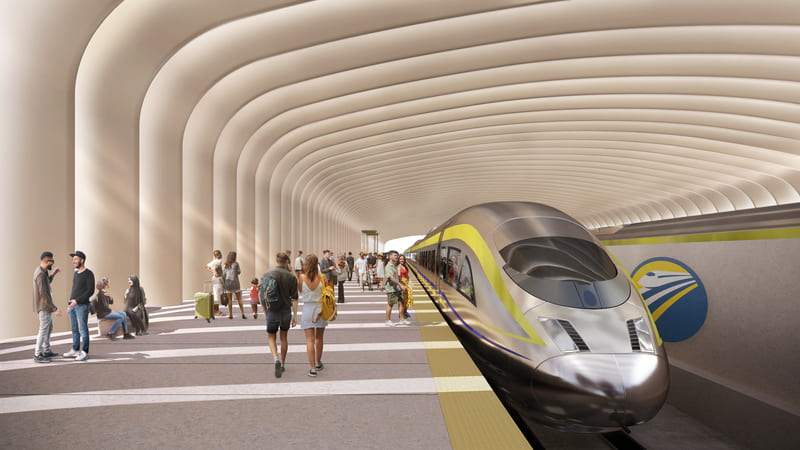
Renderings present a futuristic vision for CAHSR stations, most of which feature large soaring canopies and open concourses. Expansive architectural features incorporate natural materials like wood and stone to create a cohesive identity, as depicted in the renderings below…
What’s next for California High-Speed Rail
The Central Valley’s Initial Operating Segment approaches a milestone this year with the planned transition from civil construction to track laying and systems installation.
However, there is still no firm projected opening date for the full route from San Francisco to Los Angeles, due to funding and planning delays.
Read our article to learn more about the CAHSR timeline and what to expect in 2026.