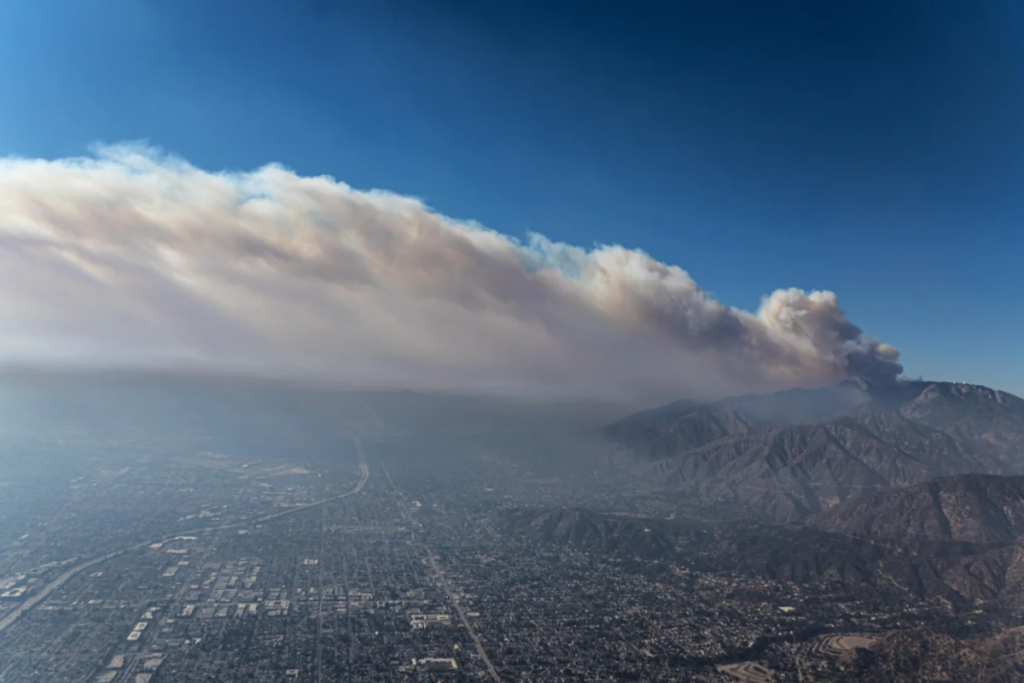

Millions of Los Angeles County residents breathed in dangerous levels of toxic metals last year.
A new study from Caltech found that smoke from the Eaton Fire exposed locals to severe atmospheric contamination.
According to research published in Science Advances, nearly 7 million people in the L.A. metro area faced 24-hour lead concentrations 80 times higher than normal during the fire’s peak.
The catastrophic blaze killed 19 people, burned more than 14,000 acres, and destroyed nearly 10,000 homes.
Scientists noted that the resulting smoke had a drastically different chemical makeup compared to typical wildfires.
An ‘extreme urban fire event’
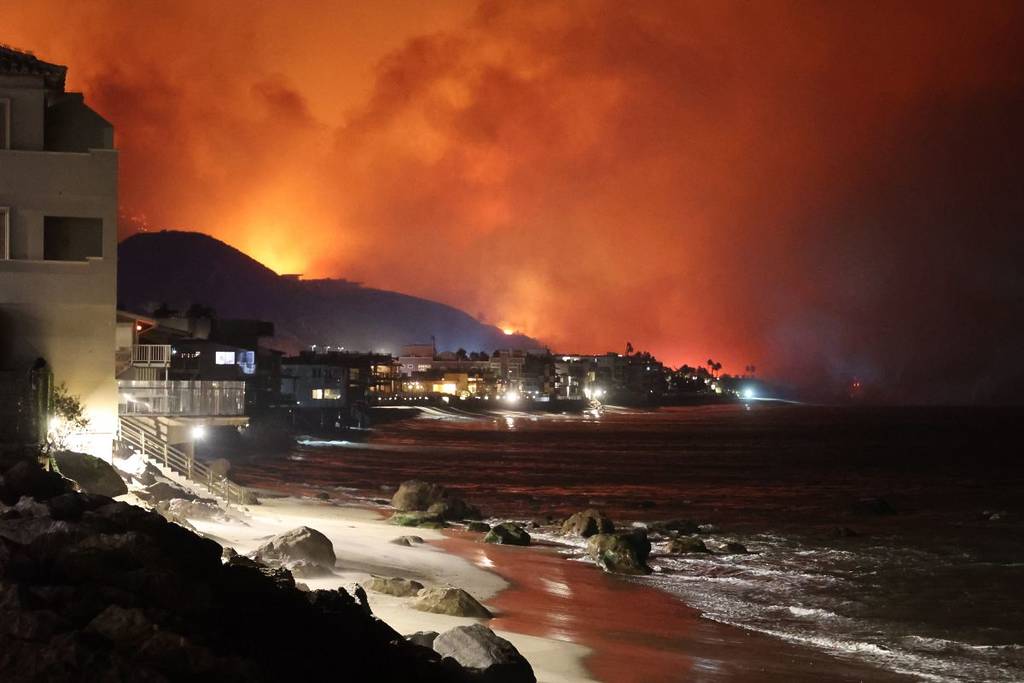
When structures and vehicles burned in the early stages of the fire, atmospheric toxic metals spiked immediately.
An advanced air monitoring station in Pico Rivera—part of the National Science Foundation’s ASCENT network—tracked this chemical signature.
Researchers discovered the urban smoke plume was enriched 50-fold in lead, 7-fold in chlorine and bromine, and 3-fold in arsenic.
“Urban fire plumes are chemically distinct from those of wildfires,” Haroula Baliaka, lead author of the Caltech study, told reporters. Baliaka co-authored the report with graduate student Ryan Ward.
They continuously measured the airborne particles as the fire moved from Altadena into the San Gabriel Mountains.
The team compared the Eaton Fire to the 2024 Airport Fire, highlighting a stark contrast. Lead levels spiked massively in eastern L.A. and the San Gabriel Valley on January 8 and 9.
As the fire moved into the mountains, lead levels finally dropped.
Caltech Professor Richard Flagan noted that previous emergency responses treated the disaster like a standard wildfire. “But the Eaton Fire was an extreme urban fire event,” he explained, suggesting a need to rethink fire codes for densely populated areas.
What it means for your health
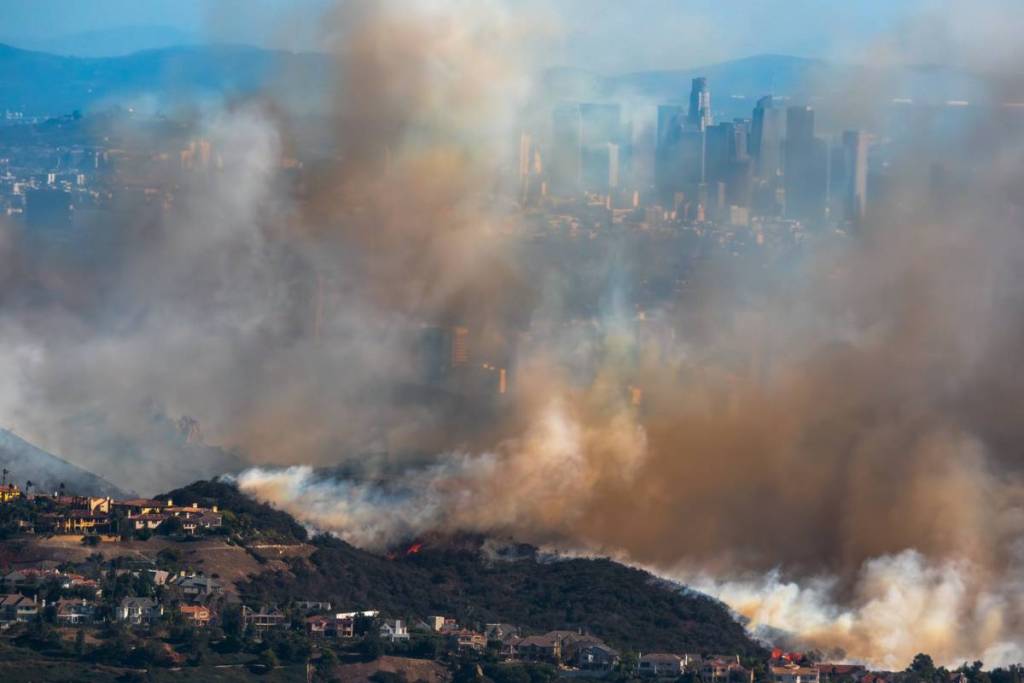
Californians face constant fire exposure, but the long-term impacts of urban fire smoke remain unclear.
Dr. Howard Hu, a University of Southern California Keck Professor, told CBS News that health impacts depend heavily on the exposure dose.
“For a single day of exposure, if you didn’t get violently ill at that time, I think most people would be okay,” Hu told CBS News. “Things I would worry about the most would be chronic exposure of weeks to months to years.”
The severe lead levels were likely driven by older structures burning in Altadena. In April 2025, Pasadena issued a public health advisory after initial soil tests revealed extreme lead contamination. The Environmental Protection Agency (EPA) followed up by testing dozens of homes in early 2026.
This follows a separate University of California study from June, which found that over 3 million people downwind of the Palisades and Eaton fires may have also been exposed to chromium-6, a toxic carcinogen linked to asthma and lung cancer.
For more, follow us on Facebook, Instagram, TikTok, and now WhatsApp!