
In Los Angeles, you know Candlelight: rooms washed in gold, music breathing easy. But before that glow appears, what really happens?
Start with scale: thousands of candles. 5,000 candles, 15,000 candles, sometimes 30,000 candles—numbers that shift by venue, yet always in the thousands, always abundant, always the point.
It looks effortless from your seat. It isn’t—and that’s exactly where this story begins.
Because to make a scene feel weightless, someone first lifts thousands of tiny lights into place.
Table Of Contents
The Set Up: From Boxes to Glow
Boxes open. Layers come off. Candles emerge, one after another, ready to become a field of light.
Placement follows: lines along aisles, clusters on steps, neat rows around the stage edges. Corners fill. Sightlines clear. The shape of the room starts to show.
Then, lighting: one by one, flames appear. Rows wake up, patterns connect, and the room begins to breathe.
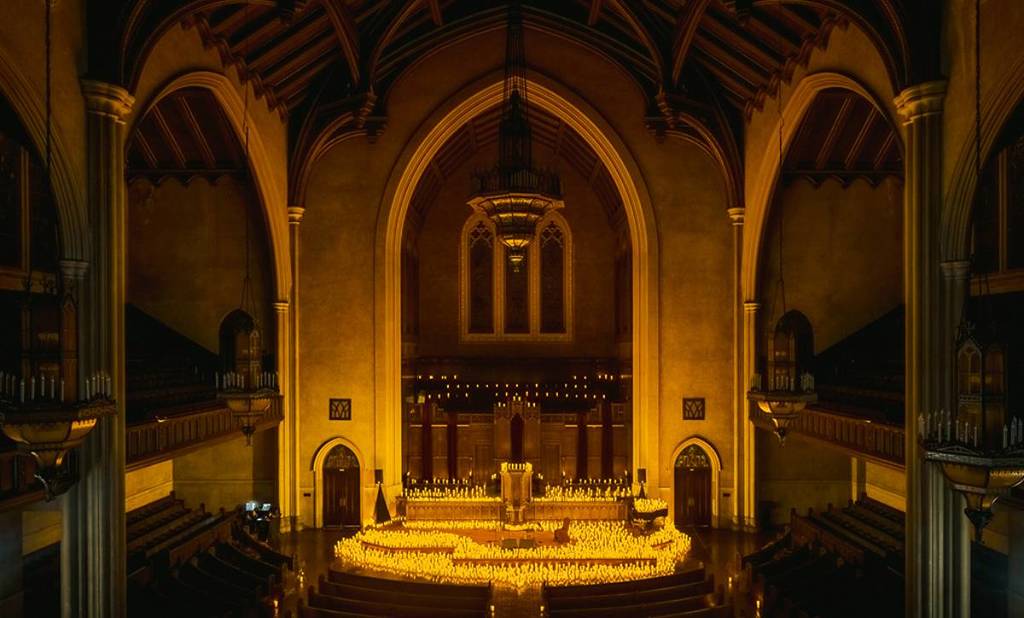
The payoff is the feeling that meets you at the door. In venues like Immanuel Presbyterian Church, candles soften stone and wood, trace the nave, and turn distance into intimacy. Faces warm. Strings shimmer brighter. You settle in as if the whole space were designed around your seat.
Or think of it this way: 15,000 flickering flames, more than the seats at the Hollywood Bowl, glowing brighter than a full house on opening night.
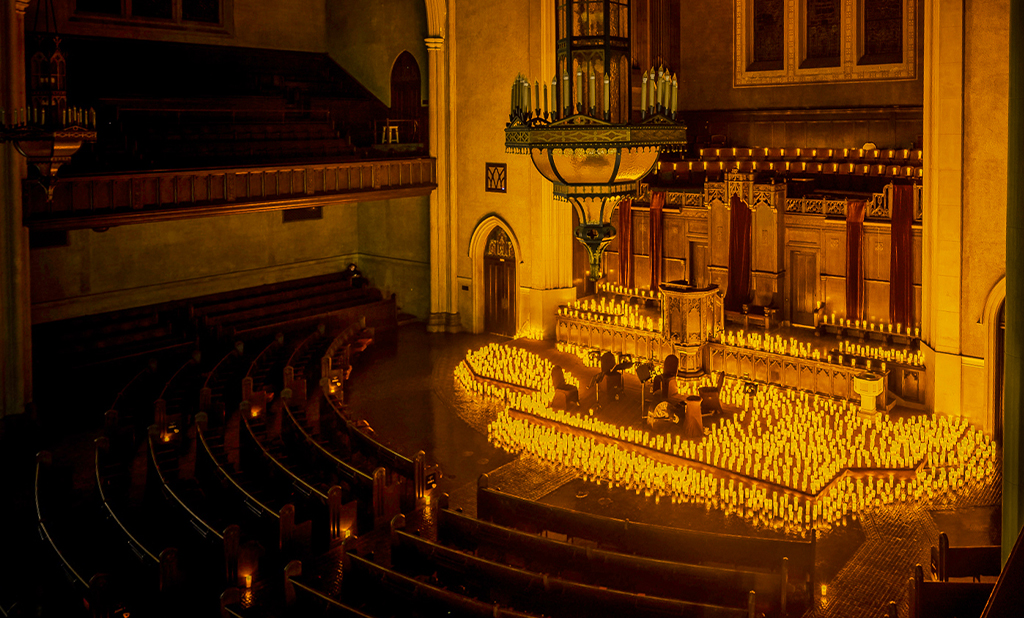
And when the final note fades, the work continues. Candles go dark, get gathered, and return to their boxes. What was spread across the room is condensed again—ready to be set, placed, and lit the next night, and the night after that.
So the next time Candlelight illuminates Los Angeles, you’ll see more than atmosphere; you’ll notice the care behind it—the thousands of tiny decisions that let the music feel effortless. That understanding changes the way the first chord lands, and how long it stays with you.
24 October 2026 18:00 + more dates
The Biltmore Los Angeles
29 October 2026 18:15 + more dates
Los Angeles Equestrian Center
29 October 2026 20:30 + more dates
Los Angeles Equestrian Center
23 October 2026 18:15
Immanuel Presbyterian Church
1 November 2026 18:00 + more dates
The Queen Mary – Queen's Salon
1 November 2026 20:15 + more dates
The Queen Mary – Queen's Salon
1 November 2026 18:00 + more dates
Los Angeles Equestrian Center
31 October 2026 20:30
TCL Chinese Theatre
30 October 2026 20:45
Petersen Automotive Museum
30 October 2026 18:15
Los Angeles Equestrian Center
31 October 2026 18:00
TCL Chinese Theatre
30 October 2026 20:45
The Ritz-Carlton, Marina del Rey
30 October 2026 18:30 + more dates
Petersen Automotive Museum
1 November 2026 20:15 + more dates
Los Angeles Equestrian Center
30 October 2026 18:15
The Ritz-Carlton, Marina del Rey
6 November 2026 18:00 + more dates
The Queen Mary – Queen's Salon
7 November 2026 17:30
Zipper Concert Hall
7 November 2026 19:45
Zipper Concert Hall
13 November 2026 20:30 + more dates
The Biltmore Los Angeles
13 November 2026 20:30 + more dates
Pasadena Presbyterian Church
13 November 2026 18:15 + more dates
The Biltmore Los Angeles
13 November 2026 18:15 + more dates
Pasadena Presbyterian Church
15 November 2026 18:30
Petersen Automotive Museum
20 November 2026 18:15 + more dates
Aquarium of the Pacific
20 November 2026 20:30 + more dates
Immanuel Presbyterian Church
21 November 2026 18:00
The Biltmore Los Angeles
20 November 2026 18:15 + more dates
Immanuel Presbyterian Church
20 November 2026 20:30 + more dates
Aquarium of the Pacific
21 November 2026 18:00 + more dates
Los Angeles Equestrian Center
21 November 2026 20:15
Los Angeles Equestrian Center
4 December 2026 18:15 + more dates
Los Angeles Equestrian Center
28 November 2026 19:15 + more dates
Immanuel Presbyterian Church
29 November 2026 19:45 + more dates
Immanuel Presbyterian Church
29 November 2026 20:15 + more dates
Los Angeles Equestrian Center
4 December 2026 20:30
Los Angeles Equestrian Center
28 November 2026 17:00 + more dates
Immanuel Presbyterian Church
5 December 2026 19:45 + more dates
Los Angeles Equestrian Center
5 December 2026 16:30 + more dates
Los Angeles Equestrian Center
6 December 2026 18:00 + more dates
Los Angeles Equestrian Center
19 December 2026 18:00
The Biltmore Los Angeles
13 December 2026 18:15 + more dates
Aquarium of the Pacific
18 December 2026 20:30
Pasadena Presbyterian Church
19 December 2026 17:30 + more dates
Fox Studio Lot – Zanuck Theater
17 December 2026 18:15 + more dates
The Queen Mary – Queen's Salon
18 December 2026 18:15 + more dates
The Queen Mary – Queen's Salon
18 December 2026 20:30
The Queen Mary – Queen's Salon
19 December 2026 16:30
The Queen Mary – Queen's Salon
19 December 2026 20:00
Fox Studio Lot – Zanuck Theater
26 December 2026 18:00
Vibiana
20 December 2026 18:00 + more dates
GRAMMY Museum
20 December 2026 16:00
GRAMMY Museum
27 December 2026 20:15 + more dates
Los Angeles Equestrian Center
8 January 2027 20:30 + more dates
Los Angeles Equestrian Center
8 January 2027 20:30 + more dates
Aquarium of the Pacific
17 January 2027 19:45
The Queen Mary – Queen's Salon
23 January 2027 17:30
Fox Studio Lot – Zanuck Theater
5 February 2027 18:15
Los Angeles Equestrian Center