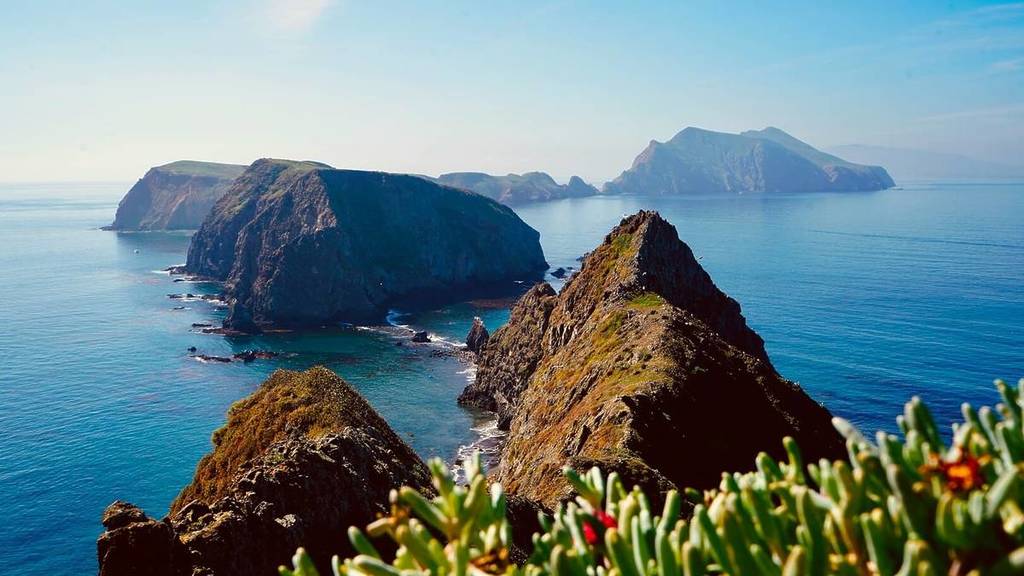
Did you know that Channel Island National Park is known as the “Galápagos of North America?” This remote chain of islands is the least-visited national park in the state, and it’s teeming with 150+ endemic plant and animal species.
From the enormous marine sanctuary with world-class diving and kayaking opportunities, to ample hiking and camping spots, here’s how to make the most of the Channel Islands.
Features of the Channel Islands
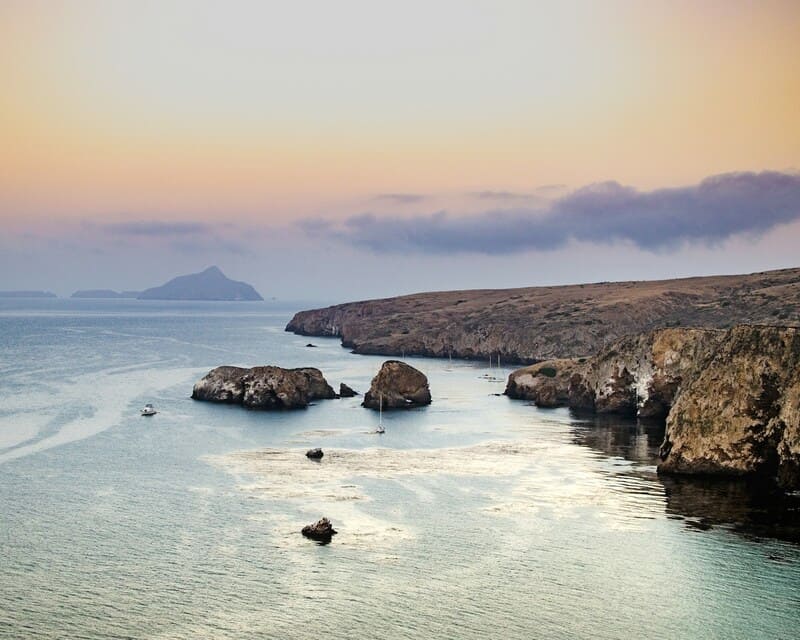
Channel Island National Park comprises the following five islands off the coast of Southern California, about a 1-2 hour ferry ride from Ventura or Oxnard. There are another three islands in the island chain (including Catalina), but they are not included in the park territory.
- Santa Cruz: At over 96 square miles, Santa Cruz is the largest island with numerous sea caves, trails, and endemic species.
- Santa Rosa: This is the second-largest island at 83 square miles, featuring sandstone canyons and a rare Torrey pine grove. It’s also the site of archeological discoveries, including the oldest human remains in North America.
- San Miguel: The westernmost Channel Island covers 14.5 square miles, known for seal and sea lion colonies.
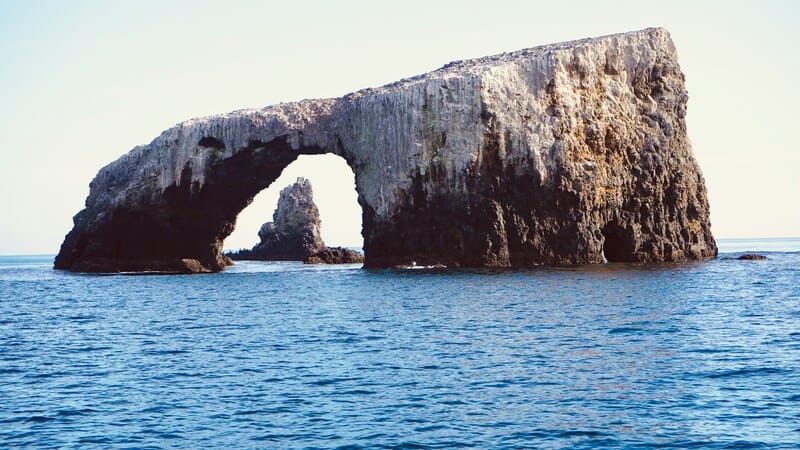
- Anacapa: Three islets compose the 1.1-square-mile Anacapa Island, which is known for a 40-foot volcanic arch rock.
- Santa Barbara: At only 1 square mile in size, Santa Barbara Island is the smallest of the Channel Islands, known for its steep cliffs and nesting seabirds.
Human history
Archaeological investigations uncovered human remains on Santa Rosa Island dating back over 13,000 years, making them some of the oldest in North America. The islands were primarily inhabited by the Indigenous Chumash people on the northern islands and the Tongva people on the southern islands. Nearly 150 village sites have been identified, telling of a complex social and religious structure.
With the arrival of Spanish conquistadors on the mainland, nearly all of the Native American island residents were forced into missions, including Santa Barbara and San Buenaventura.
Endemic species
The islands’ isolation has allowed sensitive habitats to thrive for millennia. Now, the Channel Islands are home to an impressive 150+ endemic plant and animal species, meaning they cannot be found anywhere else on earth. Here are a few of the most iconic ones.
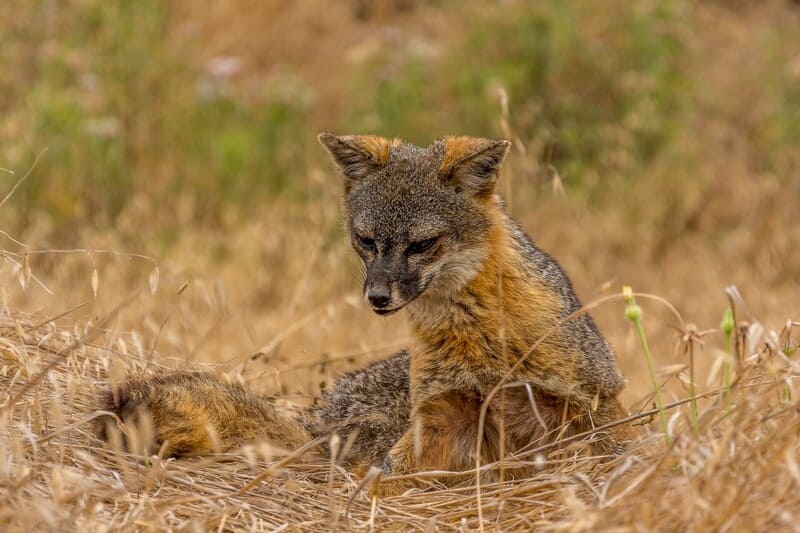
- Island Fox (Urocyon littoralis): This small fox, about the size of a cat, has six distinct subspecies (one on each island). The fox is the islands’ top terrestrial predator and has rebounded from near extinction in the 1990s.
- Island Scrub Jay (Aphelocoma insularis): This striking blue bird has a distinctly brighter color than its mainland counterparts and is found only on Santa Cruz Island.
- Island Deer Mouse (Peromyscus maniculatus): Each island has a subspecies of this tiny endemic rodent.
- Island Spotted Skunk (Spilogale gracilis amphiala): This rare skunk is found only on Santa Cruz and Santa Rosa Islands.
- Torrey Pine (Pinus torreyana var. insularis): The rarest pine in the U.S. is only found on Santa Rosa Island and in a small region near San Diego.
- Santa Cruz Island Ironwood (Lyonothamnus floribundus ssp. aspleniifolius): This beautiful, fern-like evergreen tree is mostly found on Santa Cruz Island.
Marine sanctuary
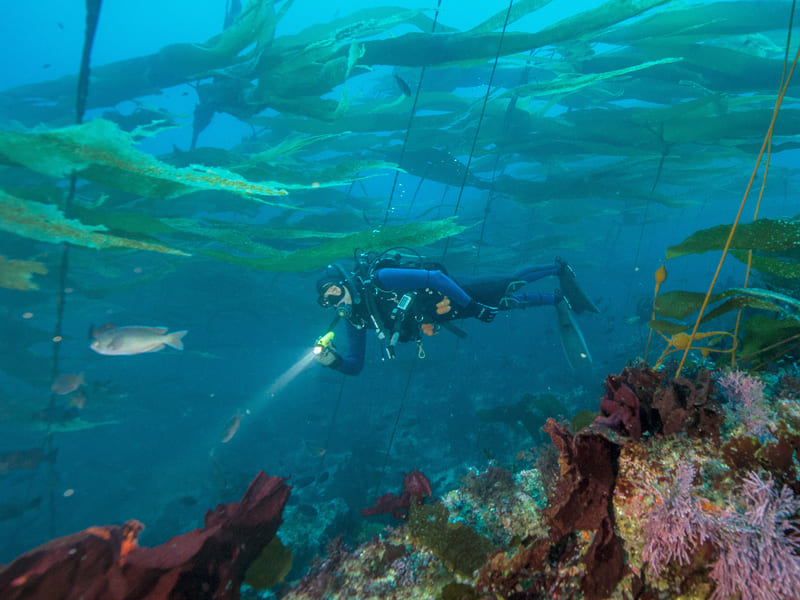
Channel Islands National Marine Sanctuary protects 1,470 square miles of ocean waters around the Channel Islands. It contains over 33 species of marine mammals, over 60 species of seabirds, and thousands more fish, invertebrates, and marine plant species. You can explore the sanctuary by SCUBA diving, snorkeling, kayaking, boating, and some restricted fishing.
Look out for notable residents, including blue whales, humpback whales, seals, sea lions, and even endangered white abalone and leatherback sea turtles.
Visiting the Channel Islands
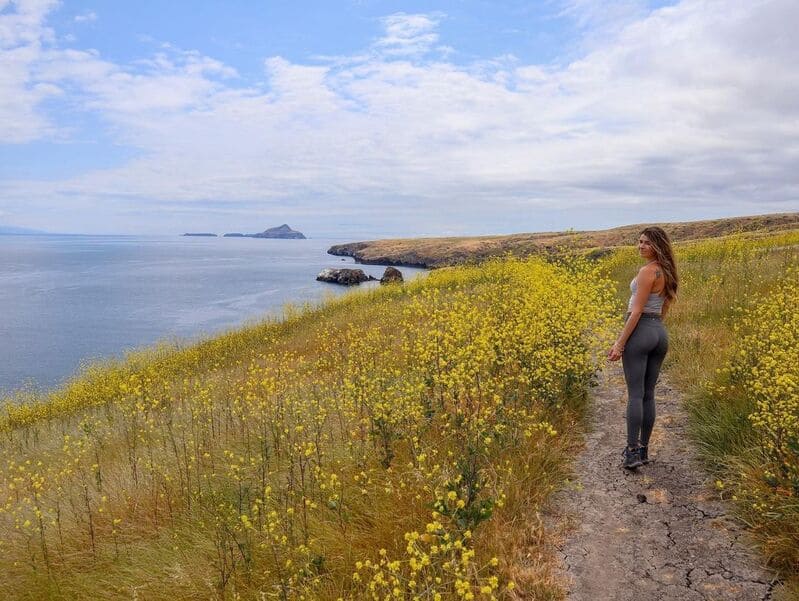
In 2024, the Channel Islands received 262,581 visitors, making it the least-visited national park in California behind other underrated spots like the Pinnacles and Lassen. Most visitors take the Island Packers Cruises ferry from Ventura or Oxnard. The closest islands are Santa Cruz and Anacapa, whose shorter ferry rides take about 1-1.5 hours, and it’s recommended to reserve your ferry spot in advance.
There are no stores, restaurants, hotels, or other resources on the islands. Visitors must bring all their own gear, food, water, sunscreen, and first aid.
Each island has a designated campground with pit toilets, food lockers, and picnic tables, and fires are prohibited, but camp stoves are allowed. The main campgrounds at Santa Rosa and Santa Cruz islands do have water available.
Finally, there is no cell reception in the Channel Islands. Make sure you plan your trip in advance, and download resources including maps and the ferry schedule.
🌐 Learn more: National Park Service