
As the nights get longer, one of the most recognizable constellations in the Northern Hemisphere is making its seasonal return. Orion, also known as the Hunter, is becoming increasingly visible in the Los Angeles night sky throughout November. This constellation offers an easy opportunity for stargazers to spot a familiar celestial pattern.
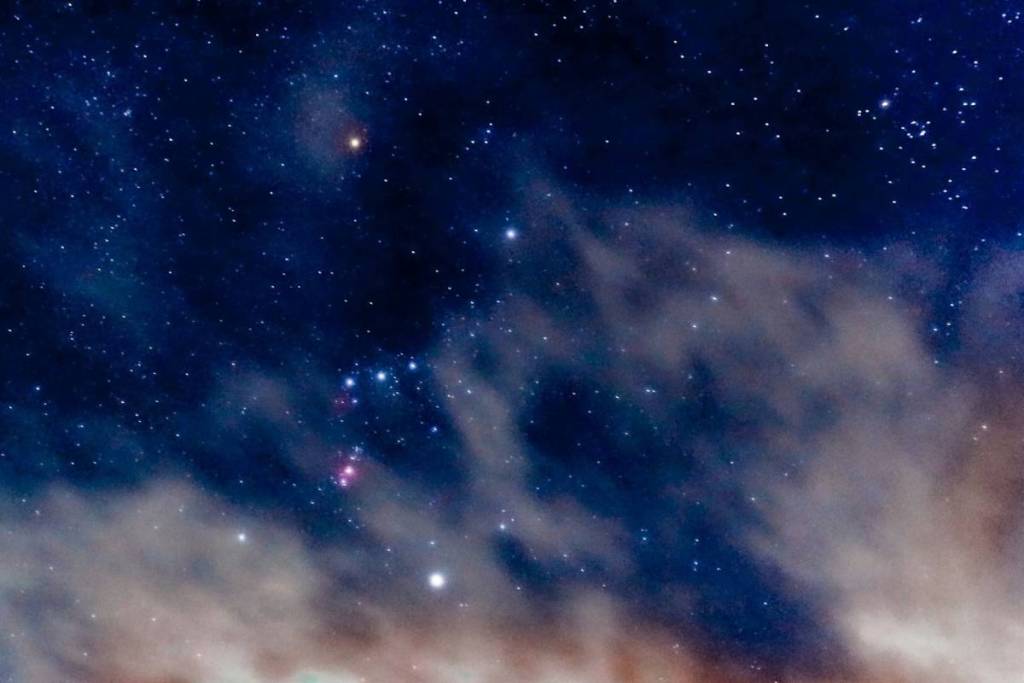
The constellation is particularly recognizable thanks to the three bright stars that form Orion’s Belt.
When can you see Orion in Los Angeles?
Orion is visible throughout November, although it will become easier to spot earlier in the evening as the month progresses.
In early November, the constellation rises in the eastern sky at around 8:40 p.m. By the end of the month, it will appear above the horizon closer to 7:25 p.m., giving skywatchers more time to catch it before midnight.
For the best view, head outside later in the evening, when Orion has climbed higher above the horizon. Look toward the eastern sky initially, then follow the constellation as it moves toward the south throughout the night.
How to find Orion in the night sky
The easiest way to recognize Orion is by looking for three bright stars arranged in a nearly straight line. These are Mintaka, Alnilam, and Alnitak, which make up the constellation’s famous Belt.
Once you’ve found them, look for two particularly bright stars nearby:
- Betelgeuse: A distinctive reddish star marking one of Orion’s shoulders. It’s a red supergiant and one of the most recognizable stars in the constellation.
- Rigel: A brilliant blue-white star marking one of the Hunter’s feet.
Together, these stars form the outline of Orion, which has been associated with a hunter in Greek mythology for centuries.
Look for the Orion Nebula too
There’s another reason to spend a little extra time looking at Orion this month. Just below the constellation’s Belt is the Orion Nebula, a vast cloud of gas and dust where new stars are forming.
Also known as Messier 42 (M42), it’s one of the closest major star-forming regions to Earth. Under sufficiently dark skies, it can appear as a faint, fuzzy patch even without specialized equipment. Binoculars or a small telescope can reveal more of its fascinating structure.
Where to go stargazing in Los Angeles
Los Angeles’ light pollution can make it difficult to see fainter stars and celestial objects, so finding a darker spot away from bright city lights can make a difference.
Try heading toward the mountains or other areas with fewer streetlights, and give your eyes around 20–30 minutes to adjust to the darkness. You won’t need a telescope to recognize Orion’s Belt, although binoculars can help you spot some of the constellation’s fainter details.