
California has been pushing hard toward a future of cleaner, faster, and smarter transportation. From the bullet train to Vegas to the ambitious train to New York, high-speed rails are starting to feel less like a dream and more like a real possibility.
Most recently, the California High‑Speed Rail Authority (CAHSR) released the Draft Environmental Impact Report/Environmental Impact Statement (EIR/EIS) for the Los Angeles‑to‑Anaheim segment of the statewide high‑speed rail system, a critical 30‑mile corridor connecting Union Station in Los Angeles to the Anaheim Regional Transportation Intermodal Center (ARTIC).
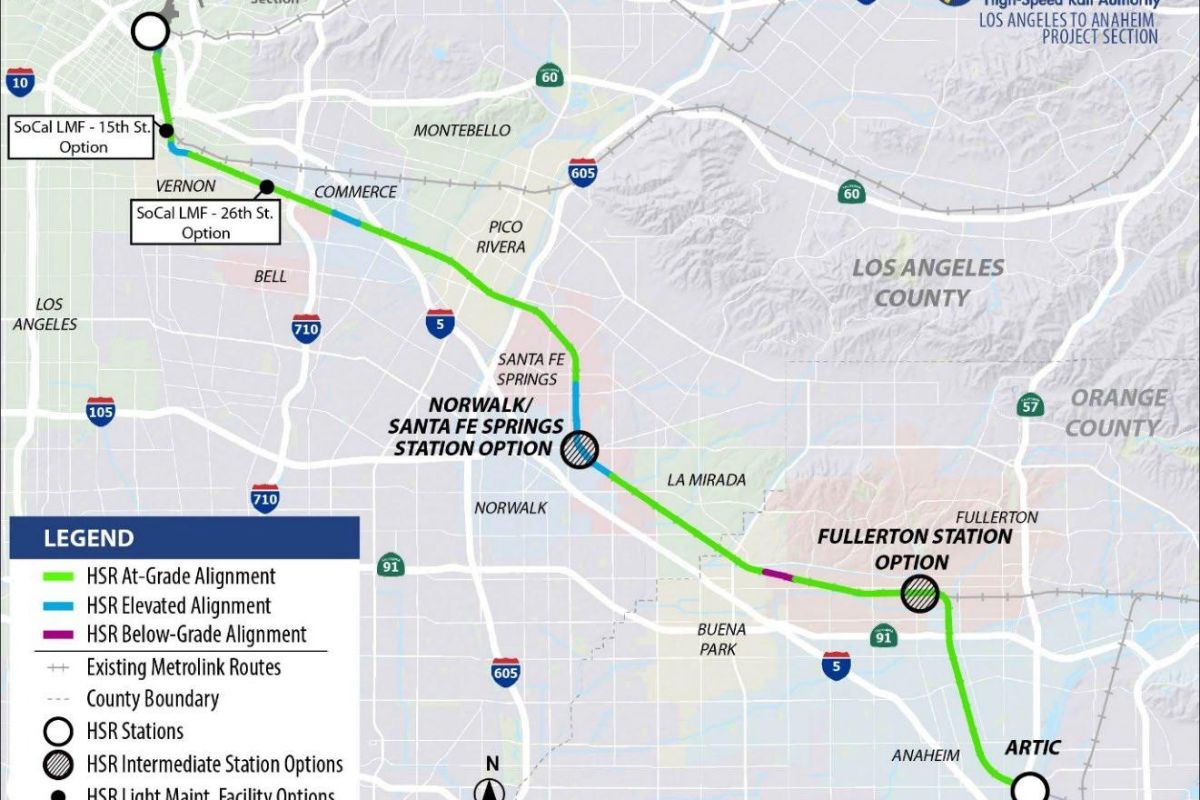
The draft document was made available to the public on December 5, 2025, and the public comment period closed on February 3, 2026, marking a major milestone in environmental review for this last un‑cleared link of Phase 1 of the project. This environmental review step is significant because it clears the way for the Final EIR/EIS, which the Authority expects to publish by winter 2026, including responses to public comments received. Once finalized, this will complete the environmental clearance required under both the California and National Environmental Policy Acts for this segment.
The LA-to-Anaheim high-speed rail project
The stretch of this new rail network is expected to stretch about 30-mile, connecting Union Station to ARTIC. Trains on this segment are part of California’s high-speed rail system, designed to provide much faster travel than existing rail or car options.
Station upgrades are planned for Commerce, Buena Park, Fullerton, and Norwalk to handle high-speed trains, as intermediate stops are being evaluated. The estimated cost for this segment is projected at around $6.9 billion.