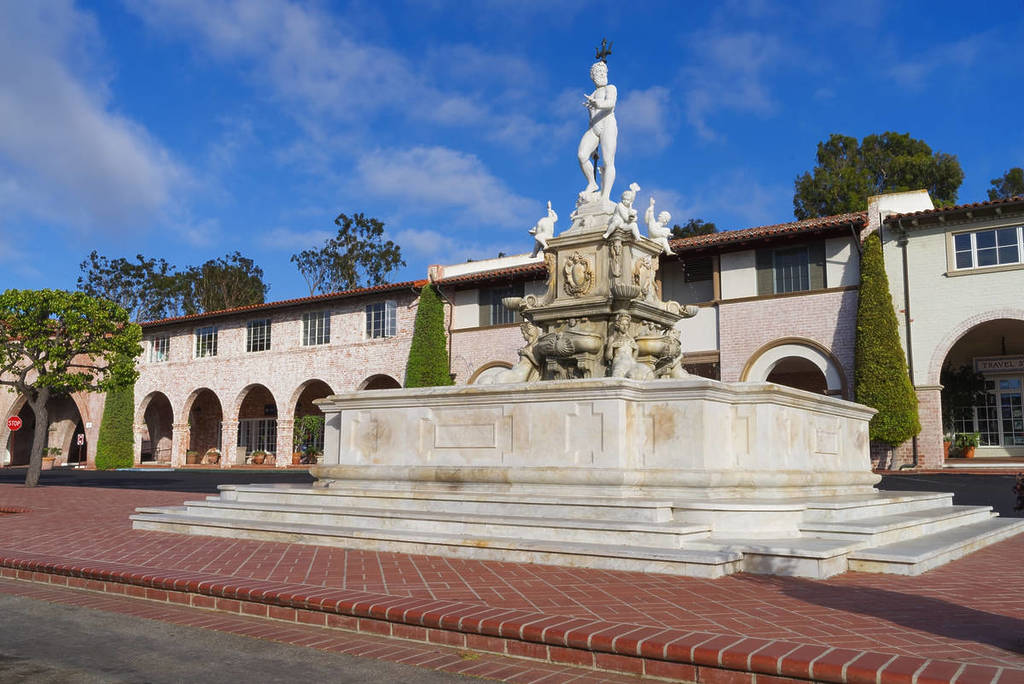
Did you know that there’s a replica of Bologna’s 16th-century La Fontana del Nettuno hidden in Palos Verdes Estates? Malaga Cove Plaza was designed to look like an old-world Mediterranean village perched in the hills above the Pacific Ocean.
From the century-old buildings with arcaded ground floors, to the brick-paved pathways, here’s a closer look at this hidden gem just a short drive from L.A.
History and design of Malaga Cove Plaza
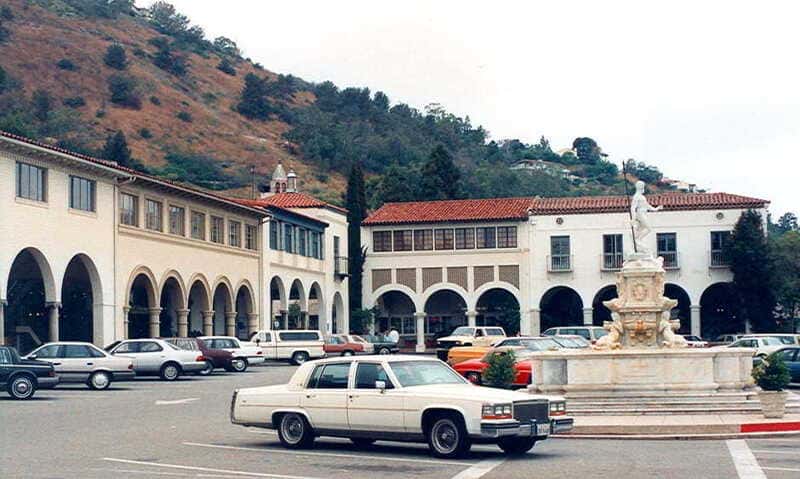
Malaga Cove Plaza was a decades-long development created between 1925 and 1964, built as the commercial heart of Palos Verdes Estates. It was created to look like an old-world village with Mediterranean revival elements, and despite taking decades to construct, it has a cohesive design that looks straight out of an ancient Italian town center.
Early buildings like the Gardner Building (1925) and the Syndicate Building (1931) set the tone with shady, arcaded ground floors, and later buildings were constructed in the same style, alongside park-like green lawns and pathways. Building elements feature stucco and whitewashed brick walls, terra cotta tile roofs, and beamed ceilings.
The heart of the plaza is no doubt the Carrara marble Neptune Fountain, which was added in 1930 and re-sculpted after damage in 1969. It’s a two-thirds scale replica of the 16th-century La Fontanna del Nettuno in Bologna, Italy.
Visiting Malaga Cove Plaza
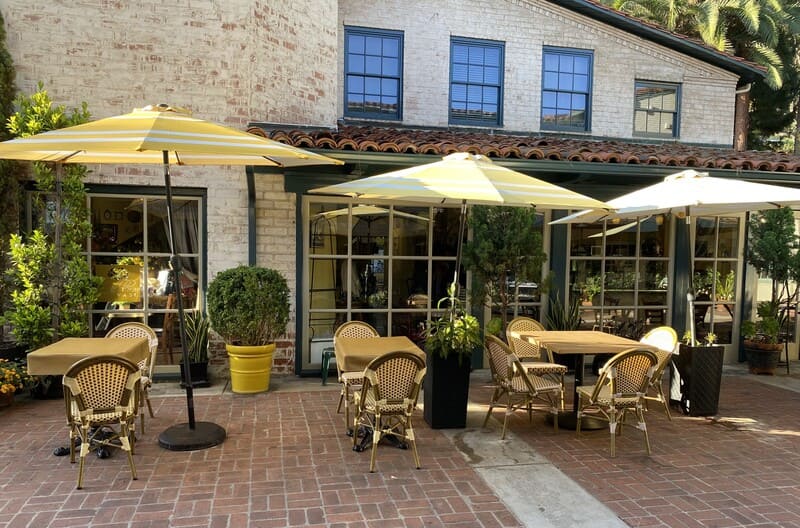
Malaga Cove Plaza itself is a relaxed and walkable area with cute cafes such as the Yellow Vase, as well as a historic hilltop library with lawns, a stone fountain, and the occasional peacock.
The surrounding area helps turn Malaga Cove into a worthwhile half-day or day trip. Just minutes away, visitors can explore bluff-top viewpoints, landscaped parks designed by the Olmsted Brothers, and trails down to Malaga Cove beach. Continue the scenic loop along Palos Verdes Drive for scenic views over the coastline.