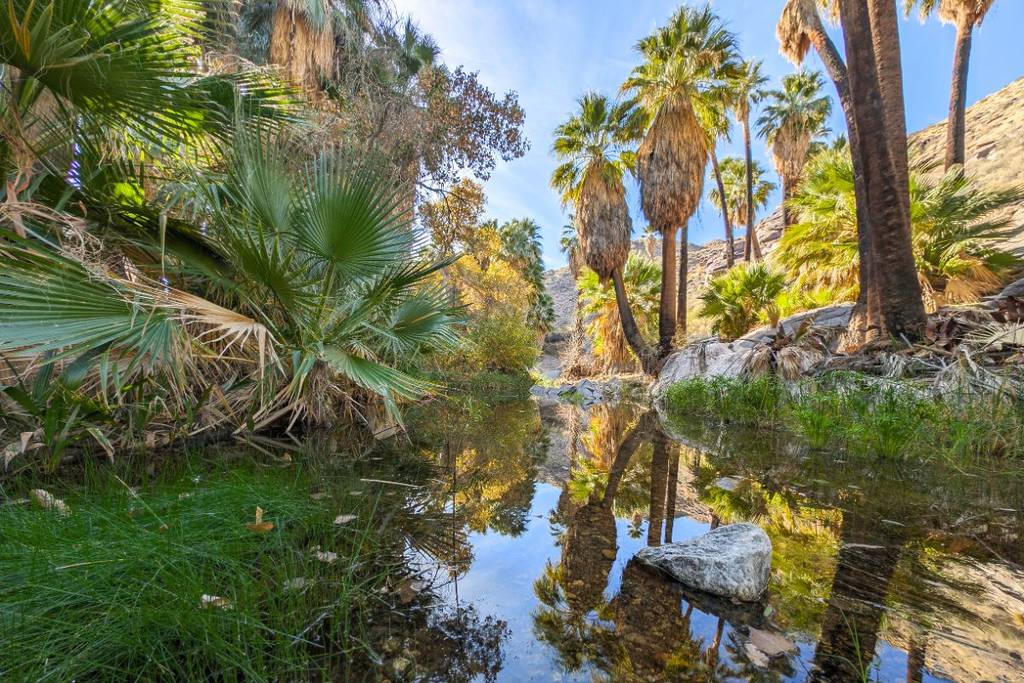
In an unassuming, hot and arid place, tucked away not far from the city, towering palms rise in the middle of a magical oasis that surprises visitors with its unexpected beauty.
Just over a two-hour drive – and 10 minutes from Palm Springs Airport – this natural retreat was once home to the Native Cahuilla people (“kaw-we-ah”) is located within today’s Agua Caliente Reservation. Palm Canyon is officially the largest natural reserve on the planet, with more than 3,000 California fan palms or Washingtonia filifera, reaching 49-66 feet tall and 10-20 feet wide, as Visit Palm Springs explains.
Palm Canyon and Native American culture
The Palm Canyons are not only a place of stunning natural beauty but also hold deep cultural significance for the indigenous people of the region. According to Visit California, the Agua Caliente Band of Cahuilla have lived in the Palm Springs area for over 2,000 years, and the canyons have always played a central role in their culture and traditions.
The canyons provided the Cahuilla with water and food, materials to build homes, and served as a spiritual and cultural center. If you plan to visit, be sure to explore the history and heritage of the Cahuilla at the Palm Springs Art Museum, which features a permanent collection of the tribe’s artifacts and artwork.
Best things to do when visiting Palm Canyon
The Palm Canyons offer hiking trails for everyone, from easy, family-friendly walks to more challenging adventures. The Andreas Canyon Trail is a popular choice, with a 1.5-mile round trip that winds through lush palm groves and desert landscapes.
For those looking for a more active experience, the Palm Canyons also offer longer hikes, birdwatching, and even guided horseback rides through Murray Canyon. Tahquitz Canyon, with its 60-foot waterfall,is a must-see, especially in spring.
The best time to explore Palm Canyon is between late September through May, when temperatures are milder. Regardless of when you’re going, remember to always stay hydrated while hiking.