
L.A. County is officially one step closer to a more connected transit network.
On Monday, L.A. Metro officially broke ground on the East San Fernando Valley Light Rail Transit project.
This marks a massive milestone for the area. Once complete, it will be the first local-stop commuter service to roll down Van Nuys Boulevard in over 70 years.
The project is a major piece of the region’s broader plan to improve mobility. It will drastically expand transit access to jobs, schools, health care, and local businesses across the Valley.
A new era for San Fernando Valley transit
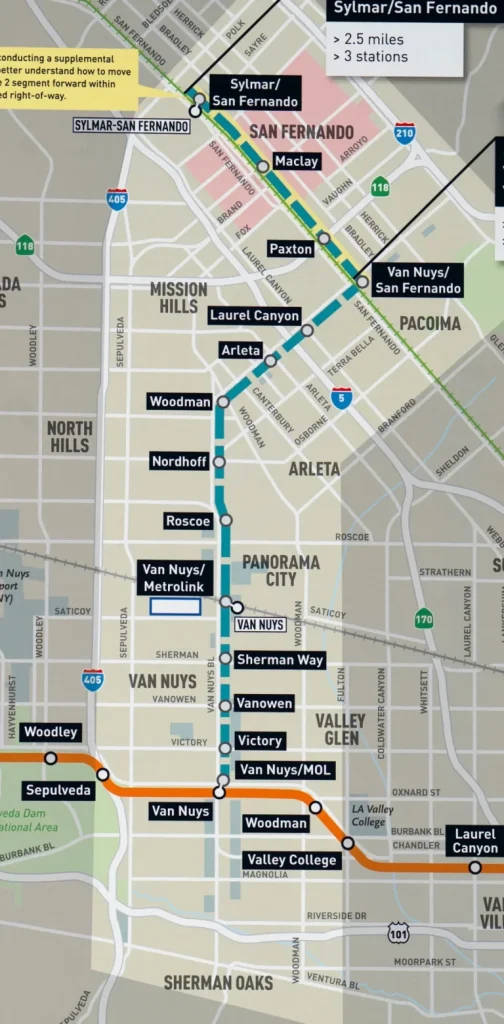
The first phase of the project will run 6.7 miles along Van Nuys Boulevard. It will stretch from the Metro G Line’s Van Nuys Station directly to San Fernando Road in Pacoima.
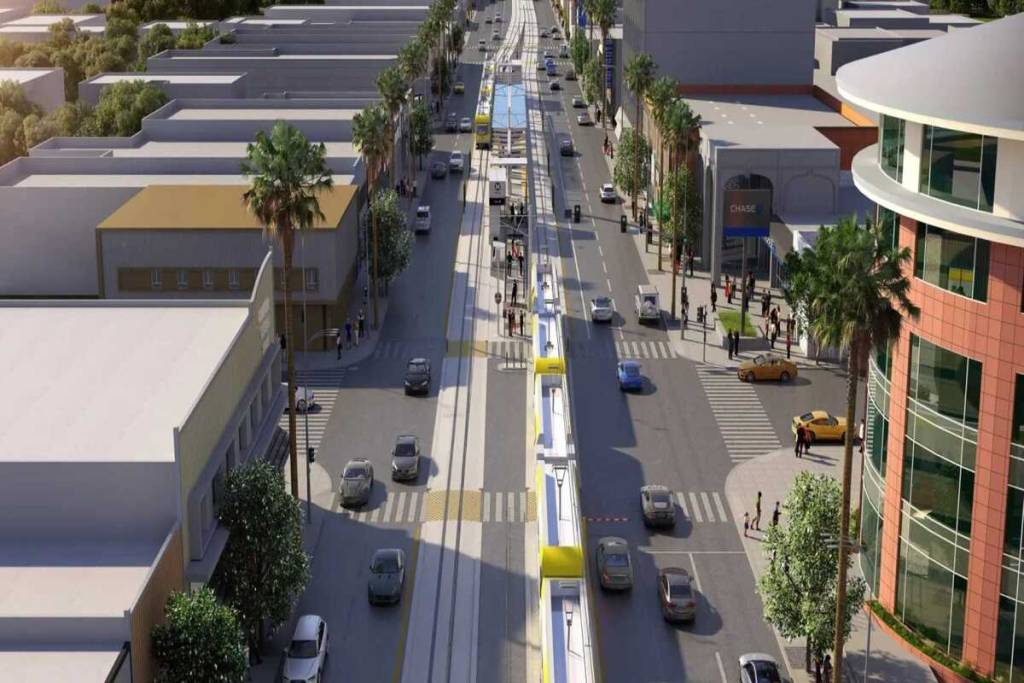
The line will operate at street level in the center of the boulevard. To keep things moving quickly, the tracks will be completely separated from regular vehicle lanes.
Plans call for 11 new center-platform stations. These stops will serve densely populated communities like Van Nuys, Panorama City, Arleta, and Pacoima.
This is a total game-changer for local residents. According to Metro, roughly 19% of households in the project corridor are fully transit-dependent.
This means they navigate the city without a personal vehicle, compared to just 8% in L.A. County as a whole.
Connecting L.A. with 11 new stations
The project will make commuting through the Valley considerably more frequent and predictable. During peak hours, Metro estimates trains will arrive every 7 to 10 minutes.
The new stations will feature modern shade structures, safer pedestrian crossings, and ADA-compliant sidewalks. They will be located approximately three-quarters of a mile apart. The planned stops include:
- Van Nuys Metro G Line
- Victory
- Vanowen
- Sherman Way
- Van Nuys Metrolink
- Roscoe
- Nordhoff
- Woodman
- Arleta
- Laurel Canyon
- San Fernando
The new line will also directly connect with existing regional transit networks, including Metrolink, Amtrak, and the Metro G (Orange) Line.
What’s next for the massive project?
The project includes 33 new electric light-rail vehicles and a 21-acre maintenance facility. Construction costs are estimated at nearly $4 billion.
Funding comes from a mix of federal, state, and local sources, including the voter-approved Measure M sales tax.
Beyond transit, the project will serve as a major economic boost. Construction and operations are projected to create over 18,000 direct and indirect jobs.
Metro is utilizing a dedicated policy to ensure good-paying construction jobs go directly to local residents.
Metro is also offering financial aid to local mom-and-pop shops through its Business Interruption Fund to help mitigate construction impacts along the corridor.
The new light rail line is slated to officially open in October 2031. Metro is also studying a potential 2.5-mile northern extension to the Sylmar/San Fernando Metrolink Station in the future.