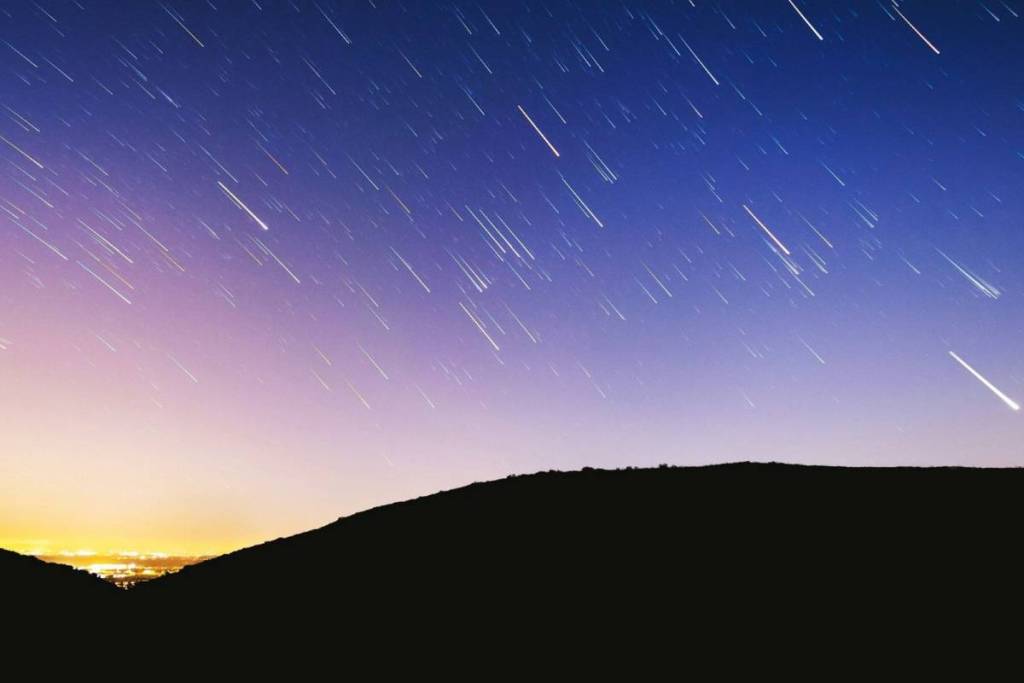

California’s night skies could get a little more exciting this Halloween weekend. The annual Taurid meteor shower is active throughout the fall, bringing the chance to spot bright shooting stars across the sky.
The shower is known for its occasional fireballs, which are meteors that appear exceptionally bright. While the Taurids don’t produce as many shooting stars as some other meteor showers, their brilliant flashes can make them worth watching.
🌠Why are they called Halloween fireballs?
The Taurid meteor shower is actually made up of two showers: the Southern Taurids and the Northern Taurids. Both are linked to debris from the Taurid complex, which includes material from Comet 2P/Encke.
The showers get their Halloween nickname because they’re active in late October and early November. They’re also known for producing slow-moving, bright meteors that can briefly light up the night sky.
🌠When can you see the Taurid meteor shower?
The Taurids will be active over Halloween weekend, although their main peaks arrive in November. The Southern Taurids are expected to peak around November 4–5, followed by the Northern Taurids around November 11–12.
You may still spot a meteor on Halloween night, but don’t expect a constant stream of shooting stars. The Taurids typically produce only a few meteors per hour under ideal conditions.
For the best chance of seeing one, head outside around midnight and find a spot with a clear view of the sky.
🌠How to watch from Los Angeles
Light pollution can make stargazing difficult in Los Angeles, so try to find a darker spot away from city lights. Check the weather beforehand and give your eyes about 20–30 minutes to adjust to the darkness.
You won’t need a telescope or binoculars to watch the shower. Just look up and scan as much of the sky as possible.
Bring a blanket or comfortable chair, dress for the cooler nighttime temperatures, and be patient. The Taurids are famous for their occasional bright fireballs, so even one sighting can make the night worthwhile.
If you miss them on Halloween, you can still look for Taurid meteors throughout November.