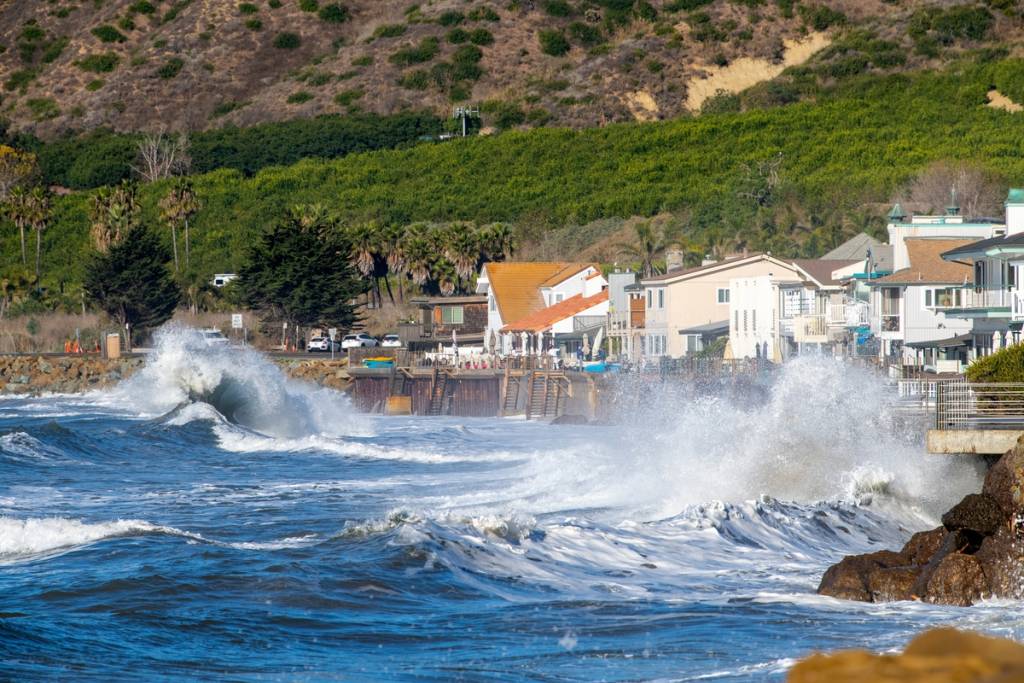

Southern California’s coastline is bracing for severe flooding this week as historic tides push seawater into oceanfront communities.
Near-record and record-breaking sea levels will trigger multiple days of coastal flooding, according to a report by the Los Angeles Times.
The inundation begins Monday morning at high tide and will impact beaches from San Diego up through the Central Coast.
If you live along low-lying shorelines, local officials urge you to move vehicles to higher ground and secure sandbags immediately.
Where high water will hit hardest
The National Weather Service has issued a coastal flood warning for Orange County and San Diego County through Thursday afternoon.
Meanwhile, a coastal flood advisory is in place across L.A., Ventura, Santa Barbara, and San Luis Obispo counties. Forecasters warn that low-lying properties, beachfront homes, local businesses, and roads will see standing water and shoreline erosion during morning hours.
Crews in Long Beach and Newport Beach spent the weekend building emergency sand berms and distributing sandbags. Key vulnerable areas include:
- Balboa Peninsula in Newport Beach
- The Long Beach Peninsula, where southern swells bypass harbor breakwaters
- Low-lying harbors and boardwalks across coastal L.A. and Orange counties
The peak tide timeline to watch
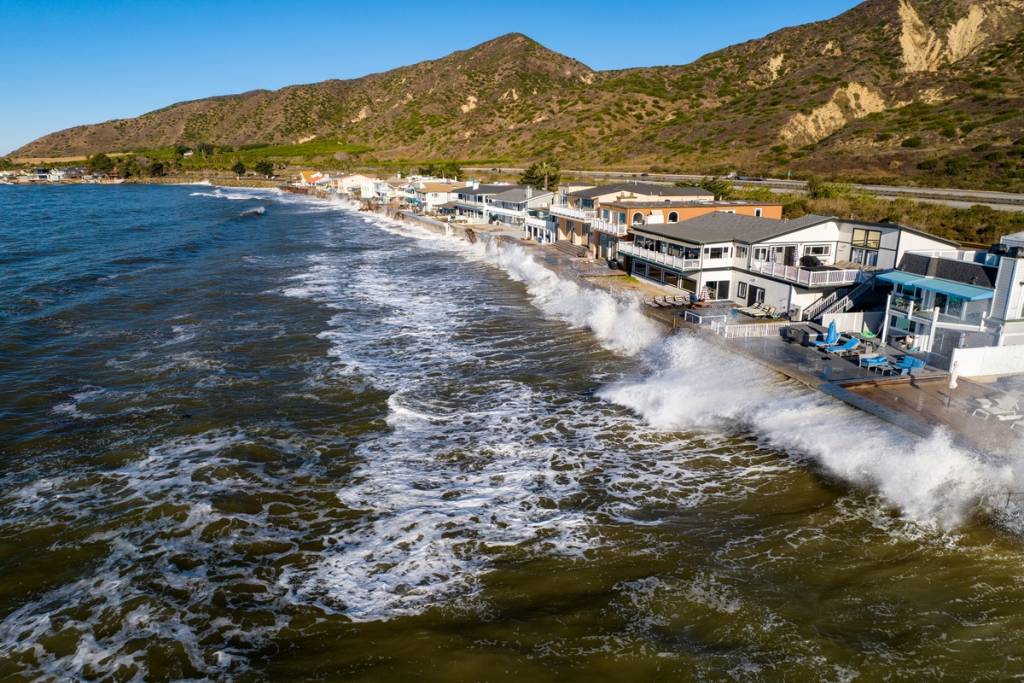
Water levels across Southern California could climb more than 8 feet above baseline. The most severe flooding is expected during morning high tides on Monday, Tuesday, and Wednesday:
- Newport Beach: Water levels hit 8 feet on Sunday. Coastal peaks are projected to reach 8.3 feet on Monday at 9:15 a.m., 8.5 feet on Tuesday at 9:50 a.m., and 8.5 feet on Wednesday at 10:28 a.m.
- Los Angeles Harbor: Projections show tides reaching 8.0 feet on Monday and Wednesday, peaking at 8.1 feet on Tuesday. That would break the all-time local record of 7.92 feet set in January 2005.
- La Jolla: Waters reached 7.66 feet over the weekend, approaching the all-time record of 7.81 feet set in November 2015.
Why tides are so extreme right now
A rare convergence of astronomical and oceanic conditions is behind the massive surge.
Scientists point to a 20-year astronomical alignment. Both the 18.6-year lunar node tidal cycle and the 4.4-year lunar perigee tidal cycle are peaking at the same time.
These subtle shifts in the moon’s orbit pull ocean waters significantly higher.
At the same time, marine heat waves and an active El Niño are keeping ocean waters unusually warm. Water temperatures off Scripps Pier recently measured 73 degrees, well above the seasonal norm of 66 degrees.
Warm water expands, raising coastal sea levels by an extra 1.25 to 1.8 feet.
More king tide events are slated to return around Thanksgiving, Christmas, and Martin Luther King Jr. Day. If winter storms collide with those cycles, coastal flooding could be even more intense.
Need sandbags? Check with your local city hall or public works yard in L.A. and Orange County for free sandbag distribution sites before morning high tides arrive.