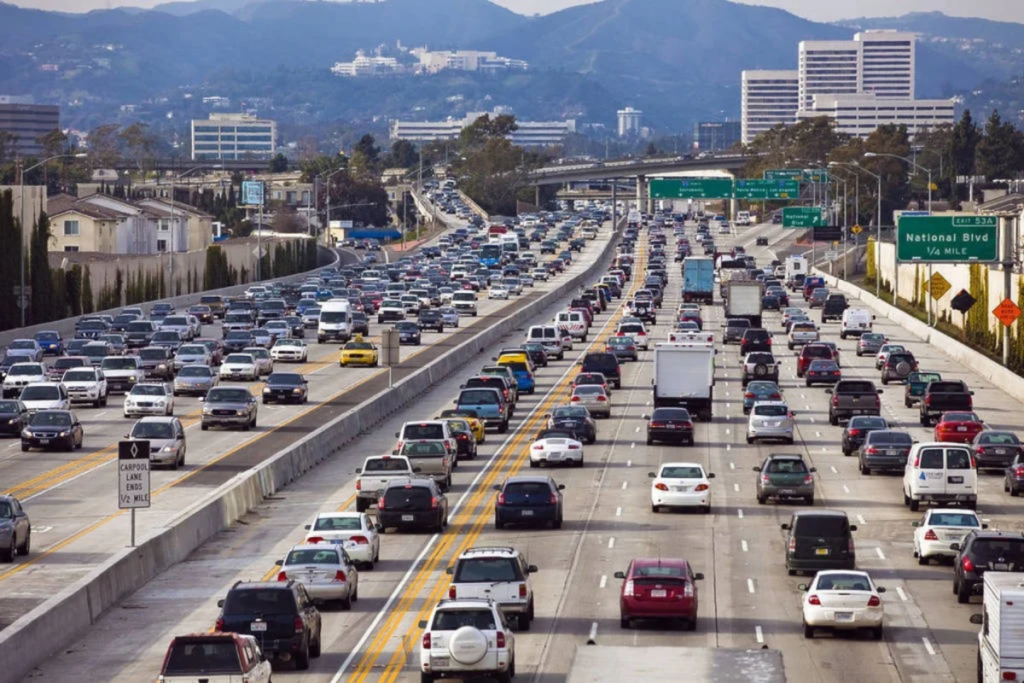

Getting through the Sepulveda Pass could eventually come with a price tag. Metro is exploring changes to a 10-mile stretch of the 405 Freeway between the 10 and 101, and some of the proposals could give drivers the option to pay extra to avoid the worst of the traffic, as reported by Patch.
The project focuses on one of SoCal’s busiest freeway corridors, where transportation officials are looking at ways to make commutes more predictable and encourage carpooling. Among the possibilities are two ExpressLanes configurations, an expanded carpool system, and maintaining the freeway’s current layout.
What could change on the 405?

Metro has identified four alternatives, each with a different approach to the freeway’s existing lanes:
- 🚗 Keep the current setup: Five general-purpose lanes and one carpool lane would remain in each direction, with no major configuration changes.
- 💳 Introduce paid ExpressLanes: Existing carpool lanes would become toll lanes, giving solo drivers the option to pay for access while leaving five regular lanes free.
- 🛣️ Build a second ExpressLane: The current carpool lanes would become toll lanes, with an additional ExpressLane built alongside them in each direction.
- 🚘 Expand carpool access: Instead of charging drivers, Metro would add a second carpool lane in each direction, keeping both lanes free for eligible vehicles.
The two expansion plans would require some adjustments to lane and shoulder widths, along with acquiring nonresidential property. Metro says the second ExpressLane proposal would not require any residential property.
How would the tolls work?
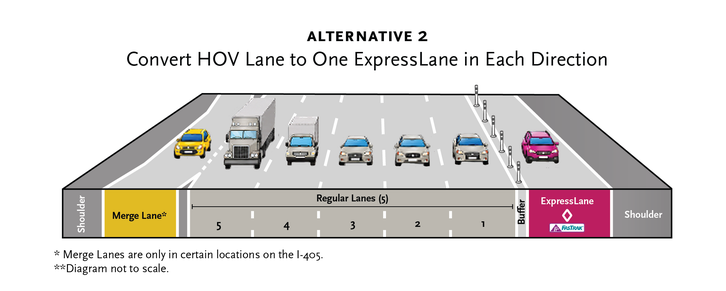
The proposed ExpressLanes would follow a pricing system already familiar to drivers on the 10 and 110 freeways. Solo motorists could pay to access the lanes, while qualifying carpools, vanpools, and transit vehicles would be able to use them for free.
Rates would change according to traffic demand, with higher prices during busier periods and lower ones when congestion eases. Drivers would also need a FasTrak Flex transponder.
For reference, existing ExpressLanes on the 10 and 110 currently charge between 10 cents and $3.30 per mile.
When will Metro make a decision?

The agency expects to publish its draft environmental impact report and environmental impact statement in late 2026. The review will examine how each alternative could affect traffic, surrounding communities, and the environment.
Public hearings and a comment period will give residents a chance to weigh in before Metro moves forward. Until then, all four alternatives remain under consideration, and there’s no confirmed timeline for construction.
For more, follow us on Facebook, Instagram, TikTok, and now WhatsApp!