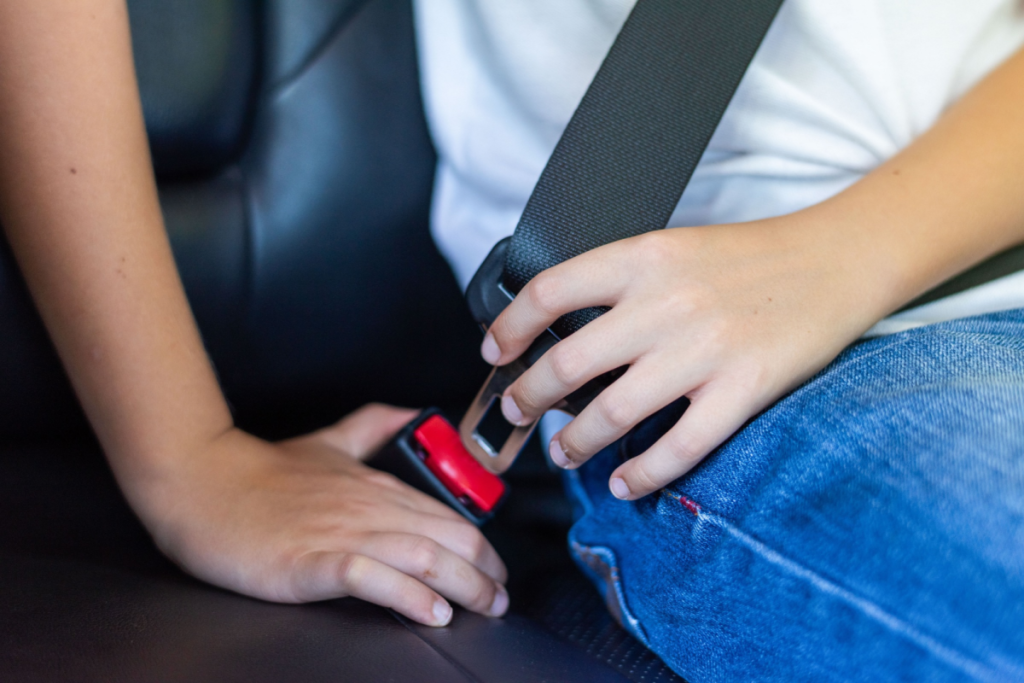

Starting January 1, 2027, California drivers transporting children between 8 and 15 years old will need to make sure they pass a five-step seat-belt test before riding with a regular seat belt alone. The change comes under Assembly Bill 435, a state law designed to ensure older children are properly secured in vehicles, even after they outgrow their car seats.
The law does not require every child under 16 to use a booster seat. Instead, children who cannot meet all five requirements must use an appropriate child passenger restraint system, such as a booster seat. Drivers who fail to comply could face fines of up to $490.
What is California’s new 5-step seat-belt test?
Under AB 435, children must meet all five criteria to legally ride using a standard seat belt without a child restraint system:
- 🪑 Sit all the way back: The child’s back must rest fully against the vehicle seat.
- 🦵 Bend their knees: Their knees should bend comfortably over the edge of the seat.
- 💺 Wear the shoulder belt correctly: The belt must cross the center of their chest and shoulder, rather than their neck.
- 👖 Position the lap belt properly: The lower belt must sit as low as possible, touching their thighs instead of their stomach.
- ✅ Stay in position: The child must be able to maintain this position throughout the entire trip.
If your child cannot meet even one of these requirements, they are not considered properly restrained by a seat belt alone under the new law. A booster seat can help position the belt correctly.
How can parents prepare for the new law?
Before your next drive, have your child sit all the way back in the vehicle’s seat and check each step. Make sure the shoulder belt stays away from their neck, and the lap belt rests low across their thighs.
If the belt doesn’t fit correctly, continue using an appropriate booster seat. You can also consult the California Highway Patrol’s official child safety seat guidance for current requirements and safety recommendations.