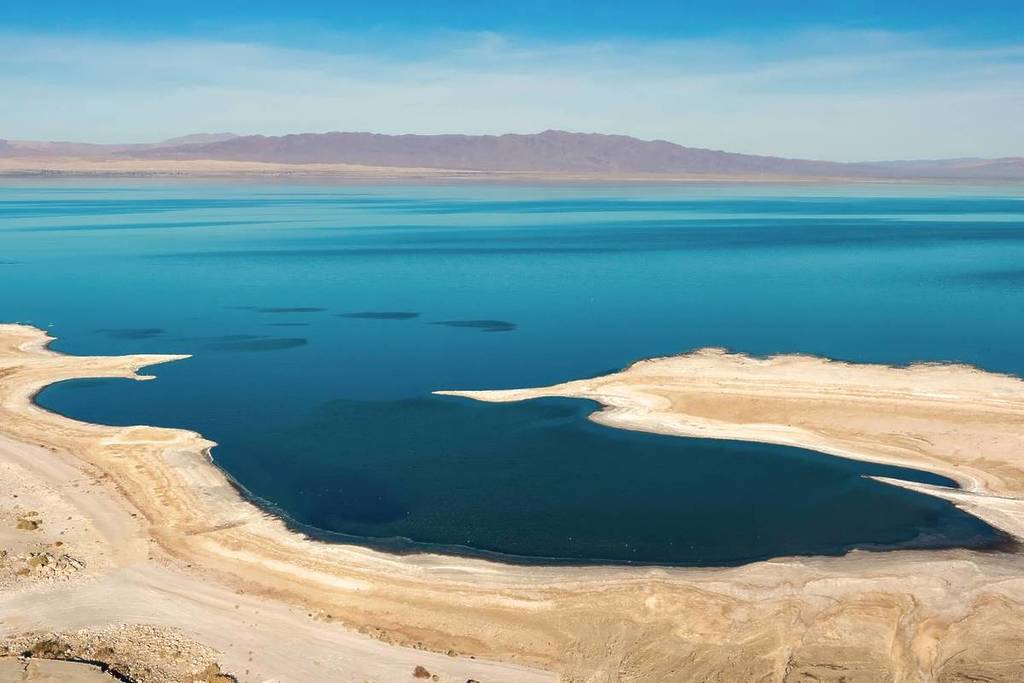
Abandoned, rusting structures, a peculiar sulfur smell, and a vast body of water whose surface makes it the largest lake in California, even bigger than the iconic and stunning Lake Tahoe. But don’t let its size fool you, taking a dip here might just be your last…
A lake made by mistake
Yes, the Salton Sea is here by mere accident. In 1905, heavy rains and snowmelt caused the Colorado River to breach an irrigation canal built by the California Development Company. Without head gates and facing heavy snowfall, the river flooded the dry Salton Sink, and water cascaded into the Alamo and New Rivers, completely filling the basin over nearly two years.
By February 1907, after significant intervention (Southern Pacific Railroad dumping rock and gravel to block the breach), the river was finally brought under control. The remaining water created the Salton Sea, which covers roughly 400 square miles and rests about 195 feet below sea level.
The rise of a desert playground
By the 1950s and early ’60s, the Salton Sea blossomed into a glamorous desert resort. Hotels, marinas, yacht clubs, and golf courses sprang up along its shores, built for entertainment, waterskiing, boating, and big-game fishing.
Celebrities such as Frank Sinatra, the Beach Boys, and Bing Crosby flocked to Bombay Beach and Salton City for sun-soaked escapes, making it one of California’s top vacation destinations with over half a million annual visitors
But the glory days of the Salton Sea were short-lived, as during the 1960s and ’70s, the lake’s popularity started waning. Heavy tropical storms in 1976–77 flooded beaches and destroyed marinas, while rising salinity from evaporation and agricultural runoff began making the water increasingly unlivable. Around the same time, nutrient-rich runoff triggered massive algal blooms, which depleted oxygen and resulted in catastrophic fish kills.
Health hazards and Mad Max vibes
Unfortunately, today, the drying Salton Sea is infamous for its eerie, post-apocalyptic landscapes. As water levels drop due to high evaporation rates in the hot desert climate, large stretches of the lake bed are exposed.
This lake has no natural outlet, so salts and minerals brought in by agricultural runoff (including pesticides, fertilizers, and heavy metals) accumulate over time, making the water saltier than the Pacific Ocean.
These dusty plains, coated with decades’ worth of toxic residues, are whipped up by the wind, creating harmful dust clouds. Meanwhile, decaying organic matter combined with low oxygen levels produces hydrogen sulfide gas: the source of the area’s notorious rotten-egg smell.

The visual reality of the Salton Sea today is haunting, thanks to its abandoned structures and skeletal fish fragments scattered across cracked earth. These elements contribute to the dystopian and desolate atmosphere that has made it a perfect filming location for movies like Into the Wild, Fear and Loathing in Las Vegas, and shows like Better Call Saul.
While it is technically possible to swim in the Salton Sea, it is not recommended due to health risks from the highly saline water, toxic chemicals, and harmful bacteria present.