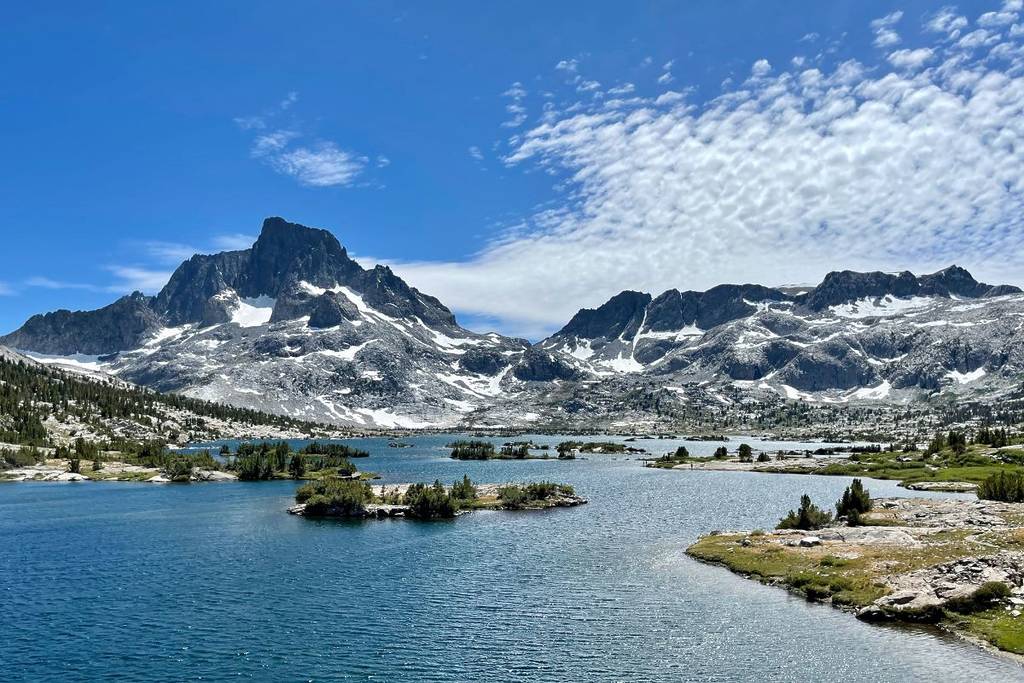

California is packed with some of the world’s most breathtaking landscapes, from sprawling deserts and sun-soaked beaches to towering redwood forests. Its lakes are just as iconic, with Lake Tahoe often topping visitors’ lists. The downside is that this postcard-perfect destination gets crowded fast, drawing roughly 2 million visitors each year, especially during the summer months.
For those seeking a quieter, more refreshing mountain escape, Thousand Island Lake stands out as an ideal choice. Unlike Tahoe’s developed shoreline, the travel website Matador Network describes its shoreline as “basically untouched”.
Discovering the mesmerizing Thousand Island Lake
Thousand Island Lake sits inside the Ansel Adams Wilderness, around mile 42 of the John Muir Trail (roughly at 9,833 feet above sea level) and earns its name from the scattered rocky islets dotting its surface.
The water is both clear and brutally cold, ranging between 35°F and 55°F. Swimming is possible, though it quickly becomes more of a shock therapy experience than a leisurely dip! Some hikers also paddle between the small islands when conditions allow.
Surrounding the lake are dramatic views of the Ritter Range, including reflections of Banner Peak that often appear perfectly mirrored on calm mornings.
How to visit Thousand Island Lake
While this spot is definitely worth visiting, it’s important to note that there’s no casual drive-up access here, but the effort will absolutely be worth it.
As travel website Islands explains, reaching the lake means earning it on foot, with the most common route being the Rush Creek Trail, located near Mammoth Lakes. The full out-and-back hike is about 14.6 miles round trip, with over 3,800 feet of elevation gain, typically taking around nine hours.
Because of the effort required, many hikers choose to camp overnight, but keep in mind that no campfires are allowed near the lake, and camping must be set at least 200 feet from water sources. Wilderness permits are required and can be competitive, often selling out months in advance.
The best time to visit is typically mid-summer through early fall, when trails are more stable.