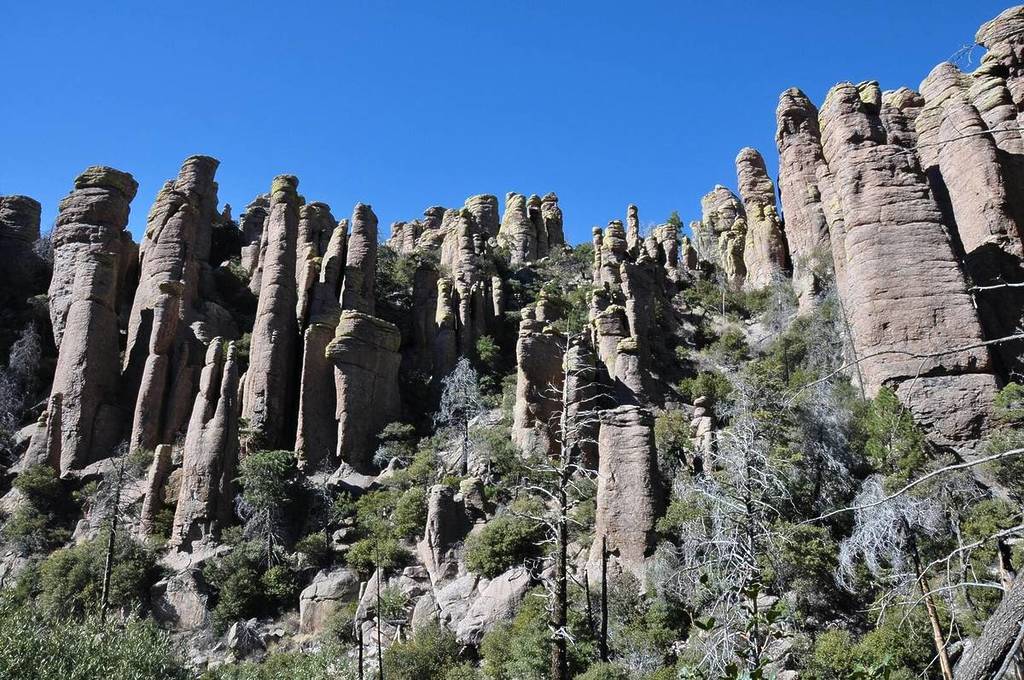
Chiricahua National Monument is a fascinating landscape in southeastern Arizona known as a “sky island,” remarkable for its striking rock pinnacle formations. It comprises about 19 square miles of land near the Chiricahua Mountains, and is part of the homeland of the Chiricahua Apache people.
Although Chiricahua has been a federally protected national monument since 1924, it’s been the subject of a years-long effort in Congress to designate the area as a national park. The debate was just renewed with the introduction of a new bill — keep reading to learn more.
Geography and features
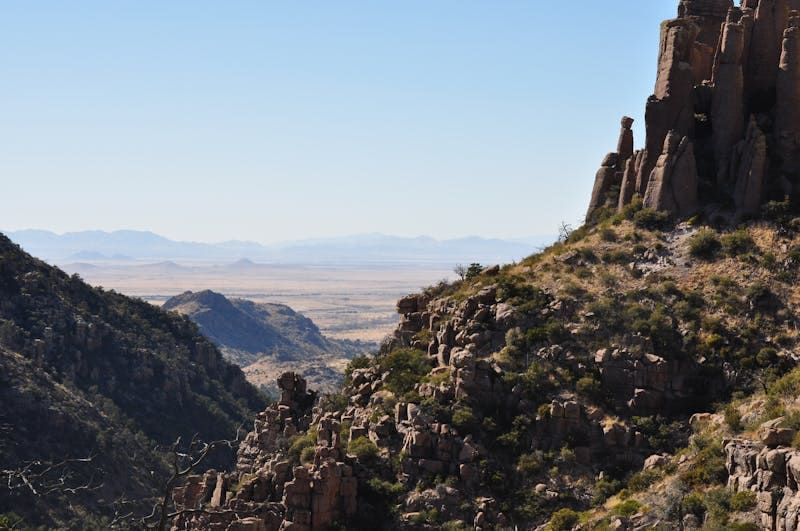
Chiricahua National Monument is known as a “sky island,” a term used to describe an area of isolated mountainous terrain that rises out of lowlands. Because it is cut off from other nearby mountains, the upper-elevation habitats function like an island with a very different climate and ecosystem.
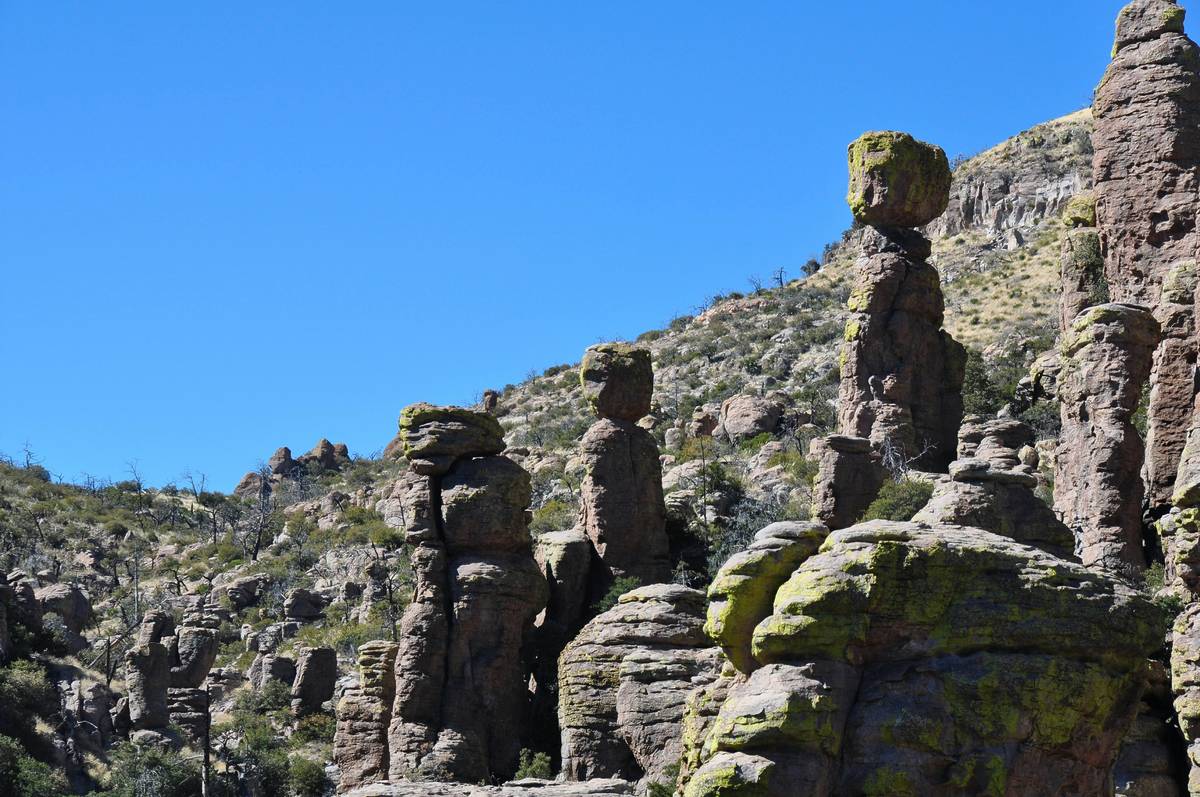
The landscape is covered with rhyolitic tuff pinnacles and hoodoos, the products of a volcanic eruption 27 million years ago. These dense rock spires create an intricate maze that traverses woodland, grassland, and canyon bottoms.
National Park status and debate
Republican Congressman Juan Ciscomani reintroduced legislation that would designate Chiricahua National Monument as a national park. The bill follows several others in recent years, put forward by Democratic Senator Mark Kelly, which had bipartisan support but failed to come to fruition.
Supporters argue that national park status would boost the area’s visibility and attract more visitors, which would in turn support local economies. But skeptics worry that the rebrand would overwhelm the fragile terrain, and tribal representatives have voiced concern over visitation near sacred sites, according to SFGATE.
Visiting Chiricahua National Monument
The monument is located in a rural part of Arizona, about 35-50 miles from small cities like Willcox and Douglas. Visitors can access it via a single paved road, Bonita Canyon Drive, which bypasses the main viewpoints and small campground.
There is no gas, food, or lodging inside the monument, and limited cell service. Visitors are recommended to do ample research into the area, stay on established trails, and come well prepared with gear, food, and water.
🌐 Learn more: Chiricahua National Monument