A car-centric culture certainly has its perks, like enjoying scenic drives, visiting a drive-in theater, or saving precious time by grabbing a burger at a drive-thru. But it also has its dark side, ranging from higher expenses (maintenance and parking fees) to the most serious: being involved in an accident.
As one of the busiest cities in terms of traffic, a small scratch, a dent, a cyclist appearing out of nowhere, or encountering a distracted driver speeding or running a red light are all common occurrences. So much so that the independent news organization Crosstown went out to study the most dangerous intersections by analyzing over 10 years of data from the Los Angeles Police Department.
L.A.’s most dangerous intersections
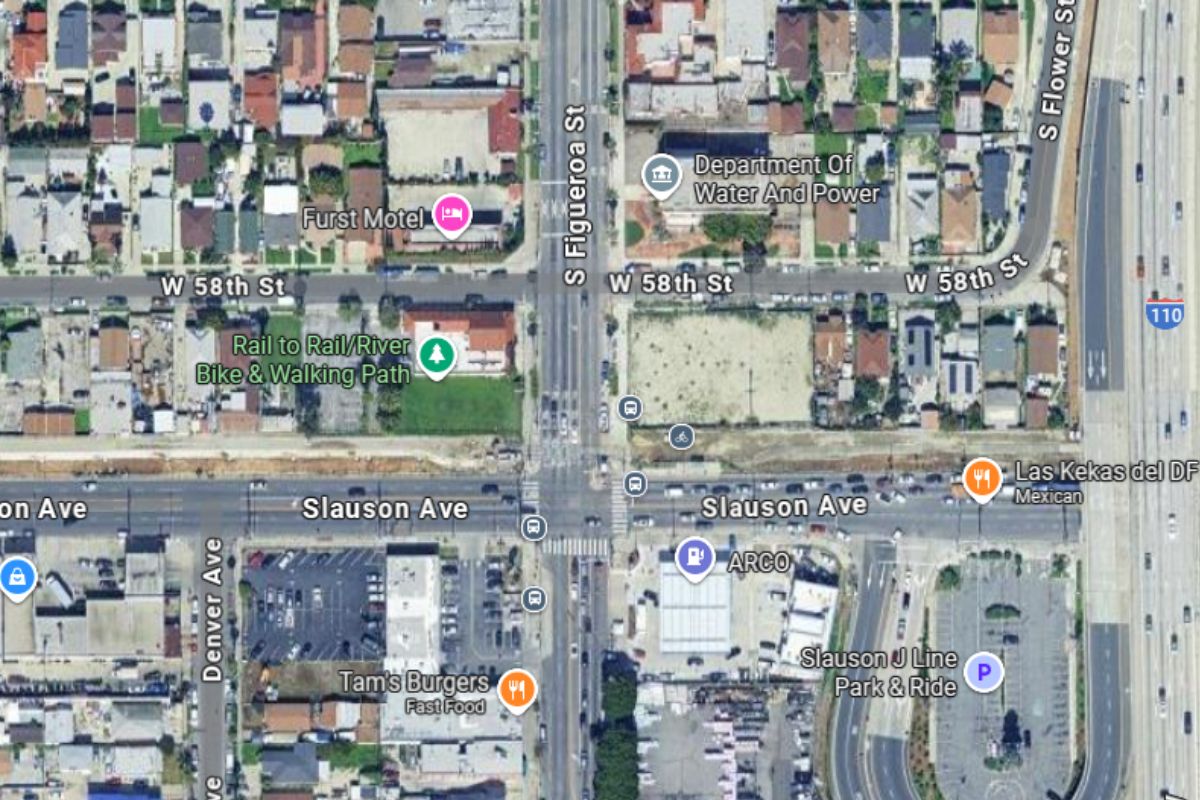
According to the study, this corner in South L.A. has seen 17 felony hit-and-run collisions and five severe injuries in just the past four years. That place is none other than the intersection of South Figueroa and Slauson Avenue.
The crosswalks aren’t safe either, as seven pedestrians have been struck there. All told, there were 66 serious collisions at this intersection, located in the Vermont-Slauson neighborhood, making it the most dangerous in the entire city.
What makes an intersection dangerous?
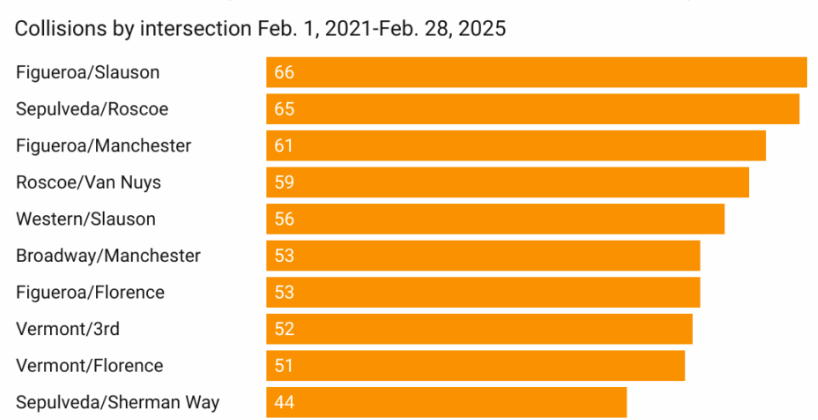
As the report states, L.A. streets became increasingly lethal in recent years, with traffic fatalities surpassing homicides for the past three years and more than 300 people killed annually in collisions since 2022. Common factors include proximity to freeway offramps, inadequate traffic signals, and poor signage, all of which increase the risk of collisions.
The intersection of Sepulveda and Roscoe in Panorama City recorded 65 serious collisions over four years, including a fatal hit-and-run involving a cyclist. Its danger is partly due to its closeness to the 405 Freeway, which brings high volumes of traffic from distant areas.
While other streets in the Valley have received safety upgrades like additional signalized intersections, Sepulveda has not, meaning drivers tend to travel faster, and risks remain high.