
Besides being the epicenter of worldwide entertainment, Los Angeles is a city that sits on top of deep prehistoric memory. Long before freeways and film studios, this basin was a shifting landscape of seas, swamps, and sediment that trapped an extraordinary record of ancient life underground.
Today, that story continues above ground at the Natural History Museum of Los Angeles County, which houses one of the most significant fossil collections on the West Coast.
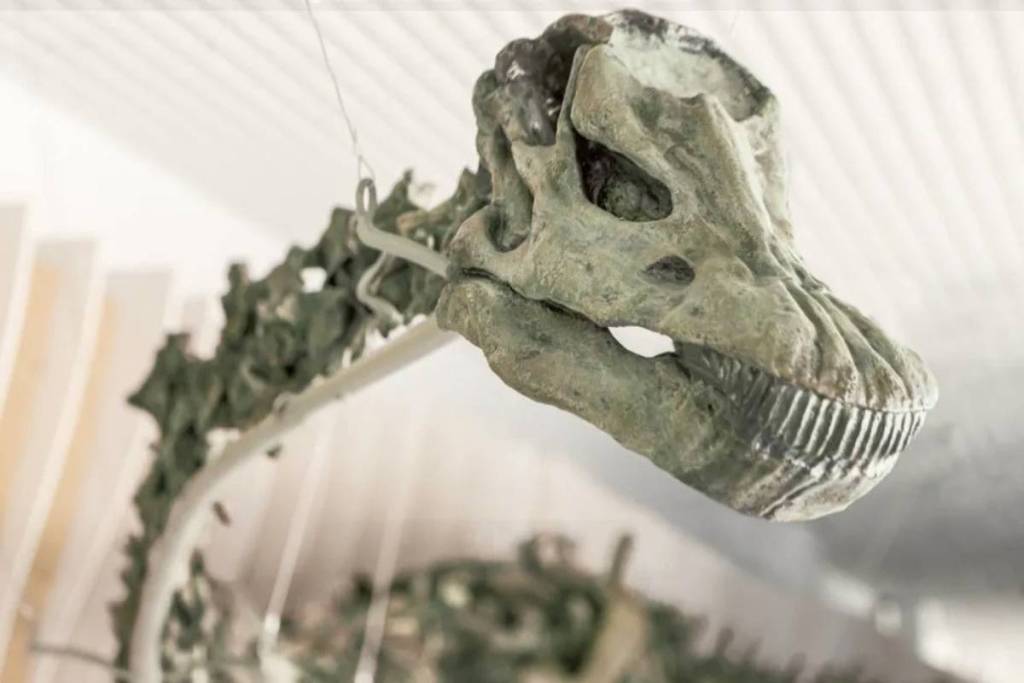
Among its standout specimens is Gnatalie, a dinosaur fossil that has drawn attention for both its completeness and its unusual green coloration.
Natural History Museum of Los Angeles County: Entry Ticket
22 October 2026 09:30 + more dates
Natural History Museum of Los Angeles County
Meet Gnatalie: the green-boned giant
Gnatalie is a nearly complete skeleton of an Apatosaurus, a long-necked sauropod that lived (roughly) 150 million years ago. It was excavated in Utah and later prepared and studied for display.
What makes it distinctive is its striking greenish hue, caused by mineralization during fossilization, where trace elements such as iron compounds replaced parts of the original bone over millions of years. This process gave the bones an almost jade-like appearance rather than the typical stone or brown fossil tones.
The specimen is exceptionally large, stretching 75 feet in length, and offers one of the most complete sauropod reconstructions in North America. Its nickname, “Gnatalie,” comes from the swarm of gnats that famously plagued the excavation site during fieldwork.
The museum behind the fossil
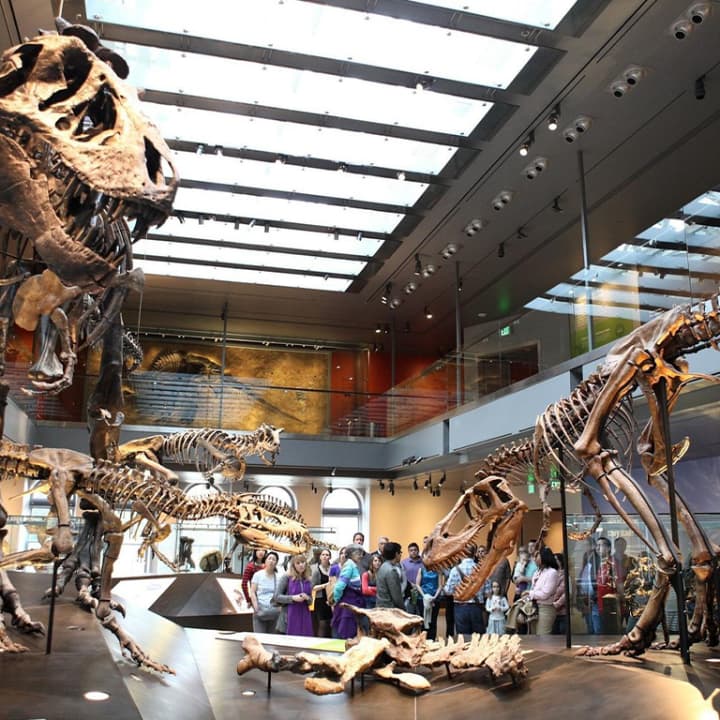
The Natural History Museum of Los Angeles County is the largest natural history museum in the western United States, with more than 35 million specimens spanning dinosaurs, gems, mammals, and regional biodiversity. Its Dinosaur Hall is a major draw, featuring mounted skeletons and immersive exhibits.
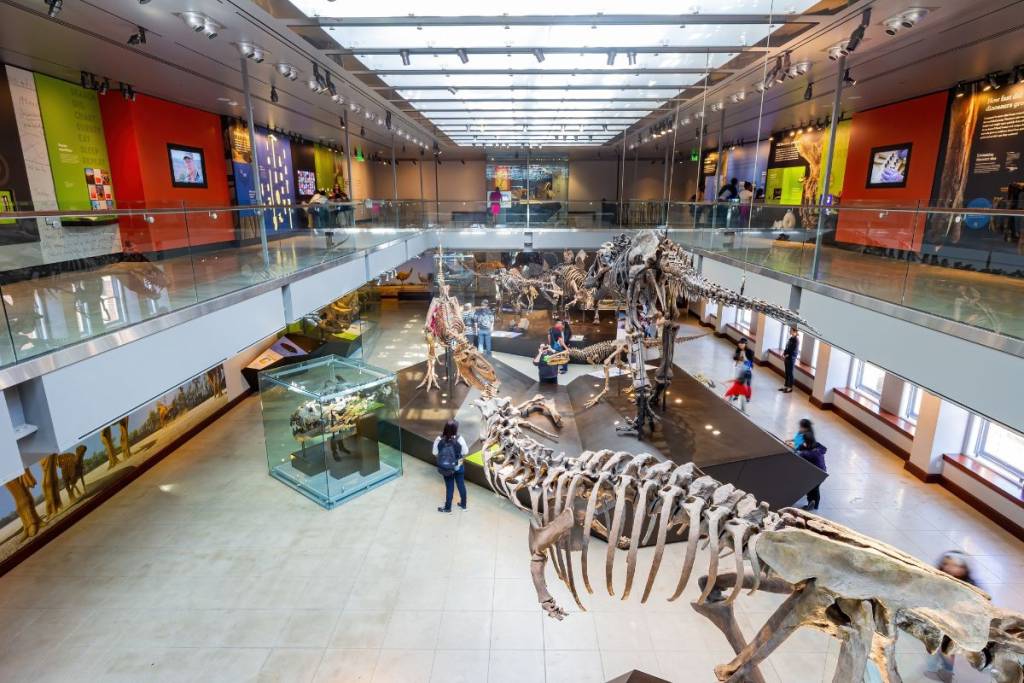
Visitors can also explore Southern California’s deep past through exhibits linked to the nearby tar pits, connecting Ice Age ecosystems with earlier prehistoric eras. The museum serves as both a research institution and a public gateway into Earth’s biological history.