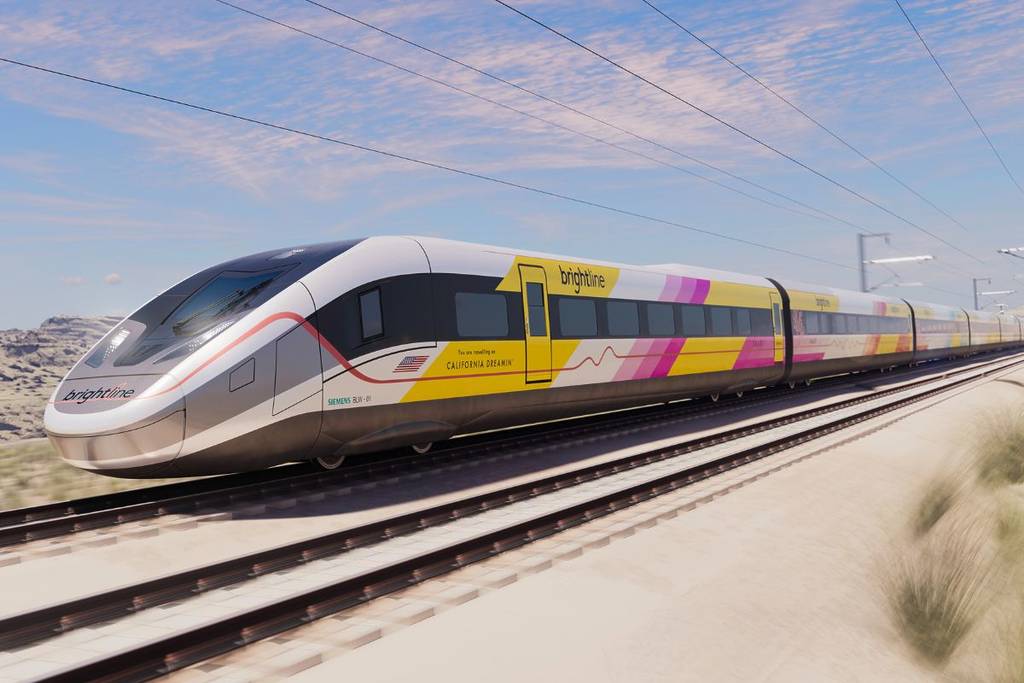
Alongside the intercontinental train that will connect New York City and L.A., this project is undoubtedly one of the most highly anticipated in the region. Similar to Japan’s Shinkansen high-speed train, it aims to link Vegas with the city via Rancho Cucamonga in less than 3 hours, nearly half the usual five-hour drive.
However, according to 13 KTNV , funding shortfalls and construction challenges have pushed back the timeline. As a result, the train won’t be ready for the Olympics as originally planned. Instead, the bullet train is now expected to be fully operational by December 2028, representing a six-month delay.
Newsweek reports that Brightline, the company behind the project, has completed nearly all (99%) of the field evaluations. Soil samples collected along the proposed route since last year are being analyzed to guide grading and determine the necessary support for the tracks, stations, and other infrastructure. This means the project is officially approaching its main construction phase.
Once completed, the L.A.–Vegas train will reach a maximum speed of 218 mph, with an average speed of 186 mph, and will carry between 434 and 450 passengers per train. Annual ridership is expected to reach around 9 million people. Brightline will officially be the fastest train in the U.S. and the first to be considered a high-speed train, as defined by the International Union of Railways, which sets a minimum operating speed of 155 mph.