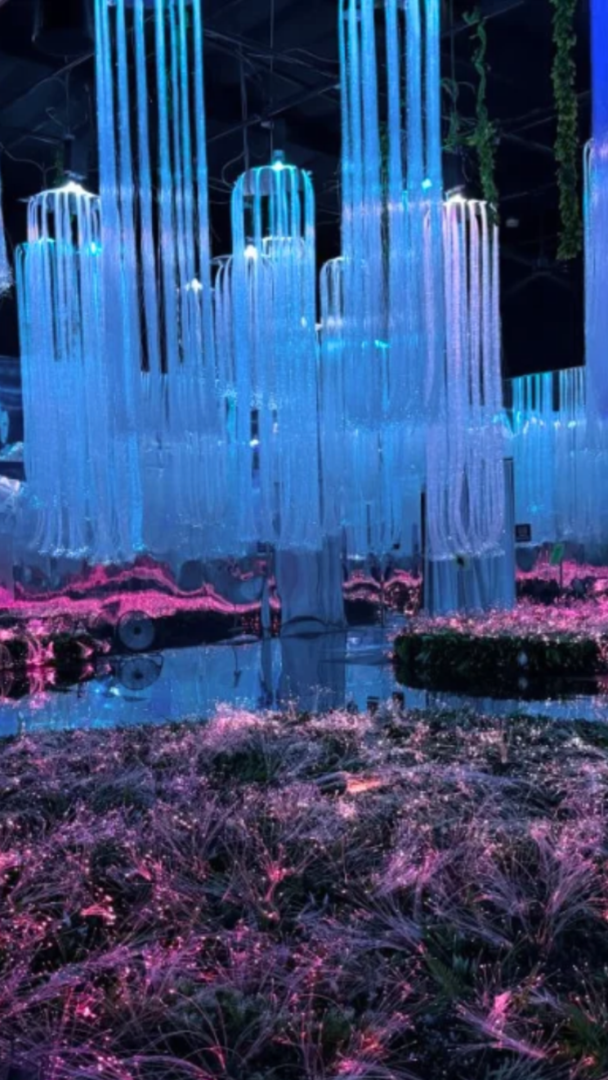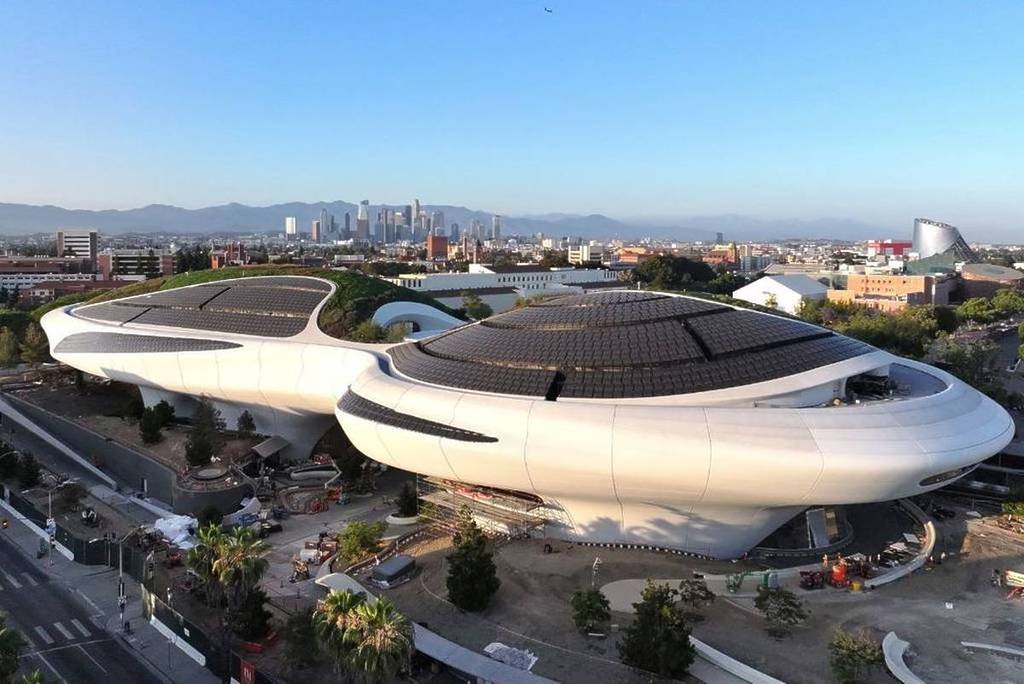

Inside the Lucas Museum of Narrative Art in Los Angeles, George Lucas and his wife Mellody Hobson are building something closer to a cinematic universe than a conventional museum. Designed by Ma Yansong of MAD Architects, the 11-acre structure rises from Exposition Park with five flowing floors of glass tubes, curved staircases, and organic forms flowing altogether.
A museum built from narrative
Opening in September after several overruns in time and budget, the museum is the most ambitious project to date from a couple whose lives are already defined by scale and invention. It spans more than 30 large galleries and is organized around Lucas and Hobson’s collection of 1,200 works of illustration, selected personally by Lucas from a pool of roughly 40,000 pieces.
Unusually for a museum, the focus is not traditional fine art hierarchy but storytelling imagery in all its forms. Well-known oil works by artists such as Maxfield Parrish and Norman Rockwell sit alongside comic strips, manga, movie concept art, and fantasy scenes populated by dragons, kings, and everyday archetypes. The result is not the usual museum chronology of art history but rather a map of human myths.
Cinematic scale and design
There are two 299-seat movie theaters that stand as some of the finest screening spaces in America. The building unfolds across five floors, with Caleb Deschanel, a six-time Oscar-nominated cinematographer, helping to shape the lighting so that each gallery feels less like a static display and more like a filmed scene, carefully exposed and emotionally tuned.
An accessible library for everyone
The museum’s library will be accessible even without a museum ticket, making it one of the institution’s most community-focused spaces. Children aged 12 and older will also be able to visit on their own. This was a detail that was especially important to Mellody Hobson. Growing up in Chicago, Hobson often spent hours at her local library, which she has described as a refuge and a place of possibility.
Her experiences as a child helped shape the museum’s vision for the space as an open, welcoming resource where young people can explore, learn, and discover stories for themselves, regardless of whether they enter the museum galleries.
In many ways, the library reflects the museum’s larger mission – making storytelling, creativity, and cultural exploration accessible to everyone. From its sweeping architectural forms to its meticulously staged interiors, everything reinforces Lucas’s long-held belief that stories are how humans make sense of the world.