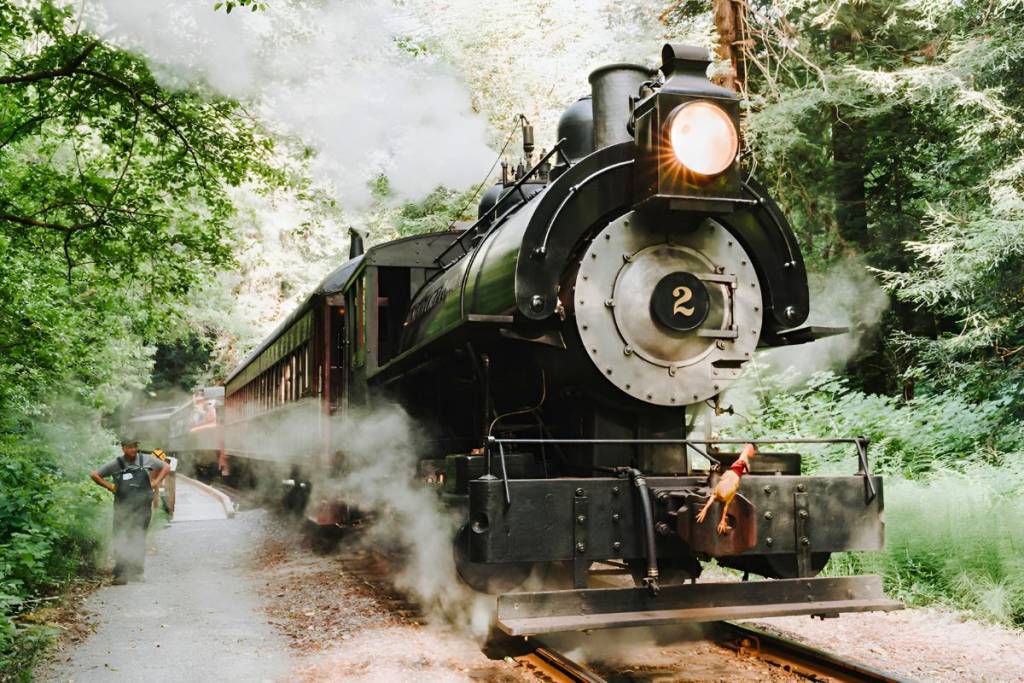

California is packed with things to do, from chasing waterfalls and exploring national parks to cruising its scenic coastline. But when it comes to taking in the Golden State’s landscapes, few experiences can match seeing them from a train window. This year, USA Today 10Best named the beloved, world-famous Skunk Train one of the 10 best scenic train rides in the country, ranking it No. 8 overall and making it California’s top-ranked ride.
A winding journey through California’s redwood country
The Skunk Train dates back to 1885, when the railway was built to transport redwood logs from Mendocino County’s rugged inland forests to the coast. Passenger service arrived in 1904, and the route eventually became a beloved way to experience the region’s towering old-growth redwoods.
The historic line stretches 40 miles between Fort Bragg and Willits, with the current excursions covering shorter sections of the original route. Along the way, the railway twists through an astonishing 381 curves, making it one of the most winding railroad journeys in the West. The line also crosses more than 30 trestles and passes through historic tunnels as it heads into the forest.
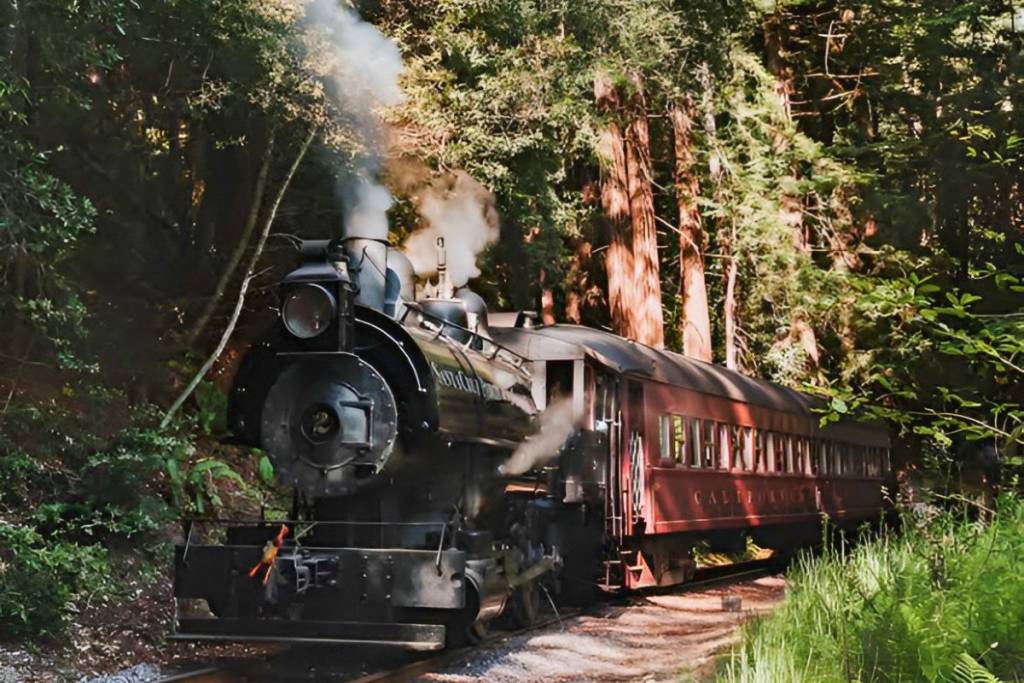
One of the most scenic options is the two-hour Wolf Tree Turn, which departs from Willits and climbs into the redwood-dense Noyo River Canyon, passing beneath towering trees and through a historic tunnel. The journey eventually reaches the railway’s highest point, roughly 1,750 feet above sea level, before arriving at the famous Wolf Tree.
A new addition is also making its way onto the Redwood Route this year. The Skunk Train recently moved its new passenger railcar, The Noyo, from Fort Bragg to Willits, expanding its offerings on the inland side of the historic railway.
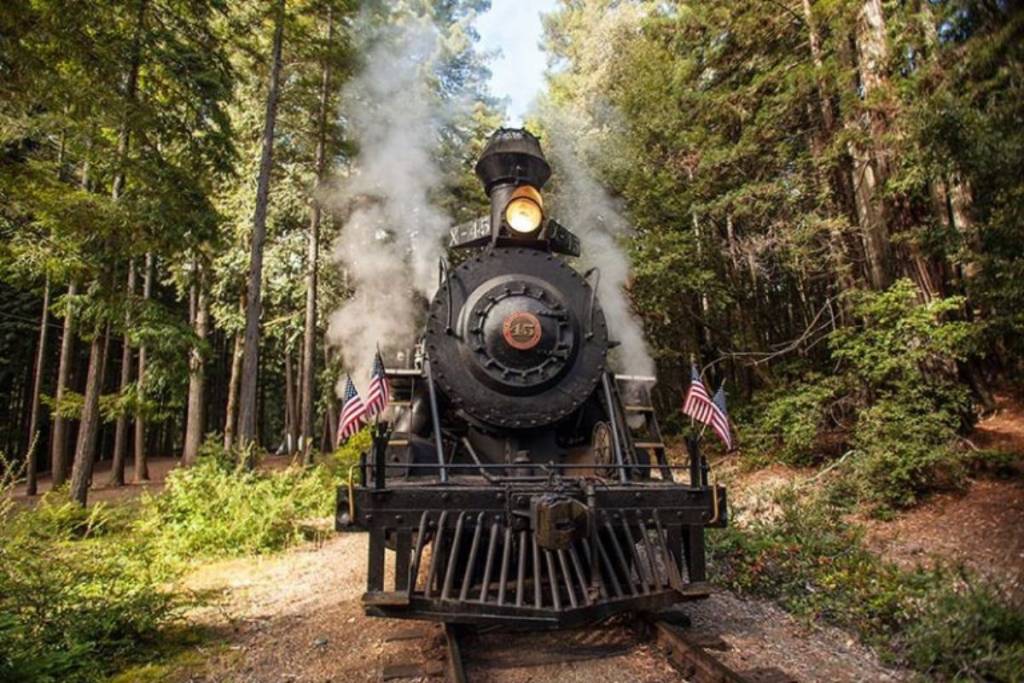
There’s also the seven-mile Pudding Creek Express, a shorter round-trip excursion from Fort Bragg along the Pudding Creek Estuary. The area is home to wildlife including blue herons, ospreys and egrets, adding another layer of scenery to the ride.
And the name? “Skunk” dates to 1925, when the railway introduced gasoline-powered cars whose exhaust and oil-burning heaters produced a famously pungent smell. Locals joked that they could smell the train before they could see it. The odor is long gone, but the wonderfully strange name stuck.