
Nikola Tesla was one of the pioneers who helped transform our understanding of electricity, developing the alternating-current system that remains fundamental to modern power networks. His work also pushed the boundaries of high-frequency electricity, wireless transmission, and electrical engineering.
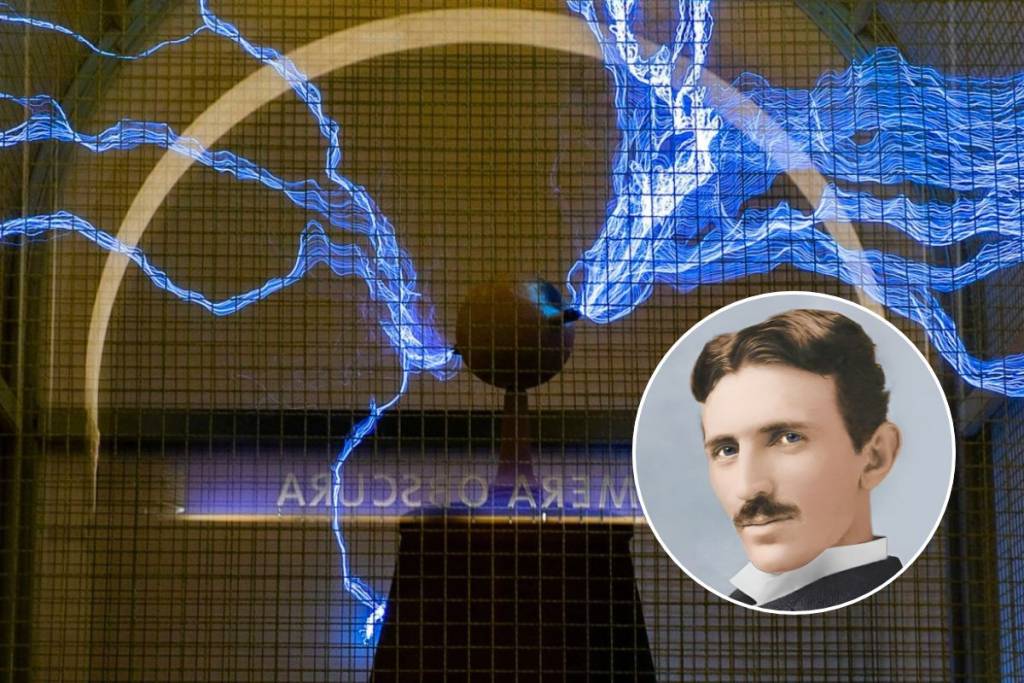
Among his most recognizable inventions is the Tesla coil, and one remarkably old example is still putting on a show in Los Angeles. Built in 1910, the machine has been part of the Griffith Observatory experience since the 1930s, where its dramatic electrical arcs remain one of the most memorable exhibits.
What is a Tesla Coil?
A Tesla coil is a type of resonant transformer designed to convert electricity into very high-voltage, high-frequency alternating current. Tesla patented the invention in 1891 while experimenting with high-frequency electricity and wireless power.
The coil at Griffith Observatory is one of a pair built in 1910 by Earle L. Ovington, who manufactured high-voltage equipment for medical and electrical demonstrations. The pair were originally displayed at New York’s Madison Square Garden under the name “Million Volt Oscillator,” where they produced spectacular electrical arcs.
23 October 2026 14:00 + more dates
Griffith Observatory
The surviving coil was eventually donated to the City of Los Angeles and placed at the observatory in 1937. Today, it produces 50,000-volt electrical discharges during demonstrations and has been restored and moved into a specially designed alcove to reduce electrical interference with the Observatory’s other equipment.
The machine is now located in the Wilder Hall of the Eye, where Observatory staff demonstrate it several times a day.
See the Tesla Coil up close on a guided Griffith Observatory tour
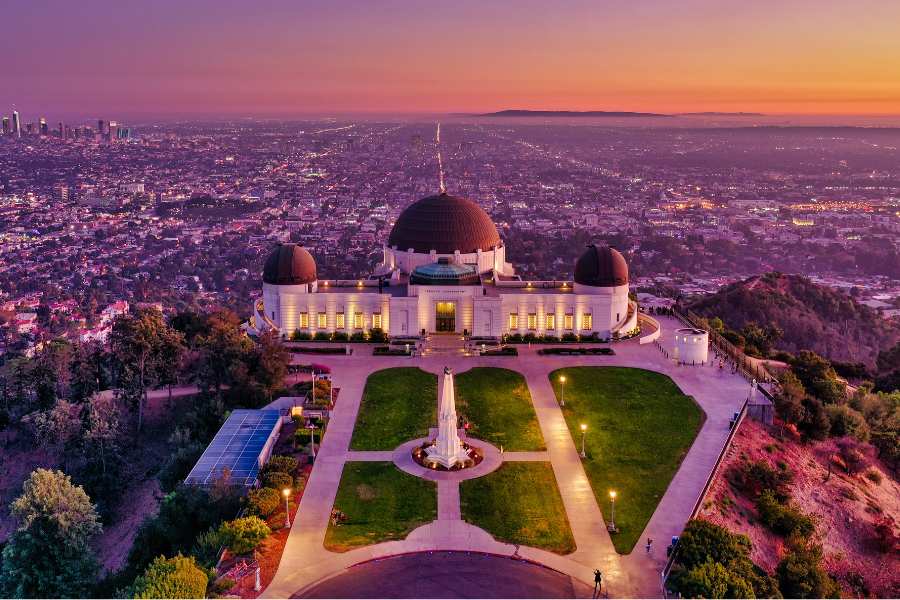
If you want to make sure you don’t breeze past the century-old machine, this Griffith Observatory: Guided Tour + Planetarium Show offers a closer look at the landmark with a small group led by former Observatory employees.
The tour covers the Observatory’s 67,000 square feet of exhibition space, including the Astronomers Monument, Central Rotunda, Tesla Coil, West Hall, rooftop telescopes, Edge of Space exhibits, and the Albert Einstein statue. You’ll also learn about the building’s science, architecture, Hollywood connections, and L.A. history before heading into the Samuel Oschin Planetarium for a show.
And, naturally, there’s time for those panoramic views of the Hollywood Sign and Los Angeles Basin from the top of Griffith Park.