
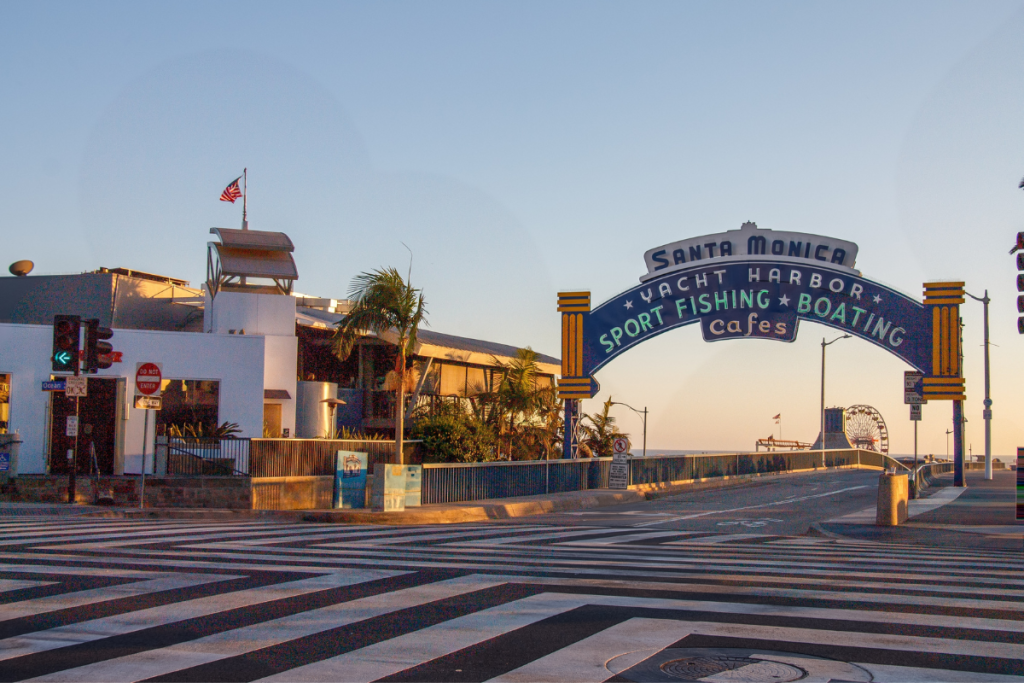

The iconic neon sign welcoming visitors to the Santa Monica Pier is about to disappear from its familiar spot — but it isn’t going away for good. The historic 20-foot blue arch sign, which has greeted visitors since 1941, is being dismantled and sent to Las Vegas for restoration as part of a major project to replace the aging bridge leading to the pier. The city says the sign will be refurbished while preserving its historic character before returning to the pier once construction is complete.
The sign still carries its original “Santa Monica Yacht Harbor” message and was designated a California historic landmark in 1996. Its temporary removal is therefore more than a construction detail — it means one of Santa Monica’s most recognizable photo spots will look noticeably different during the project.
Why is the Santa Monica Pier sign coming down?
The sign’s removal is tied to the $35 million Pier Bridge Replacement Project, which will replace the existing bridge built in 1939. The new bridge is planned to have wider sidewalks, improved pedestrian connections and modern seismic and safety standards. The project is also being carried out ahead of the 2028 Olympic Games, when Santa Monica is expected to welcome visitors from around the world.
The city has not announced an exact removal date, although recent reports say the sign is expected to come down soon. KTLA reports that, once dismantled, it will be shipped to Las Vegas, where YESCO — the sign company known for restoring the famous “Welcome to Fabulous Las Vegas” sign — will handle the restoration.
The sign will return — but not exactly where it is now
Visitors won’t have to completely lose the landmark while the work is underway. A half-scale replica has been installed on the pier so people can still take photos with a version of the familiar sign during construction.
The restoration is not intended to permanently remove or replace the historic sign. According to the City of Santa Monica, the restored sign will return to the pier when construction is finished, with completion currently expected in late 2027. The restored structure will also be positioned approximately 10 feet north of its current location and raised to improve visibility and clearance.
