

World Space Week is taking place this week from October 4–10. It’s the perfect time to spend a cozy evening looking up at the night sky.
And you don’t have to travel far from Los Angeles to go stargazing! From famous observatories to dark-sky destinations, Southern California has plenty of places to see stars, planets, and other celestial sights.
Here are some of the best places to go stargazing around L.A.
Griffith Observatory
Griffith Observatory is one of the easiest places to start stargazing in Los Angeles.
You can explore the observatory, learn about space and get views of the city. Public star parties are also held throughout the year. These give visitors a chance to look through telescopes.
📍Where: 2800 E. Observatory Road, Los Angeles
Garvey Ranch Observatory
You don’t even have to leave the city for a telescope experience!
Garvey Ranch Observatory in Monterey Park welcomes visitors on Wednesday evenings. You can look through the observatory’s telescope and sometimes see additional telescopes set up outside.
📅When: Wednesdays from 7:30–10 p.m.
📍Where: 781 S. Orange Ave., Monterey Park
Mount Wilson Observatory
For darker skies, head into the mountains to Mount Wilson Observatory.
Located high above Los Angeles, the historic observatory hosts public astronomy events and telescope viewing throughout the year.
It’s also a great option if you want to escape some of L.A.’s light pollution.
📍Where: 100 Mt Wilson Circle Road, Mt Wilson, CA 91023
Angeles National Forest
The Angeles National Forest is another option for getting away from the bright city lights.
Find a safe spot away from major roads and give your eyes time to adjust to the darkness. On a clear night, you can see many more stars than you would from central L.A.
Be sure to check road and forest conditions before visiting.
📍Where: 701 N Santa Anita Ave, Arcadia, CA 91006
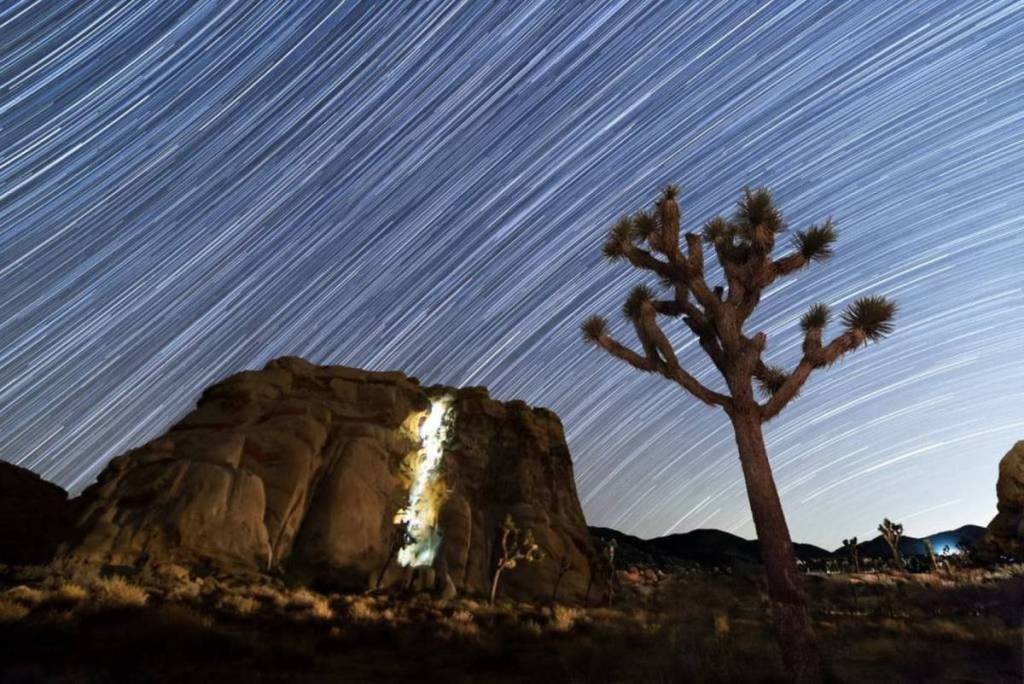
Joshua Tree National Park
If you’re willing to drive a little farther, Joshua Tree National Park offers some of the darkest skies in Southern California.
The park is an official International Dark Sky Park, making it an excellent place to see stars and the Milky Way.
Popular stargazing spots include Quail Springs, Hidden Valley, and Cap Rock.
There’s also a special event happening during World Space Week: the 2026 Joshua Tree Night Sky Festival takes place October 9–10.
How to go stargazing
You don’t need a telescope to enjoy the night sky! Choose a clear night, get away from bright lights, and give your eyes 20–30 minutes to adjust to the darkness.
Bring warm clothes, water, and a flashlight if you’re heading outside the city. A red light is best for preserving your night vision.
So grab a blanket and head outside — World Space Week is the perfect excuse to gaze up at the stars!
