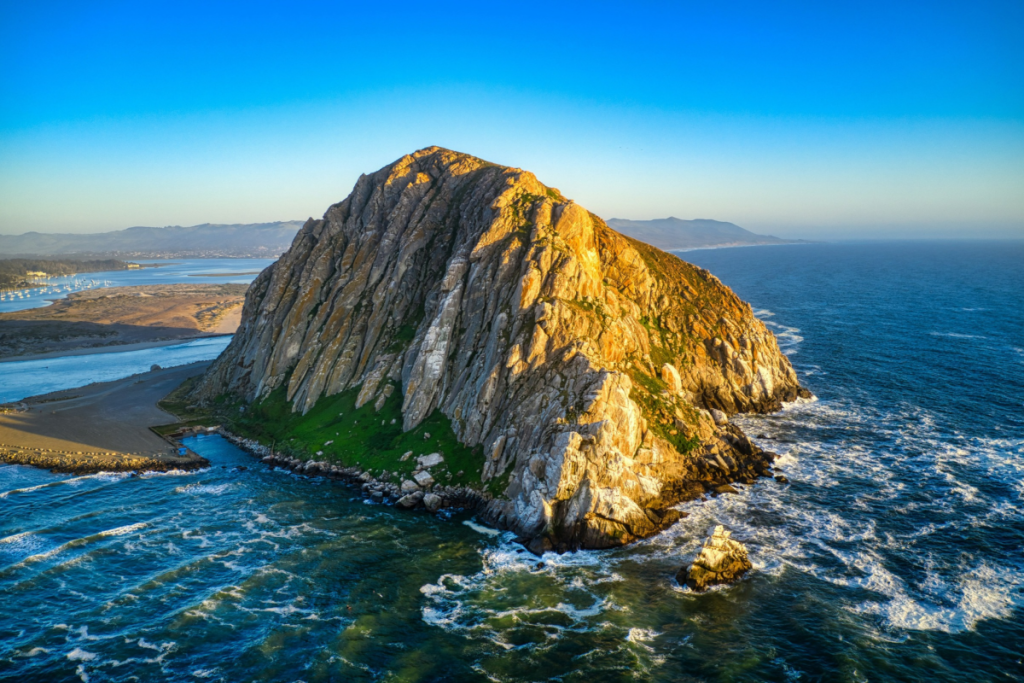

A drive up Pacific Coast Highway (Highway 1) has plenty of memorable stops, and Morro Rock is one of the most striking. The highway runs all the way from Dana Point to Mendocino, and this ancient volcanic plug is a memorable sight along the way, towering 576 feet above the water.
According to the City of Morro Bay, the natural landmark is sometimes nicknamed the “Gibraltar of the Pacific,” in a nod to the famous Rock of Gibraltar in the Mediterranean. Here’s a closer look at one of the Central Coast’s best-known natural wonders.
A 23-million-year-old volcanic core
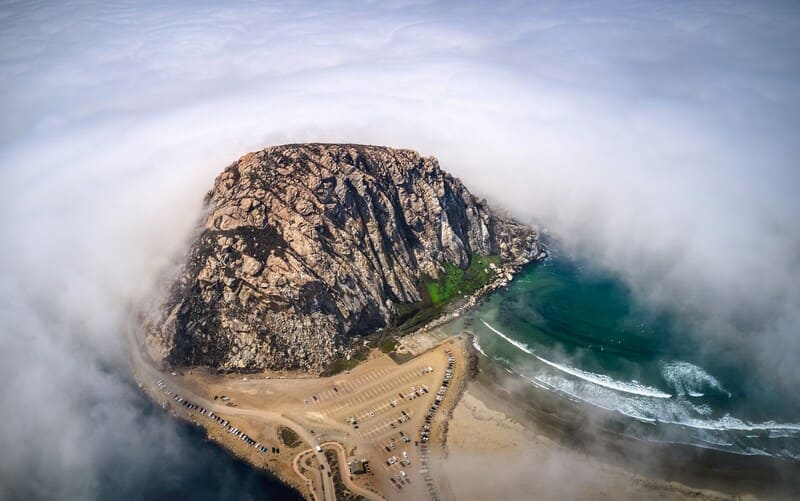
Morro Rock formed about 23 million years ago. It belongs to the “Nine Sisters,” a chain of similar volcanic plugs that stretches between Morro Bay and San Luis Obispo.
The rock is the hardened core of an extinct volcano. It formed when magma pushed up through a volcanic vent and solidified. Over millions of years, the softer stone around it wore away, leaving behind the dense plug standing today.
The rock also has deep cultural meaning. The Chumash and Salinan peoples have long used it as a navigational landmark and a place for spiritual ceremonies. Today it is protected as a bird sanctuary for species including the endangered peregrine falcon.
Visiting Morro Rock
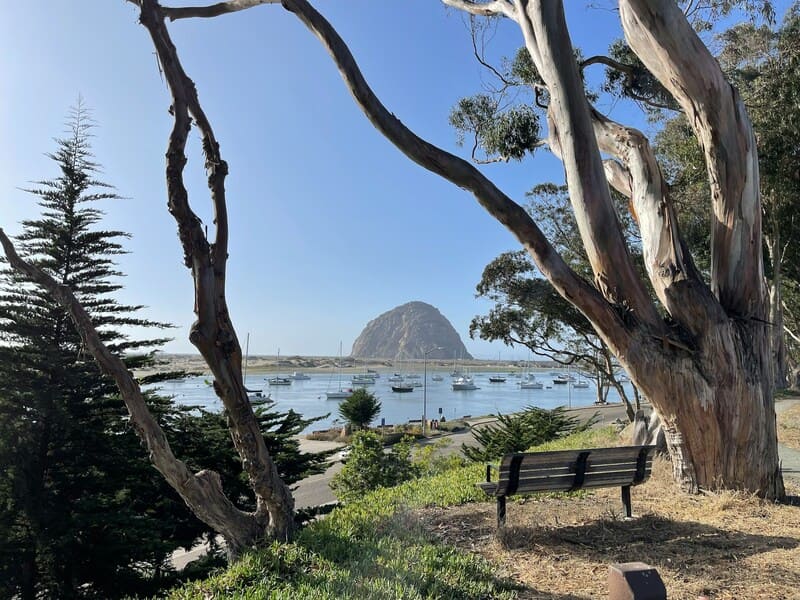
Climbing Morro Rock is prohibited to protect its delicate ecosystem and wildlife. However, visitors can reach its base via a causeway, making it easily accessible by car.
The nearby area features several beaches and walking trails, including those within Morro Bay State Park, offering plenty of opportunities to explore this scenic stretch of California’s Central Coast.