
Few astronomical phenomena have fascinated humanity for as long as eclipses. For centuries, these rare celestial alignments have turned the sky into a spectacle, inspiring everything from ancient myths to modern-day observatories packed with people staring upward.
This month, Angelenos will have a chance to watch one unfold from one of the city’s best-known stargazing spots, as Griffith Observatory is hosting an in-person public viewing and an online broadcast for an upcoming partial lunar eclipse, during which 96% of the full Moon will slip into Earth’s shadow.
How to watch the lunar eclipse from Griffith Observatory
The eclipse will take place Thursday, August 27, into the early hours of Friday, August 28, with the Moon rising over L.A. at 7:18 p.m. The Observatory’s grounds will be open for public viewing from 7:25 to 11 p.m., while an online broadcast will run from 7:25 p.m. to 12:05 a.m.
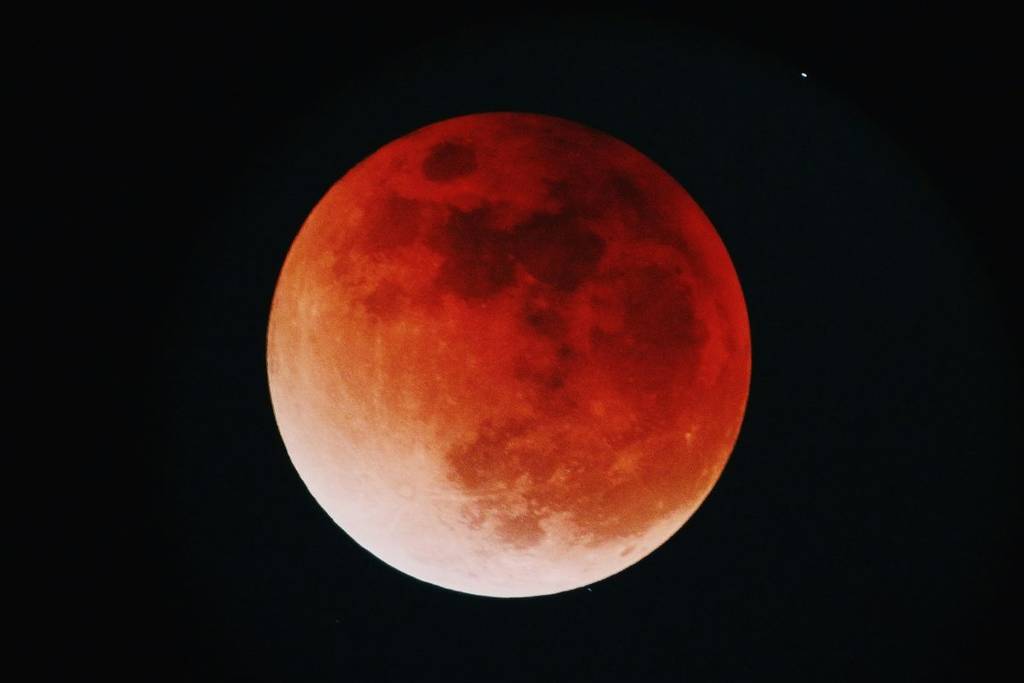
The eclipse will officially enter its darker, umbral phase at 7:34 p.m., peaking at 9:13 p.m., when 96% of the Moon will be covered by Earth’s shadow, making it an almost total eclipse and tainting the Moon with a coppery red hue. The umbral phase ends at 10:52 p.m., although the broadcast will continue until just after midnight.
If you head to Griffith Observatory, prepare for very large crowds, limited parking, and heavy traffic, especially because there is also a show at the Greek Theatre that evening. The DASH Observatory/Los Feliz bus will run from the Vermont/Sunset Metro station, with the final bus leaving the Observatory at 11 p.m. The Observatory building closes at 10 p.m., though the grounds remain open until 11 p.m.
Unlike a solar eclipse, this lunar event can be viewed safely with the naked eye, so there’s no need for special glasses or a telescope. If skies are clear, the eclipse should be visible from anywhere in SoCal. Just head outside and look toward the southeast.
More eclipses are on the way
And this won’t be the last eclipse lighting up California’s skies. According to Timeanddate’s California eclipse calendar, the state will see a partial lunar eclipse in January 2028, a partial solar eclipse later that month, another partial solar eclipse in January 2029, and a total lunar eclipse on June 26, 2029. The next total solar eclipse visible from California won’t arrive until August 12, 2045.