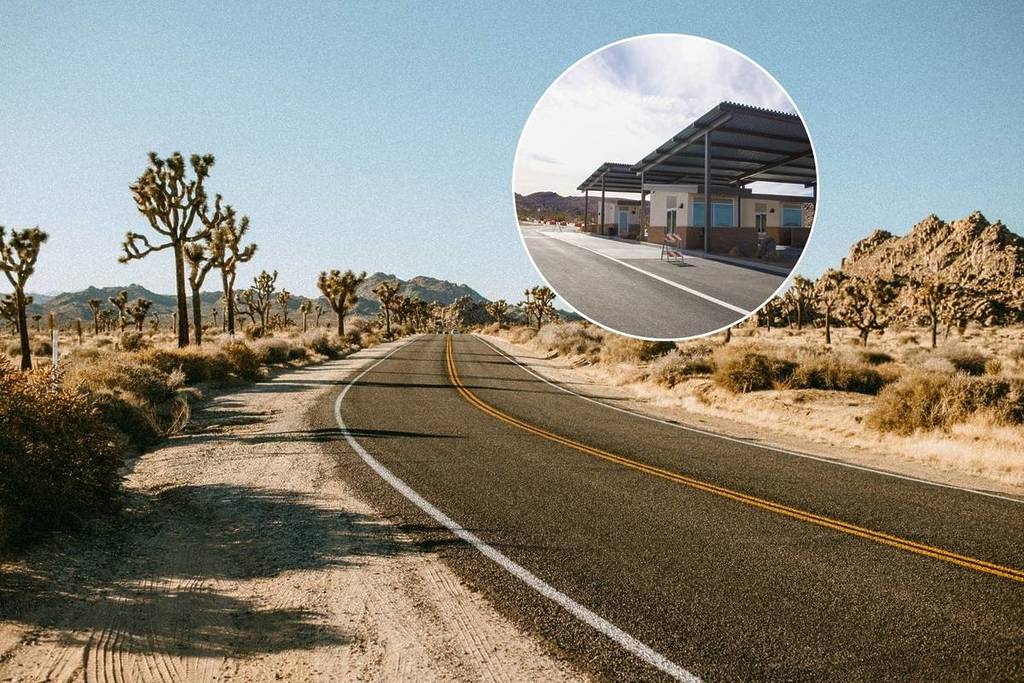

Joshua Tree’s old single-station setup at the West Entrance experienced a 194% increase in vehicle traffic over the last 10 years, with more than 513,000 vehicles passing through in 2023 alone.
As a result, the NPS spent $5 million during a year of construction on the entrance, finishing the new and improved station this past February.
The new West Entrance is better equipped to handle traffic and crowding with the addition of two inbound lanes, one outbound lane, and one bypass lane in each direction.
The improvements should reduce wait times and decrease traffic in the town of Joshua Tree.
Visiting Joshua Tree through the West Entrance
Joshua Tree National Park receives over three million visitors every single year, making it one of the top ten most-visited national parks in the United States.
The park’s West Entrance is easily the busiest, receiving more than double the traffic of the North and South Entrances. The entrance is directly accessible from the town of Joshua Tree, taking the brunt of visitors from Palm Springs, L.A., and the Inland Empire.
While the newly renovated entrance will no doubt alleviate the park’s notorious traffic congestion, NPS still recommends buying your pass in advance, as staff may expedite passholders through the bypass lanes. You could also try visiting on weekdays and avoiding exiting the park immediately after sunset.
Finally, NPS may still direct travelers to the North and South Entrances for the fastest entry and exit times.
Peak periods in Joshua Tree
Joshua Tree receives its peak visitorship from October through May, especially during weekends, holidays, and spring break. Crowds and traffic lines are usually worst between 10am and 2pm, especially during wildflower season in March and April.
Traffic also spikes at night during astronomical events like the Perseid meteor shower in August, the Lyrids in April, and rare Aurora Borealis sightings, as we experienced in recent years.
The NPS is hosting a handful of free admission days on select dates in 2026 – more on that here.