Those who have traveled around the Golden State know that it feels like home to a wide range of landscapes resembling some of the most beautiful regions in the world. From dunes that could pass for a snapshot of the Sahara Desert to pristine lakes framed by trees that look straight out of Switzerland, the state truly has it all.
And one of these places is what’s known as ‘Little Patagonia,’ a mountainous region perfect year-round and home to a glacier that, in autumn, turns into a canvas of vibrant yellows and golds.
A slice of Patagonia in the heart of California
Nestled in the Eastern Sierra, June Lake mirrors many of Patagonia’s defining features. Both regions were shaped by glacial activity, resulting in deep valleys, clear alpine lakes, and rugged mountain landscapes, as Cal Fly Fisher explains.
The area’s geology includes the remnants of the Rush Creek glacier, which carved out the valley and left behind significant geological features. Just a short distance from June Lake sits North America’s southernmost glacier, adding an extra layer of dramatic scenery to the region. Its icy presence reinforces the alpine feel of the area.
Cruising through an alpine wonderland
As Roadtripping California states, the June Lake Loop is a 14-mile drive, offering breathtaking views of alpine lakes and rugged mountain landscapes. This paved, two-lane highway, also known as California State Route 158, follows a horseshoe-shaped canyon carved by glaciers, passing by four stunning lakes: June Lake, Gull Lake, Silver Lake, and Grant Lake.
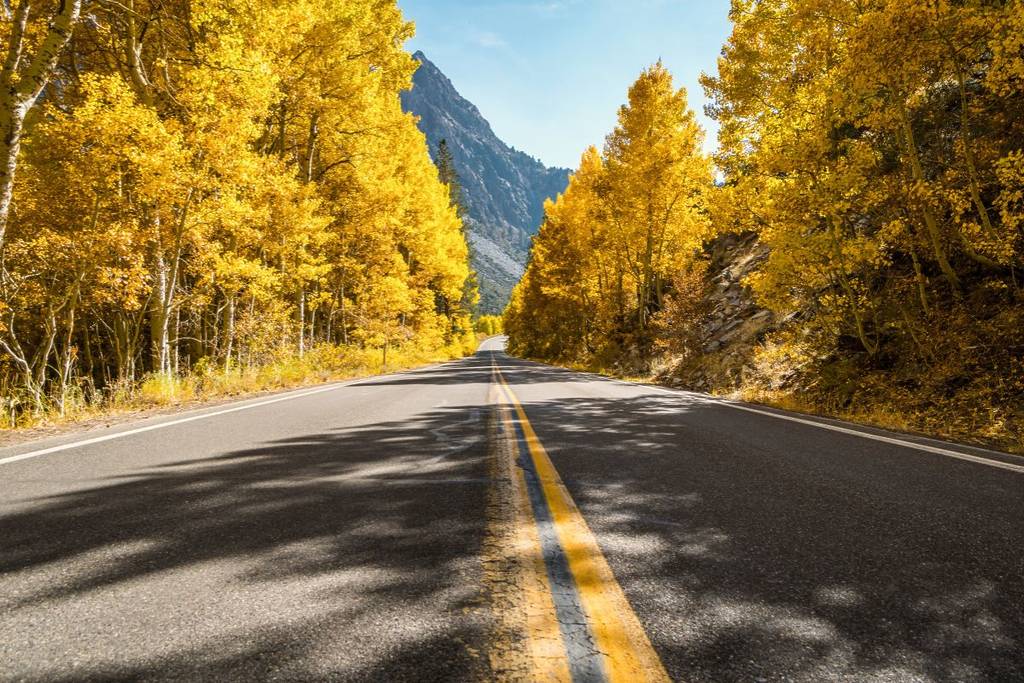
When you drive the June Lake Loop in the fall, the trees turn bright yellow and gold, making it one of the most beautiful places to see fall colors in California. The road curves around the lakes, giving you great views of Carson Peak, which rises 10,909 feet, and the clear alpine waters below. The drive is suitable for all skill levels and is accessible all year, though portions may be closed in winter due to snow.