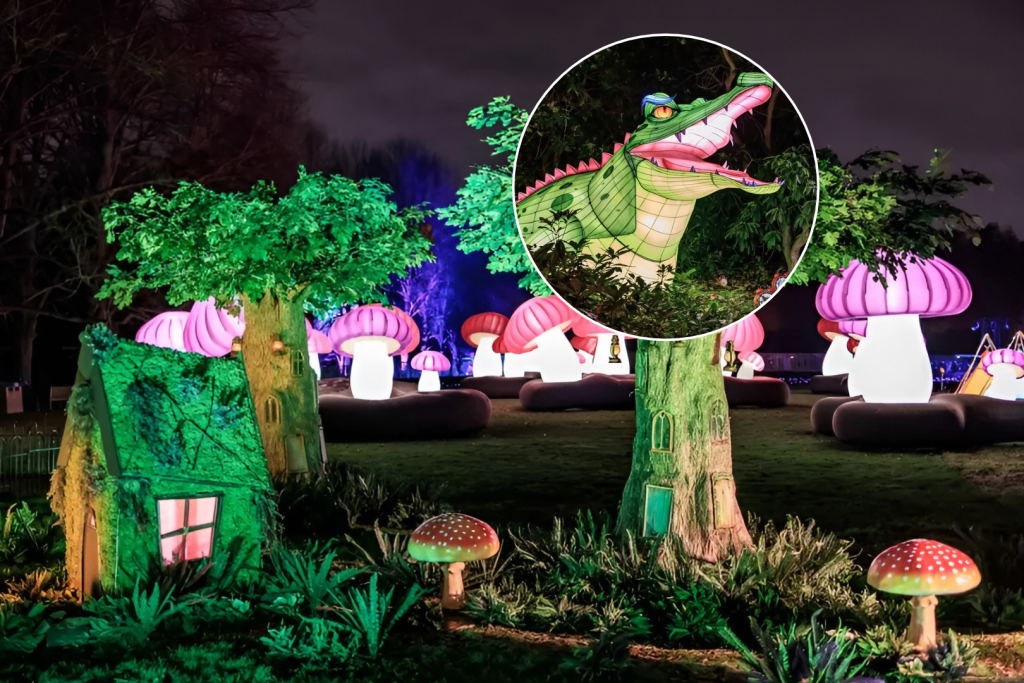

There are only a couple of months left in the year, which means that even if Christmas still feels far away, Los Angeles is already gearing up for the most magical time of the year.
This holiday season, the South Coast Botanic Garden is getting a festive makeover with a brand-new twinkling event that will turn its winding paths and leafy landscapes into Tinker Bell’s Neverland.
Millions of lights will transform the garden after dark

Tinker Bell’s Neverland: An Illuminated Adventure will invite guests to follow the famous fairy through an outdoor light trail filled with glowing installations, illuminated fairy realms, and interactive seasonal spectacles. Set throughout the historic garden, the experience is designed to make the surrounding trees, paths, and canopies part of the adventure rather than simply serving as a backdrop.
The trail will be covered in millions of twinkling lights, creating plenty of opportunities to stop for photos as the landscape takes on a completely different look after sunset. The experience also brings some of the classic ingredients of a winter night out, with hot cocoa, seasonal treats, and holiday drinks available along the route.
The illuminated adventure runs from November 13 through January 3, giving visitors several weeks to experience Neverland during the holiday season.
There are 87 acres of garden to explore

Tinker Bell’s Neverland: An Illuminated Adventure
13 November 2026 17:30 + more dates
South Coast Botanic Garden
Even without the lights, South Coast Botanic Garden is a destination worth knowing. The 87-acre garden sits on the Palos Verdes Peninsula, about 10 miles south of LAX, and is home to more than 2,500 plant species, including specimens from Australia, the Mediterranean, and southern Africa. The garden also records more than 200 species of birds throughout the year.
Among its highlights are the Dorothy and John Bohannon Rose Garden, the Japanese Garden, Desert Garden, Fuchsia Garden, Garden for the Senses, and a striking Living Wall. The rose garden alone contains around 1,000 rose bushes spanning more than 100 varieties.
And the garden has an unusually green origin story: it was developed on land that had previously been used as a sanitary landfill, turning a former industrial site into one of the region’s major botanical spaces. The transformation began in the early 1960s, when more than 40,000 donated trees, shrubs, and plants were planted.