
Southern California is in the middle of a major wave of infrastructure and development projects, from massive transportation upgrades to new housing and public spaces. But one of the region’s most ambitious projects is designed for both people and wildlife living alongside one of the country’s busiest freeways.
The Wallis Annenberg Wildlife Crossing now has an official opening date, marking the long-awaited finish line for a project years in the making.
The world’s largest wildlife crossing is opening this winter
The Wallis Annenberg Wildlife Crossing in Agoura Hills will officially open on December 2, 2026, with a public celebration planned at King Gillette Ranch in Calabasas. The event will run from 11:30 a.m. to 3:30 p.m., with tickets required for entry. Donations are $10 for guests ages 13 and older and $5 for children 12 and under.
The actual ribbon-cutting ceremony will take place at the crossing and will be streamed live at the public celebration. The event will also launch a new partnership between the National Wildlife Federation and the Wildlife Crossing Fund focused on long-term research, habitat restoration and future wildlife connectivity projects.
What to know about the Wallis Annenberg Wildlife Crossing
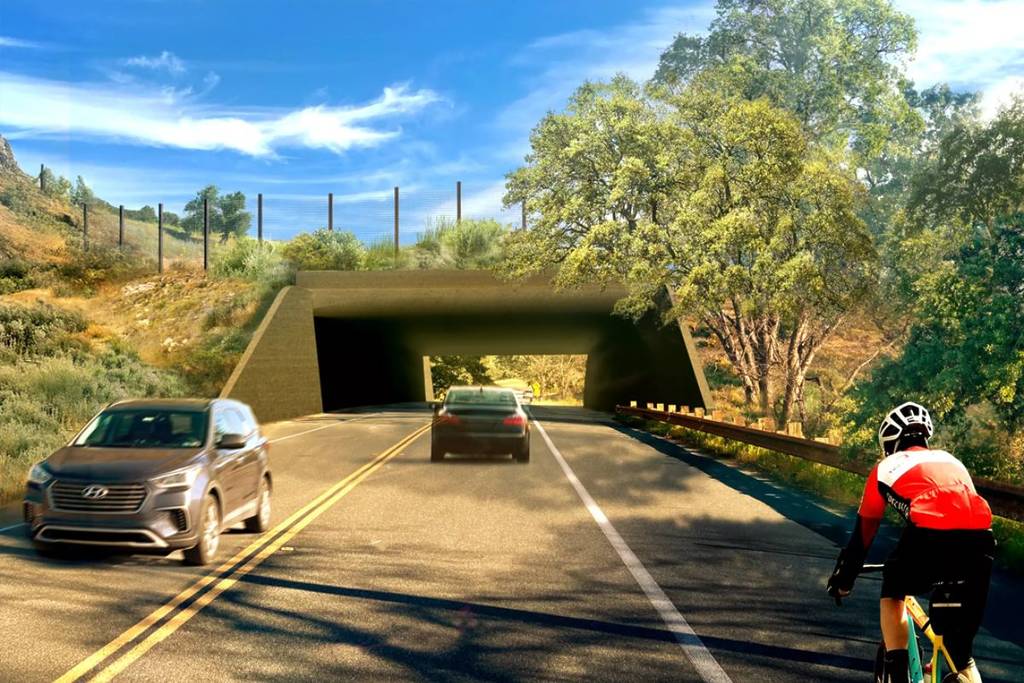
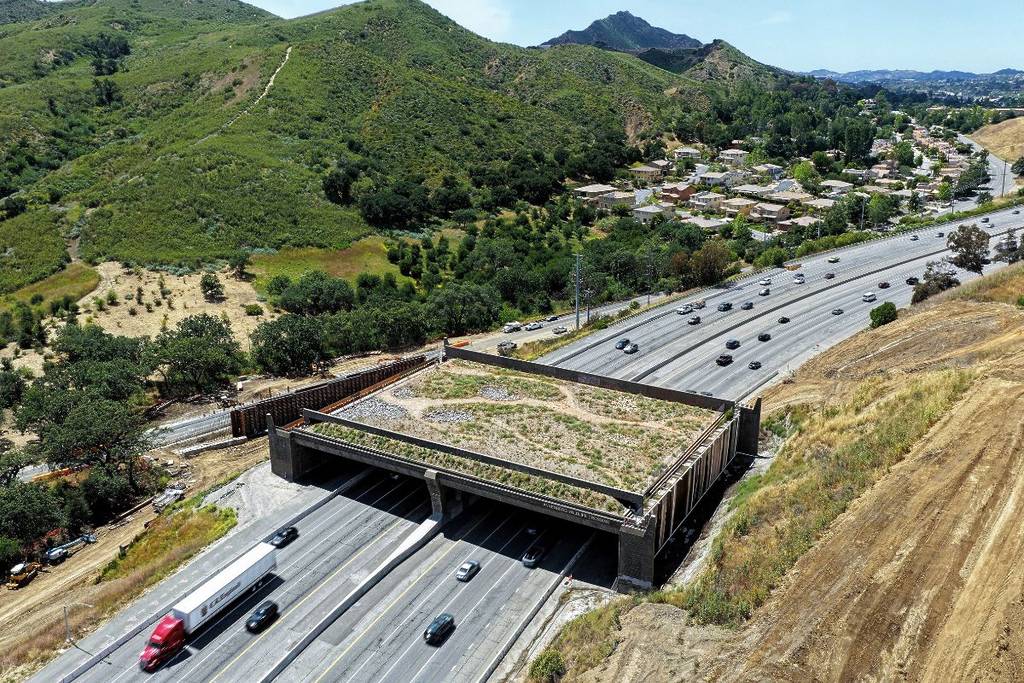
The project broke ground on Earth Day 2022, after years of planning and fundraising. It is being built over the 101 Freeway at Liberty Canyon, where the highway has fragmented habitat between the Santa Monica Mountains and the Simi Hills and Santa Susana Mountains.
The vegetated crossing spans roughly 210 feet across the freeway and about 174 feet wide, covering nearly an acre. It will connect fragmented habitats and give mountain lions, bobcats, coyotes, gray foxes, mule deer and other species a safer route across the highway.
The project has a programmed cost of approximately $92 million, with funding from public agencies, private donors and conservation organizations.
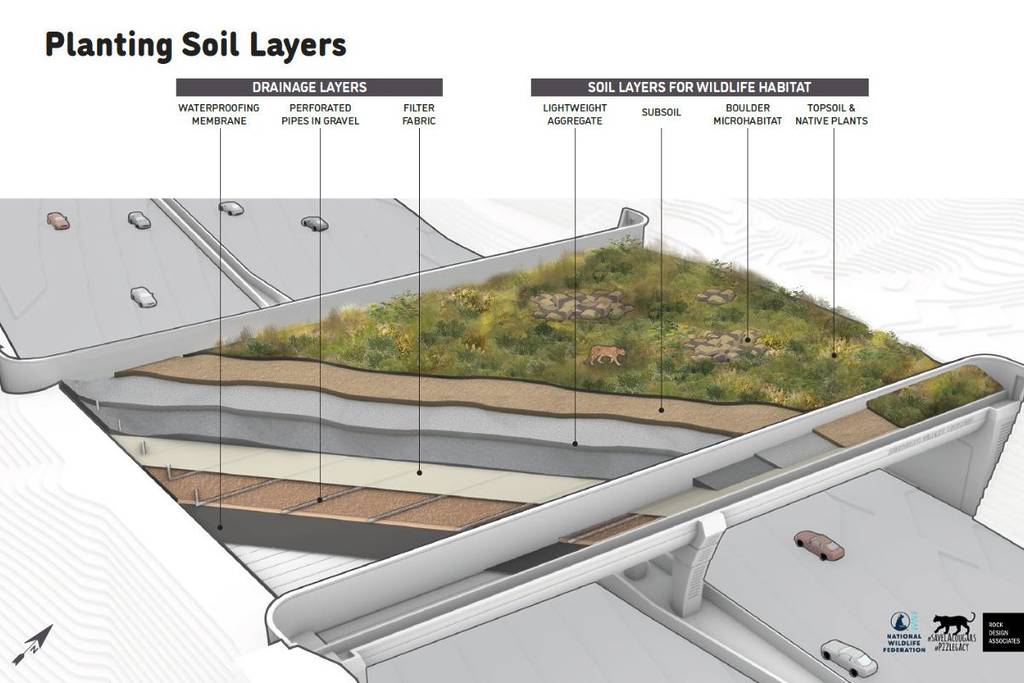
Construction’s first stage included 82 concrete girders and more than 26 million pounds of concrete. The crossing is also being covered with thousands of cubic yards of living soil and more than 50 native plant species, transforming what could have been a purely functional bridge into a restored wildlife habitat.
Once complete, the crossing will not only become the largest on Earth but also reconnect a critical ecological corridor while helping reduce wildlife-vehicle collisions along a freeway used by more than 300,000 drivers every day.