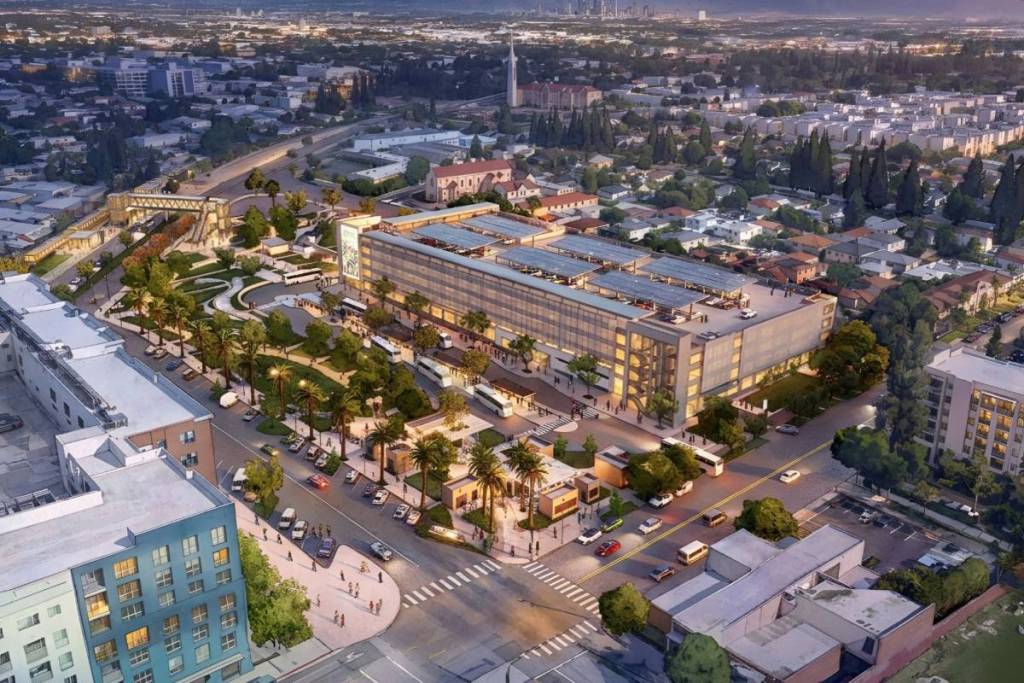

Inglewood is moving ahead with a new transportation plan after its original vision for an elevated train system hit a major roadblock in 2024. The city has officially broken ground on the first phase of the Inglewood Transit Connector (ITC), a $250 million project designed to improve access to public transportation, ease event-day congestion and revitalize the historic downtown corridor.
The new approach prioritizes mobility hubs and street improvements while preserving the option to build the automated people mover in a future phase.
About the Inglewood Transit Connector
The first phase will introduce three mobility hubs along Market Street, adding more than 1,000 parking spaces and designated areas for rideshare pickups and drop-offs, bicycles and pedicabs. The Market & Florence hub will also feature transit-oriented retail and a 10-bay bus plaza.
One of the project’s key additions is a pedestrian bridge over Florence Avenue, connecting Downtown Inglewood directly to the Metro K Line’s Downtown Inglewood Station. The improvements are intended to make it easier to transfer between transportation options and reach the city’s sports and entertainment district.
The plan also includes redesigned streets along Market Street, Manchester Boulevard and Queen Street, with new sidewalks, landscaping, lighting and wayfinding. Additional improvements will support event-day bus service, including dedicated bus lanes and smarter traffic management technology.
The project aims to improve access to SoFi Stadium, the Kia Forum and Intuit Dome, with completion expected by spring 2028.
A downtown revitalization plan with local benefits
The project is also tied to a broader effort to revive Market Street and support Inglewood businesses. Eligible businesses relocating to make room for the mobility hubs can receive individualized relocation assistance, and the city has offered grants of up to $250,000 to qualifying businesses moving elsewhere in Downtown Inglewood.
The construction program also includes targeted local hiring, apprenticeship opportunities and a goal of allocating 20% of project participation to small and local businesses. According to the project team, 35% of construction labor hours are targeted for local residents.