
California can often feel like several planets stitched together. In the east, deserts stretch out like Martian terrain, cracked and sun-baked. In the north, alpine zones and glacier-carved valleys resemble fragments of Patagonia. It’s a place where geography rarely sits still, and few examples capture that better than Tulare Lake.
Its history traces back around 600,000 years BC, when the Central Valley was filled by an ancient body of water known as Lake Corcoran. Fed by rainfall and glacial melt from the Sierra Nevada, it gradually rose until it overflowed, carving out channels that eventually drained into the Pacific. What remained was a drier valley and a smaller successor: the Tulare Lake.
By the early 1800s, Tulare (known as “Paashi” by the Tachi Yokut) was the largest freshwater lake west of the Mississippi River, according to NASA. But that quickly changed with the arrival of settlers.
Canals and drainage systems were built to redirect water, and over time, irrigation projects and dams steadily cut off its supply. By 1920, the former lakebed had been converted into farmland.
Tulare Lake’s comeback in 2023
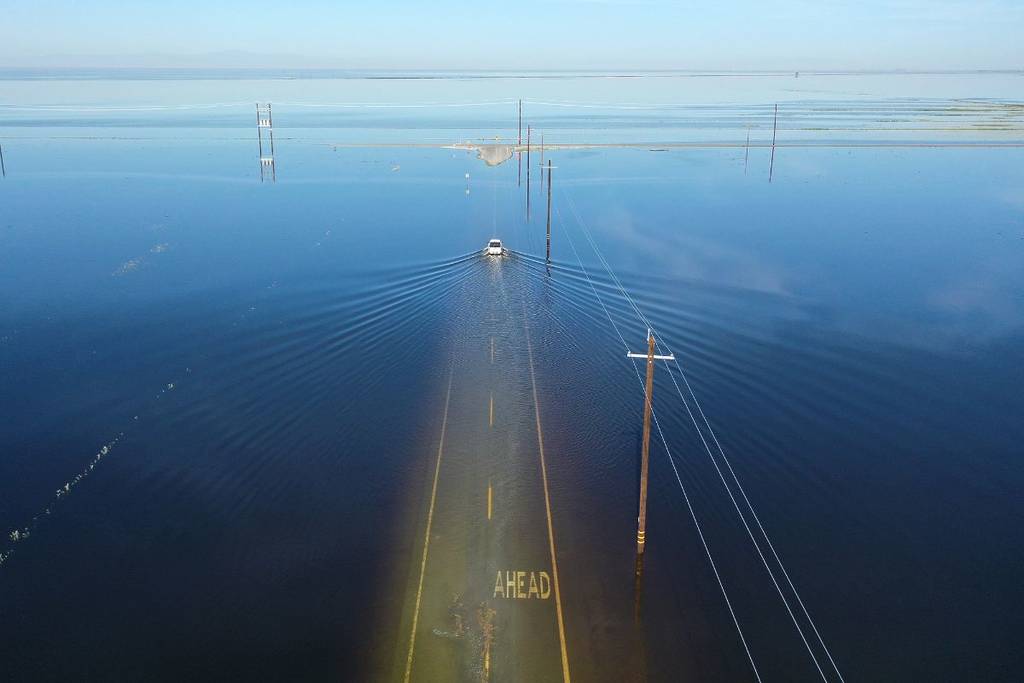
After more than a century largely absent from the landscape, Tulare Lake reappeared in 2023 following an unusually wet winter driven by unusual atmospheric rivers and snowmelt.
Water once again spread across the dry lakebed, submerging tens of thousands of acres of farmland. Its return disrupted agriculture and local economies, but for scientists and Indigenous communities, the lake’s reappearance was a reminder that California’s landscapes still move to ancient rhythms,
Retreat, drying, and current state
With reduced inflows and extensive drainage to reclaim farmland, the water gradually receded by 2024. Today, Tulare Lake no longer exists as a continuous body of water. It remains a hydrologic ghost, though it may re-form again in unusually wet years.
As of May 2026, farmers in the region are being urged to curb groundwater overuse and improve reporting as state regulators tighten oversight in response to land subsidence and declining aquifers, the L.A. Times reports.