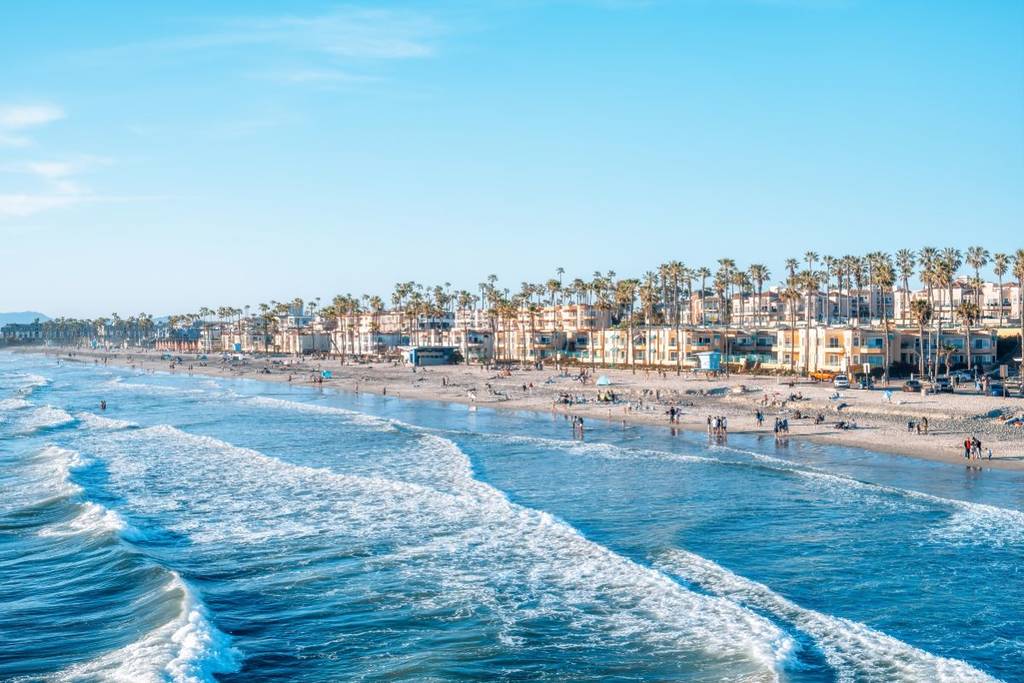

California’s legendary golden beaches are facing a massive crisis as rising sea levels and climate change could render most of the state’s coastline uninhabitable by 2100. It’s a pretty grim picture, but one sunny SoCal city is refusing to let its shores wash away without a fight.
Oceanside, a surf-obsessed community just north of San Diego, is taking matters into its own hands. The city is banking on a brand-new $55 million project called Re:Beach, featuring an innovative, artificial reef designed to stop its sand from disappearing into the Pacific.
The (almost) impossible battle of the vanishing beaches
A study by the U.S. Department of the Interior conducted back in 2023 established that 75% of California’s coast might be gone by 2100.
As we speak, Oceanside’s beaches are a prime example of what the future holds for the state’s coasts in the near future. Most of the city’s coast is nowadays a collection of rocks and boulders, as the beach has super-fine sand that gets easily sucked out by big waves, and local development has cut off the natural sand supply.
For decades, the city has tried traditional fixes (like dumping fresh sand every year and begging the federal government for help), but the waves just wash it all away within a couple of years.
Enter the “living speed bumps”
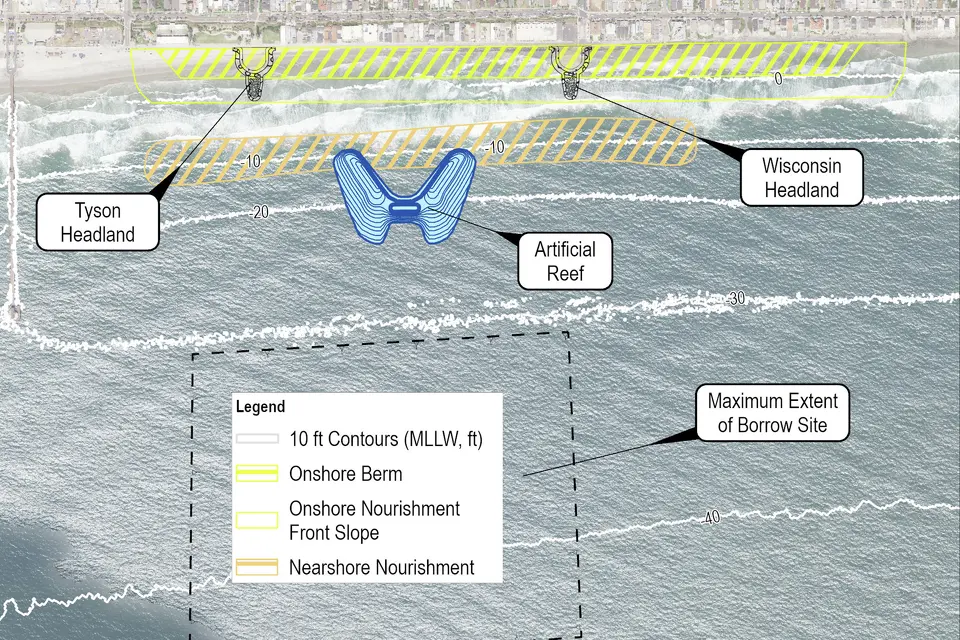
After decades dealing with the same issue with no substantial results in sight, Oceanside launched an international competition to find a real solution. The winner? A wild design from an Australian firm that introduces “living speed bumps” for the ocean.
The $55 million project features two artificial headlands to slow down sand movement, alongside a submerged, butterfly-shaped artificial reef. This clever shape reduces the harsh wave energy pulling the sand away, while still allowing surfers to enjoy great wave conditions near the pier.
The plan also includes dumping a massive 900,000 cubic yards of offshore sand to jumpstart the beach. Currently, the project is about 65% through its design and wave-pool testing phase. If the city secures the funding and the necessary permits over the next year, construction could break ground by fall 2027.