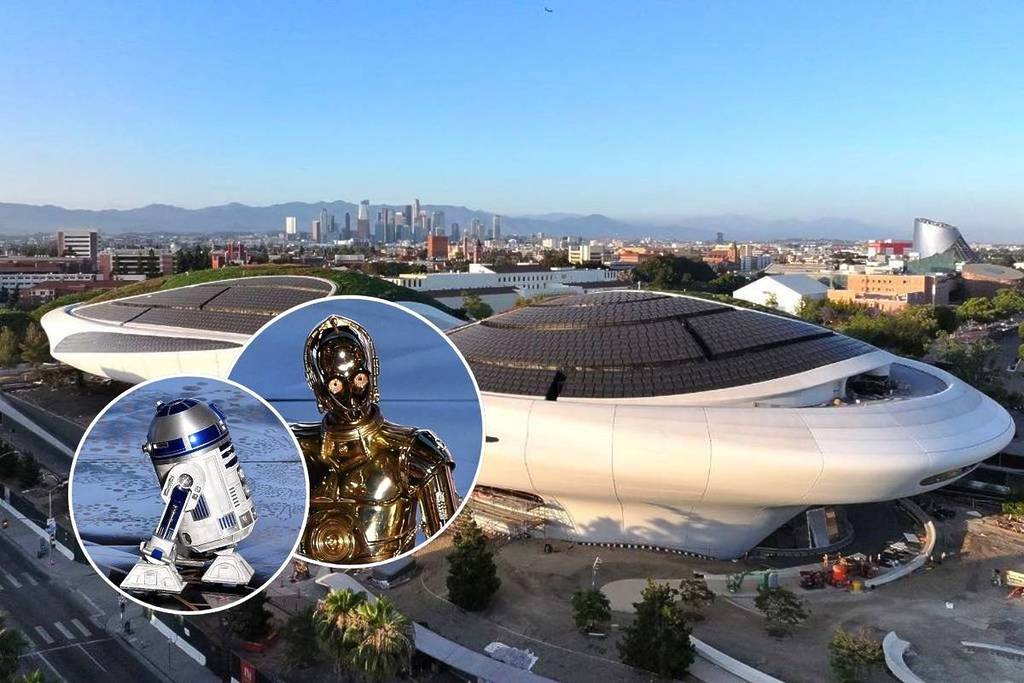

In a galaxy not so far away, more specifically at Exposition Park, the Lucas Museum of Narrative Art is set to open this fall, with a slate of more than thirty inaugural installations drawn from its founding collection. But one of the most anticipated highlights will be its inaugural cinema exhibition.
“Star Wars in Motion” will transport visitors to the cinematic universe of one of the most important franchises in Hollywood history through a selection of visionary vehicle designs, props, costumes, and illustrations from across the first six films of George Lucas’s saga. The display spans the evolution of one of cinema’s most influential universes, which first began with the release of Star Wars on May 25, 1977.
Featured objects include a wide range of high-speed racers, massive transport vehicles, and iconic flying vessels. Key highlights range from Luke’s Landspeeder in Star Wars: Episode IV – A New Hope to the first physical build of General Grievous’s Wheel Bike from Star Wars: Episode III – Revenge of the Sith, underscoring the franchise’s emphasis on inventive, kinetic design and imagined motion.
Within the broader Cinema program, this exhibition stands out as a centerpiece of the museum’s opening, showcasing how storytelling through design and visual world-building has helped define modern cinematic mythology.
About the Lucas Museum
Co-founded by George Lucas and Mellody Hobson, the Lucas Museum of Narrative Art is set to open on September 22, 2026. It is designed to explore visual storytelling across mediums, bringing together painting, illustration, comics, photography, and film under one roof.
The museum is part of a large-scale cultural development in the city, with a 300,000-square-foot building set within an 11-acre campus that includes galleries, theaters, a library, and public spaces.
It will feature a founding collection of over 40,000 works, making it one of the most extensive archives dedicated to narrative art. Across its galleries, it will present works ranging from historical illustration and fine art to modern cinematic materials, reflecting a broad timeline of human storytelling traditions.