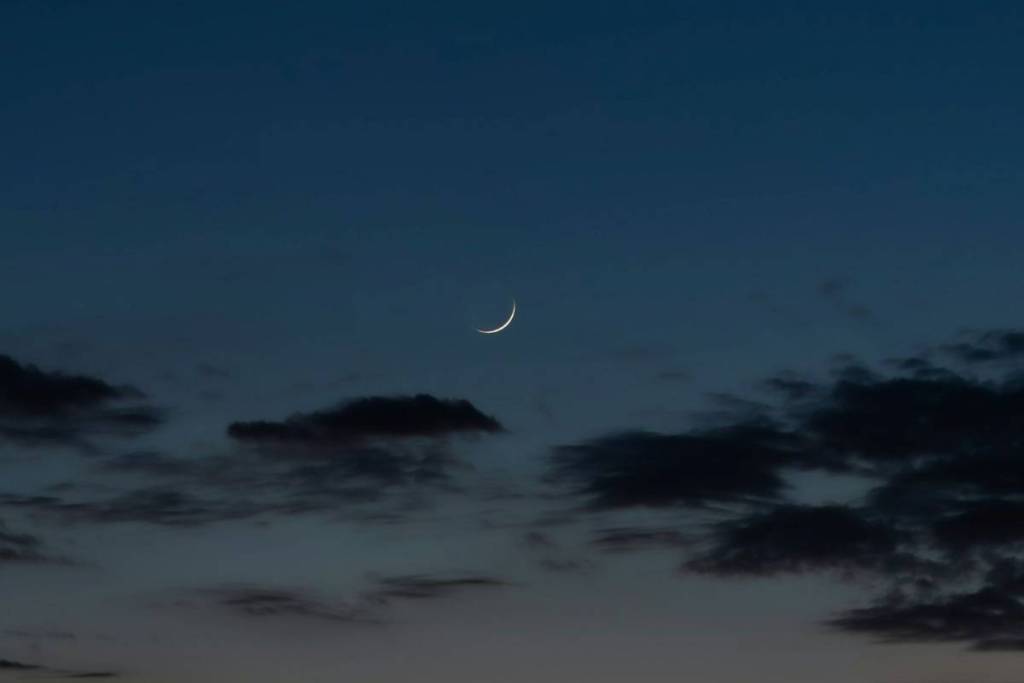

Los Angeles stargazers will have a great chance to enjoy darker night skies this November as the new Moon arrives on November 8th. With almost no moonlight to brighten the sky, the nights surrounding this lunar event offer some of the month’s best conditions for observing distant stars and other celestial objects.
The new Moon is an especially good opportunity for anyone interested in astronomy or astrophotography, particularly for those willing to travel outside the city to escape Los Angeles’ light pollution.
When is November’s new Moon?
November’s new Moon occurs on Sunday, November 8th in Los Angeles.
During a new Moon, the Moon sits between Earth and the Sun, leaving the side facing our planet mostly unilluminated. This makes it nearly impossible to see in the night sky.
Without bright moonlight washing out the view, fainter celestial objects become easier to observe.
What can you see during the new Moon?
The darker skies provide a better opportunity to spot distant stars, star clusters, and galaxies. It’s also a good time to photograph the night sky, especially from locations in L.A. with minimal artificial lighting.
One of the biggest attractions for stargazers is the Milky Way, which appears as a faint, cloudy band stretching across the night sky. However, seeing it requires genuinely dark skies, so heading away from Los Angeles’ bright city lights will make a significant difference.
Where to go stargazing near Los Angeles
For a better view, consider escaping the city’s light pollution at some of Southern California’s best stargazing destinations. Within Los Angeles County, Griffith Observatory, Garvey Ranch Observatory in Monterey Park, Malibu Creek State Park, Mount Wilson Observatory, and Angeles National Forest offer opportunities to explore the night sky.
If you’re up for a longer drive, Mount Pinos, Joshua Tree National Park, Anza-Borrego Desert State Park, and Death Valley offer much darker skies, where you may even catch a glimpse of the Milky Way on a clear night. Just remember to check access restrictions and weather conditions before heading out.
November has more celestial events ahead
The new Moon isn’t the only reason to look up this month. November also brings the Northern Taurid meteor shower around November 12th, followed by the Leonid meteor shower, which peaks overnight on November 17–18.
With several astronomical events taking place throughout the month, November offers plenty of reasons to spend a little more time looking up at the night sky.