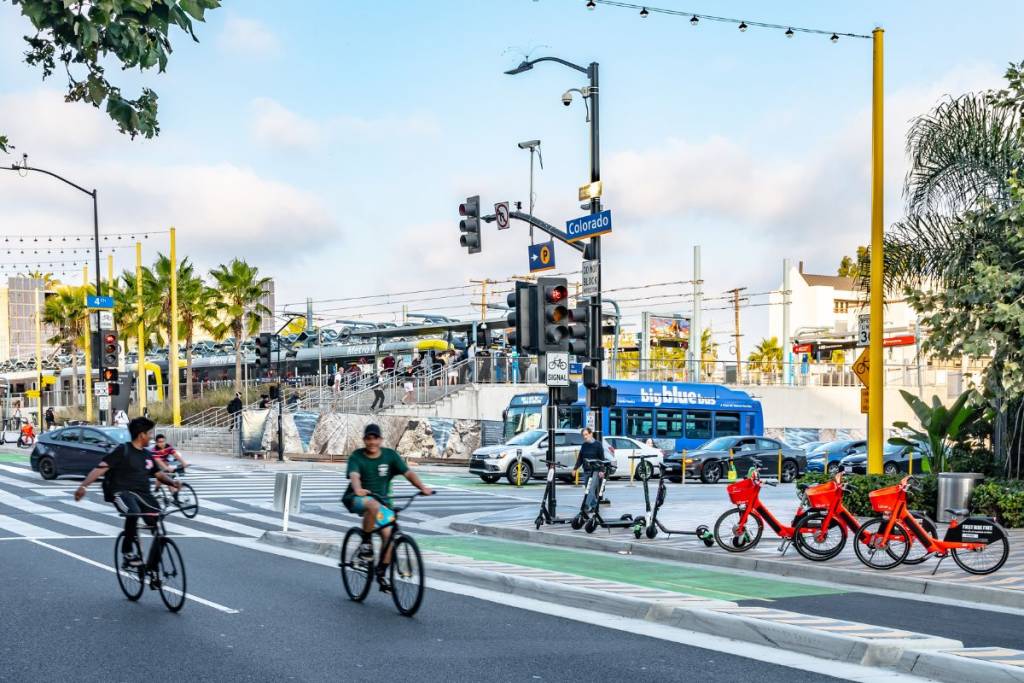

We know for a fact that SoCal and Los Angeles County have long been built around cars. Congested streets, limited parking, and constant gridlock make driving the default for millions of residents, but they also create daily conflicts between motorists, cyclists, and pedestrians.
Now, one local city is turning to artificial intelligence to tackle one of its most common safety hazards: drivers blocking bike lanes. Santa Monica has just become the first city in California to enforce bike lane parking violations using AI-powered cameras mounted on city vehicles.
The initiative is designed to keep bike lanes clear by targeting vehicles that stop or park illegally, forcing cyclists into busy traffic lanes where the risk of collisions increases significantly.
How Santa Monica’s AI bike lane enforcement works
Instead of relying solely on parking enforcement officers spotting violations, Santa Monica has equipped two parking enforcement vehicles with forward-facing cameras mounted on their roofs. As the vehicles drive their normal routes, the cameras automatically detect cars stopped or parked in designated bike lanes, capturing photos, video, time, and location data.
That evidence isn’t processed automatically into a ticket. Every potential violation is first reviewed by an officer, who verifies the incident before a citation is mailed to the vehicle’s registered owner.
The city launched the program on May 1, 2026, initially giving drivers a 60-day grace period during which only warning notices were issued. Beginning July 1, violations started carrying a $93 fine. According to city officials, around 50 tickets and several hundred warning notices have already been issued.
Santa Monica tested the technology during a six-week pilot in 2024, when just two enforcement vehicles identified nearly 1,700 potential bike lane violations, underscoring how frequently drivers blocked cycling infrastructure.
The AI bike lane program builds on the city’s existing automated bus lane enforcement system. That program helped reduce bus lane parking violations by 67% and bus stop violations by 40% within months, encouraging officials to expand automated enforcement to bike lanes as well.