
Long before telescopes, satellites, or space missions, humans tracked the stars to tell stories, navigate oceans, and make sense of the universe. Thousands of years later, that fascination hasn’t faded. If anything, it has only grown stronger as every eclipse and comet reminds us that Earth’s greatest show still takes place overhead.
Now, one of the most popular celestial spectacles returns this week as the Perseid meteor shower officially becomes active. Beginning July 17, skywatchers across L.A. will have their first chance to spot the famous “shooting stars,” with activity gradually increasing before reaching its dazzling peak in mid-August.
What is the Perseid meteor shower?
The Perseids are among the oldest recorded meteor showers, with historical observations dating back nearly 2,000 years. Early records date back to Chinese astronomers as far as A.D. 36, making the annual display one of humanity’s longest-observed astronomical events.
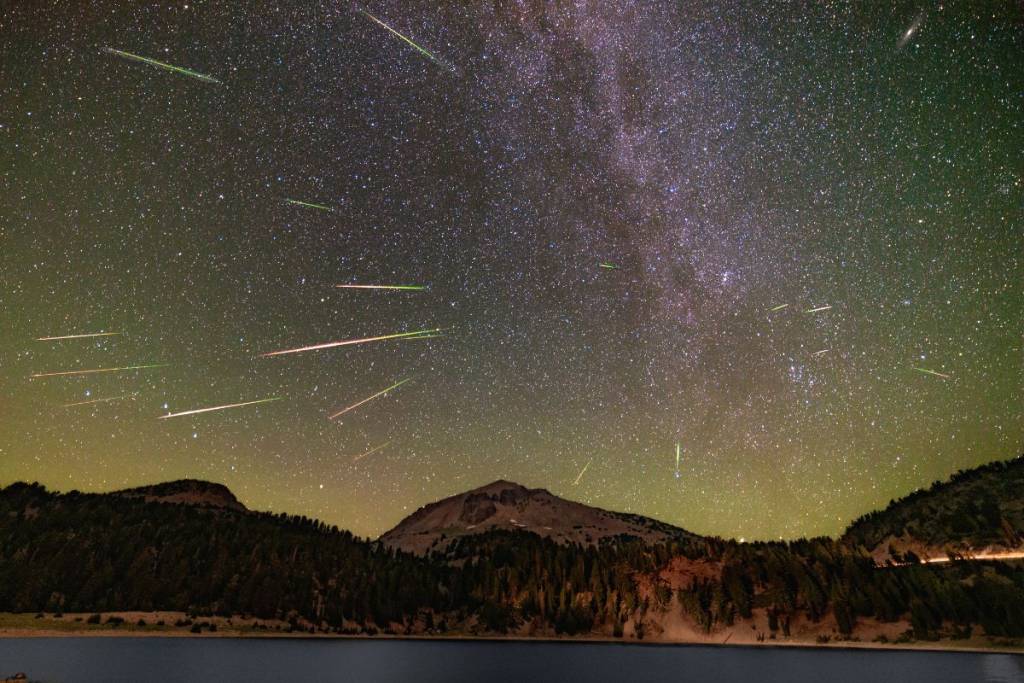
Every summer, Earth passes through a stream of debris left behind by Comet 109P/Swift-Tuttle, a massive comet measuring about 16 miles across. As tiny fragments of rock and dust slam into Earth’s atmosphere at incredible speeds, they burn up, producing the brilliant streaks of light we call meteors.
NASA considers the Perseids “the best meteor shower of the year” thanks to their high hourly rates, exceptional brightness, and colorful, long-lasting trails that can linger in the sky for several seconds.
The shower will remain active through August 24, with its peak expected during the nights of August 11 and 12, when viewing conditions are forecast to be especially favorable thanks to a nearly new moon and dark skies.
Where to watch the Perseids around L.A.

You don’t need a telescope, binoculars, or any special equipment to enjoy the Perseids. In fact, the best way to watch is to find the darkest sky possible, let your eyes adjust for about 30 minutes, and look up.
NASA recommends viewing during the pre-dawn hours, although the first meteors can begin appearing as early as 10 PM on clear nights.
Within the city, Griffith Observatory offers one of the city’s most accessible stargazing locations, though light pollution will reduce the number of visible meteors. For a much better experience, consider heading to darker areas outside the city, including: