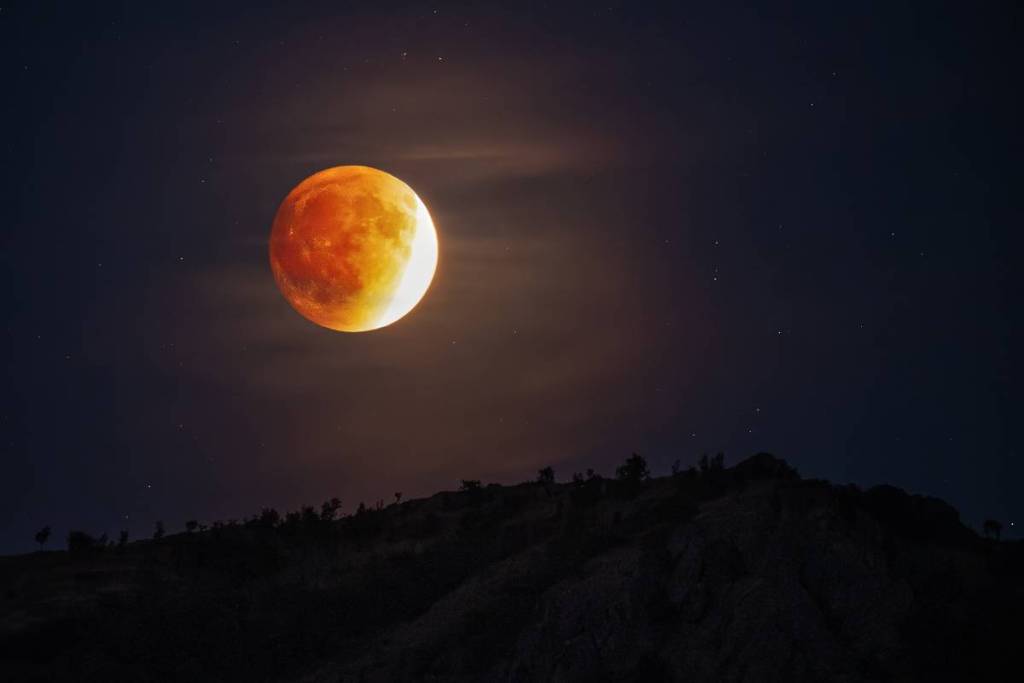

A striking lunar eclipse is happening tonight, August 27, and much of Southern California will have a chance to see it. The Moon will move deep into Earth’s shadow, with about 96% of it covered at the peak, giving it a noticeably reddish, coppery appearance.
In Los Angeles, the Moon rises at around 7:17 p.m., the partial eclipse begins at 7:33 p.m., and the eclipse reaches its maximum at 9:12 p.m. The main phase ends at around 10:51 p.m. That gives you plenty of time to find somewhere with a clear view of the east-southeast sky. And while familiar spots like Griffith Observatory will be popular, there are plenty of other options worth considering.
These are some of the best places around L.A. to catch tonight’s lunar eclipse!
Palmdale

If you want open skies, head north toward Palmdale and the Antelope Valley. The wider landscape is useful tonight because the Moon will be low when the partial eclipse begins. The timing is almost identical to Los Angeles, with maximum eclipse around 9:12 p.m. The local school district is actually hosting a public viewing at the SAGE Planetarium. The evening starts with a short eclipse presentation at 7 p.m., followed by telescope viewing outside from 7:30 to 10:30 p.m.
Big Bear Lake
Big Bear Lake makes a good choice for anyone willing to turn the eclipse into a mountain escape. The higher elevation and darker surroundings can make the reddish Moon stand out more, while the surrounding landscape gives photographers plenty of options. Just make sure your chosen spot has a clear eastern view. The mountains and trees can block the Moon early in the evening.
Los Angeles State Historic Park
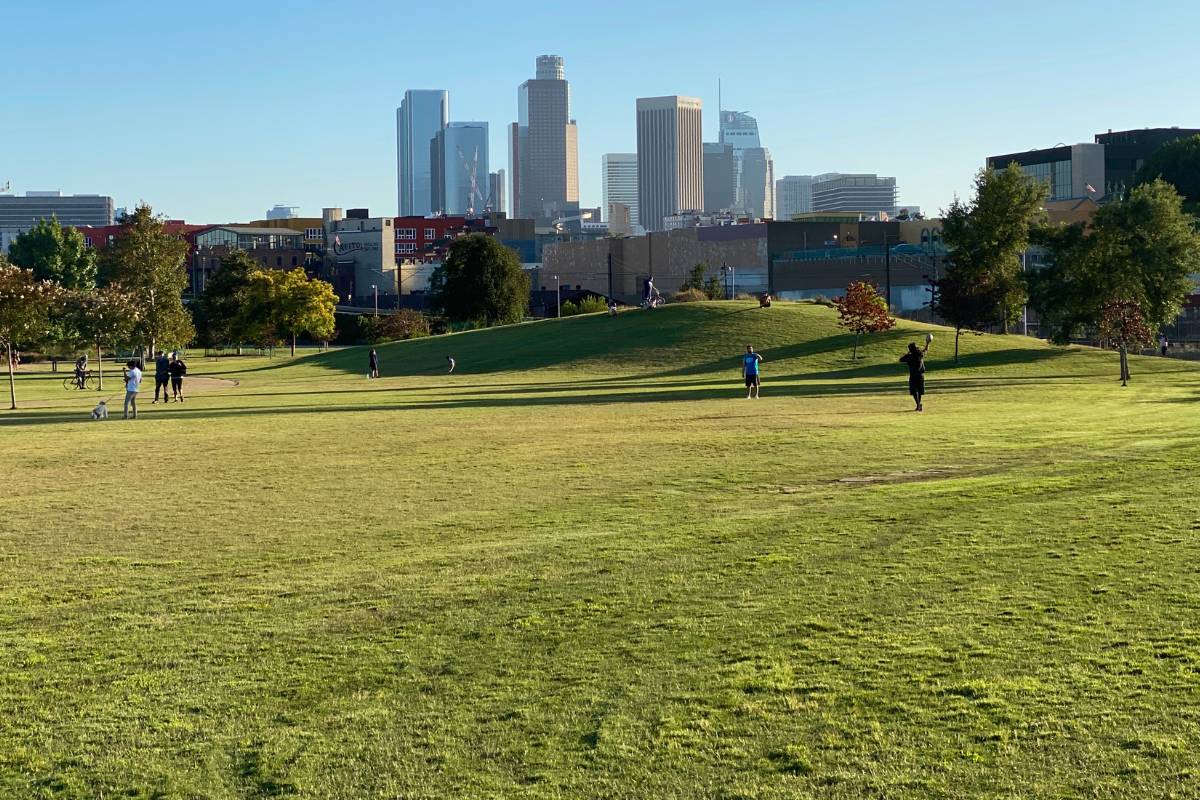
If you want to stay in Los Angeles without heading up into the hills, Los Angeles State Historic Park offers one of the more open urban settings for watching the lunar eclipse. The 32-acre park sits on the edge of Chinatown, with broad lawns and long sightlines that feel surprisingly spacious for a location so close to Downtown. It’s especially useful tonight because the Moon will be rising low in the eastern sky, so having a wider view can make the beginning of the eclipse easier to follow.
The setting also gives you a very L.A. way to experience the event: instead of a mountain overlook or a dedicated observatory, you’ll have the Downtown skyline around you as the Moon gradually moves deeper into Earth’s shadow
Joshua Tree National Park

For some of the best dark-sky viewing near Los Angeles, Joshua Tree is the standout. The park is an International Dark Sky Park, so you’ll have much less artificial light competing with the eclipsed Moon. The desert landscape also makes for a particularly good setting for eclipse photography. The National Park Service recommends established stargazing locations including Quail Springs, Hidden Valley and Cap Rock, although you should check current access and conditions before heading out.
Borrego Springs
For a longer desert trip, Borrego Springs is another strong option. The community is recognized as an International Dark Sky Community, making it one of Southern California’s better destinations for stargazing. It’s farther from L.A. than Joshua Tree, so this makes more sense as an overnight plan. This is less of a spontaneous L.A. evening and more of a road-trip option, but that’s part of the appeal.
Lastly, for the classic Los Angeles eclipse experience, Griffith Observatory is hosting public viewing from 7:25 p.m. to 11 p.m. The Observatory says the eclipse should become visible from its lawn at around 8:15 p.m.